
Modern Art in the United States and Mexico
Chapter Overview and Introduction
In the period between 1900-1945, art and architecture in the United States and Mexico underwent profound transformation. Artists in both regions were inspired by the modernist styles coming out of Europe: Fauvism, Expressionism, Cubism, Abstract art, Dada, Surrealism, etc. The physical distance of North America from the destruction of World War I allowed artists to continue experimenting from the early 20th century into the period between the two World Wars. Artists working in cosmopolitan centers, such as New York City, were producing avant-garde artworks. While some avant-garde artists focused on the formal properties of modern art (line, shape color, etc.), other American and Mexican avant-garde artists were combining modernist aesthetics with social issues.
Focus Artworks
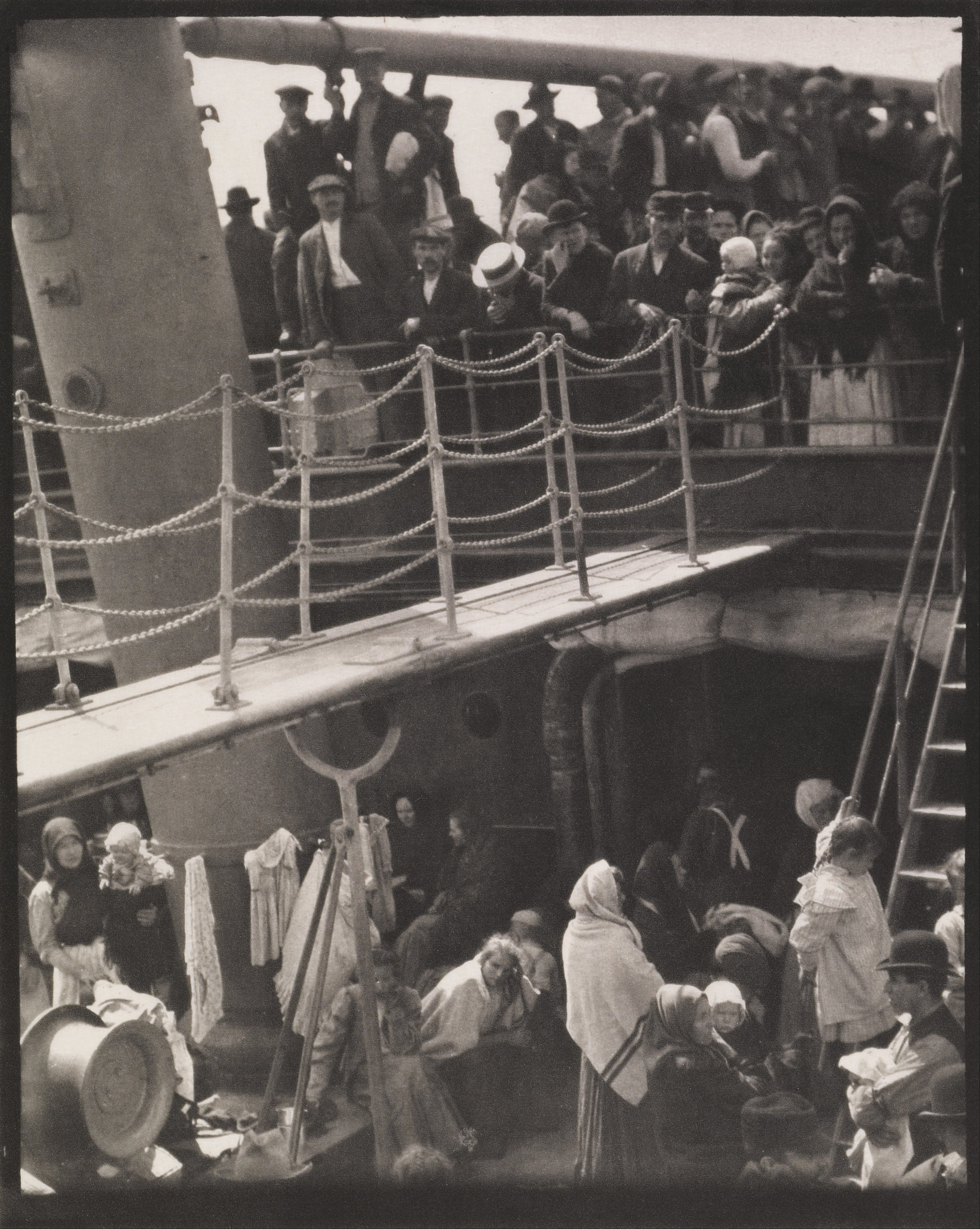
- Alfred Stieglitz, The Steerage, 1907, photograph
- Georgia O’Keeffe, Radiator Building—Night, New York, 1927, oil on canvas
- Aaron Douglas, Aspiration, 1936, oil on canvas
- Jacob Lawrence, The Migration Series, 1940-41, 60 panels, tempera on hardboard
- Hale Woodruff, The Banjo Player, 1929, oil on canvas
- Diego Rivera, History of Mexico murals, 1929–30, fresco
- Frida Kahlo, The Two Fridas (Las dos Fridas), 1939, oil on canvas
Term List
- Avant-garde
- 291 Gallery
- Pictorialism
- Straight photography
- Modernity
- Modernism
- Armory show
- Harlem Renaissance
- Great migration
- Social realism
- American regionalism
- Genre
- Mexican muralism
- Mexican Revolution
- Fresco
- Indigenismo
- Pre-Columbian
1898–1945 in the United States, an introduction
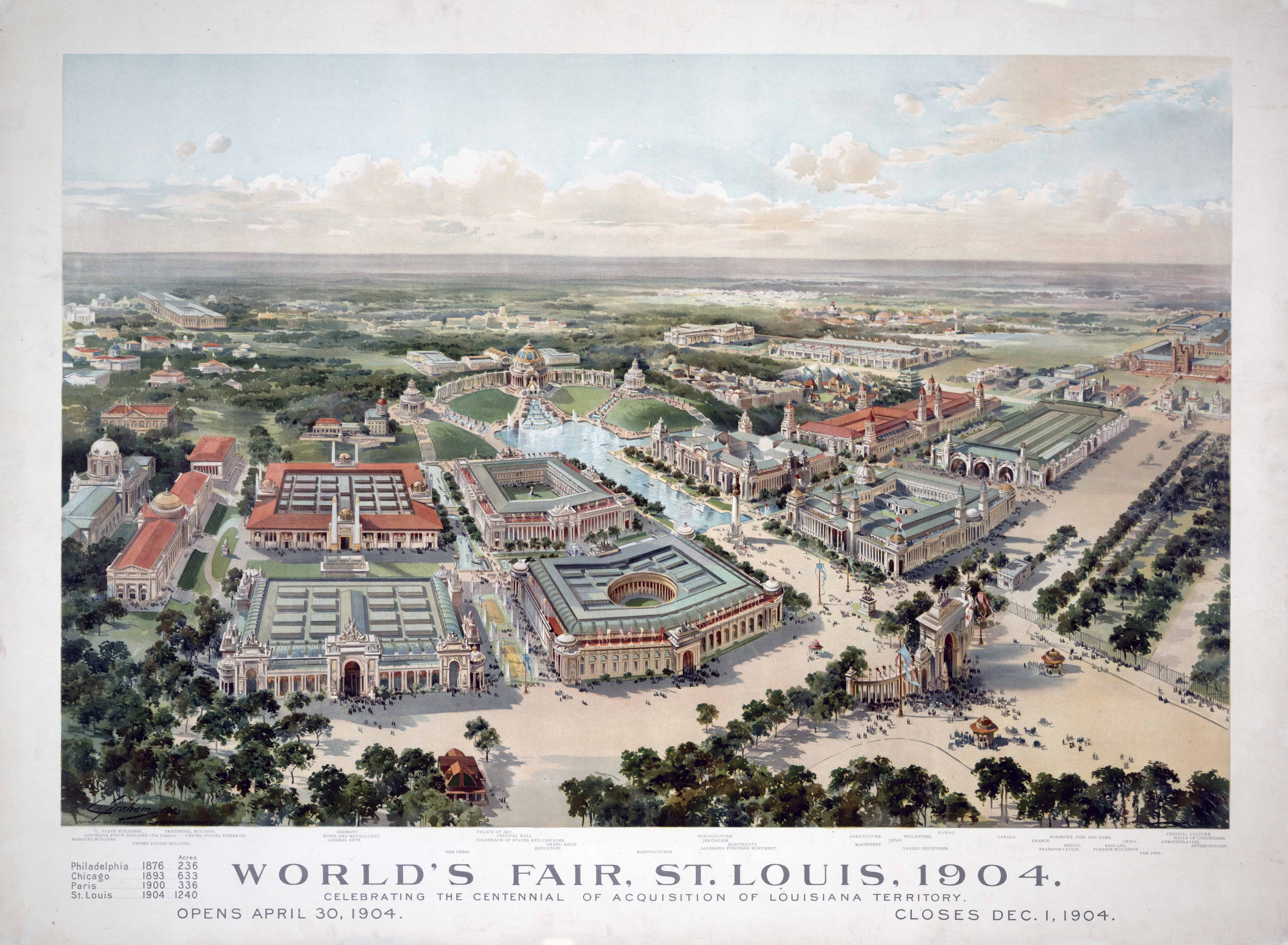
Wondrous new innovations for modern life
From 265 feet above the St. Louis Fair of 1904, ferris wheel riders looked down on “palaces” dedicated to electricity, transportation, and “varied industries” whose halls held wondrous new innovations for modern life including an electric streetcar, private automobiles, wireless telephones, X-ray machines, and infant incubators.
From the turn of the century and through two world wars, Americans witnessed technologies that advanced transportation, business, and health. Mass culture spread throughout the nation via movie theaters, radios, and department stores. From the view on the ferris wheel, the narrative of American progress glowed bright in the electric lights below. But on the ground, Americans experienced the inequalities of industrial development spawned by an era of mass consumption.
The fair was a centennial celebration of the Louisiana Purchase. When planning began in 1898, the U.S. was engaged in war with Spain in both the Caribbean and the Philippines. Often sensationalized in newspapers through “yellow journalism,” the Spanish-American War was a topic of debate that revealed differing ideologies of America’s place in the world.
The war ended the same year it began with American acquisition of Puerto Rico, Guam, the Philippines, and temporary control of Cuba. Although many disagreed with the politics of imperial expansion, when the fair opened in 1904 the Philippines pavilion was among the largest on site and included a small lake where model ships reenacted battles from the war.
Rights and reforms
The processes that enabled mass consumption also created great economic divisions. As industrial production increased, monopolies came to dominate American business. Workers, photographers, and “muckraking” journalists sought to expose the excesses of big business and the horrific conditions of factory labor. In 1911, the Triangle Shirtwaist Fire killed 146 workers, many of them female or children, and most immigrants of Italian or Jewish descent. In response, 20,000 New York garment workers went on strike uniting across ethnic boundaries for the common goal of safety and economic opportunity. Other strikes followed around the country, spawning more organized unionization and activism for working conditions and fair pay.
The early twentieth-century saw more women entering the workforce in factories and offices, and as telephone operators or domestic servants. Charlotte Perkins Gilman, who inspired the term “feminism,” saw changes as the “spirit of personal independence” and encouraged women to leave the home environment which was preventing them from full freedom and social engagement.
Several female leaders emerged expounding similar ideas including Emma Goldman and Margaret Sanger. Some, such as Jane Addams, actively sought to help women improve their situations though housing, career training, education, and social services. After advocating for decades, women earned the right to vote in 1920.
Throughout the era, laws and intimidation tactics prevented African Americans from full participation in democratic society. Southern states enforced segregation of facilities arguing for a doctrine of “separate but equal” that the U.S. Supreme Court affirmed in its 1896 decision Plessy v. Ferguson. Even when similar schools and healthcare facilities were provided for the black population, they were not of the same standard as those offered to the white population. In 1900, no southern state offered a high school education to African Americans.
Thousands of black Americans made their way to the industrial cities of the North in the “Great Migration.” At the same time there was an explosion of literature, music, and art that has come to be known as the Harlem Renaissance or The New Negro movement. Artists and writers looked to black history—and specifically to the art of Africa—for inspiration, joining that to a modern African American identity (Romare Bearden, Aaron Douglas, and Jacob Lawrence, for example) .
Consumer society
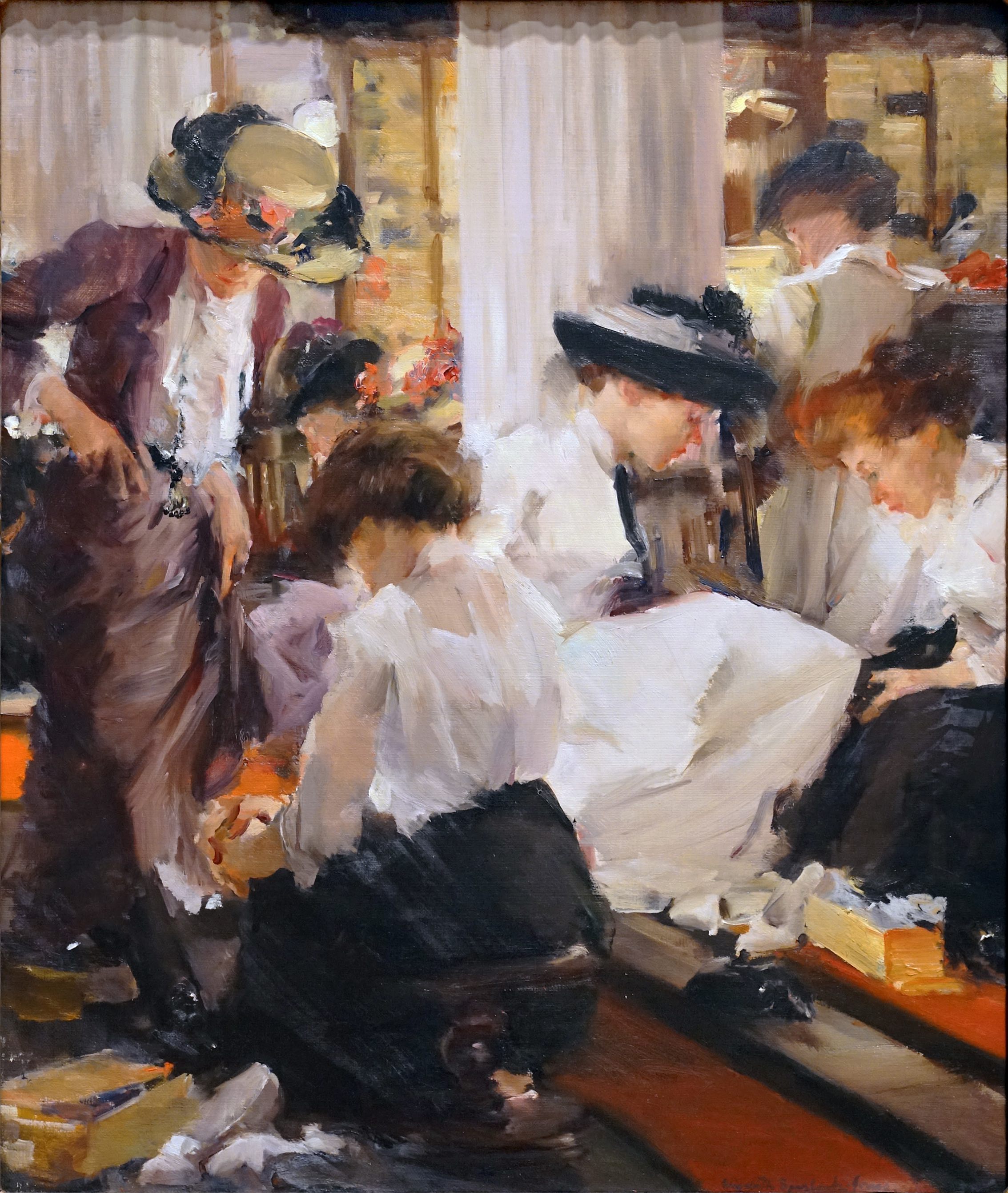
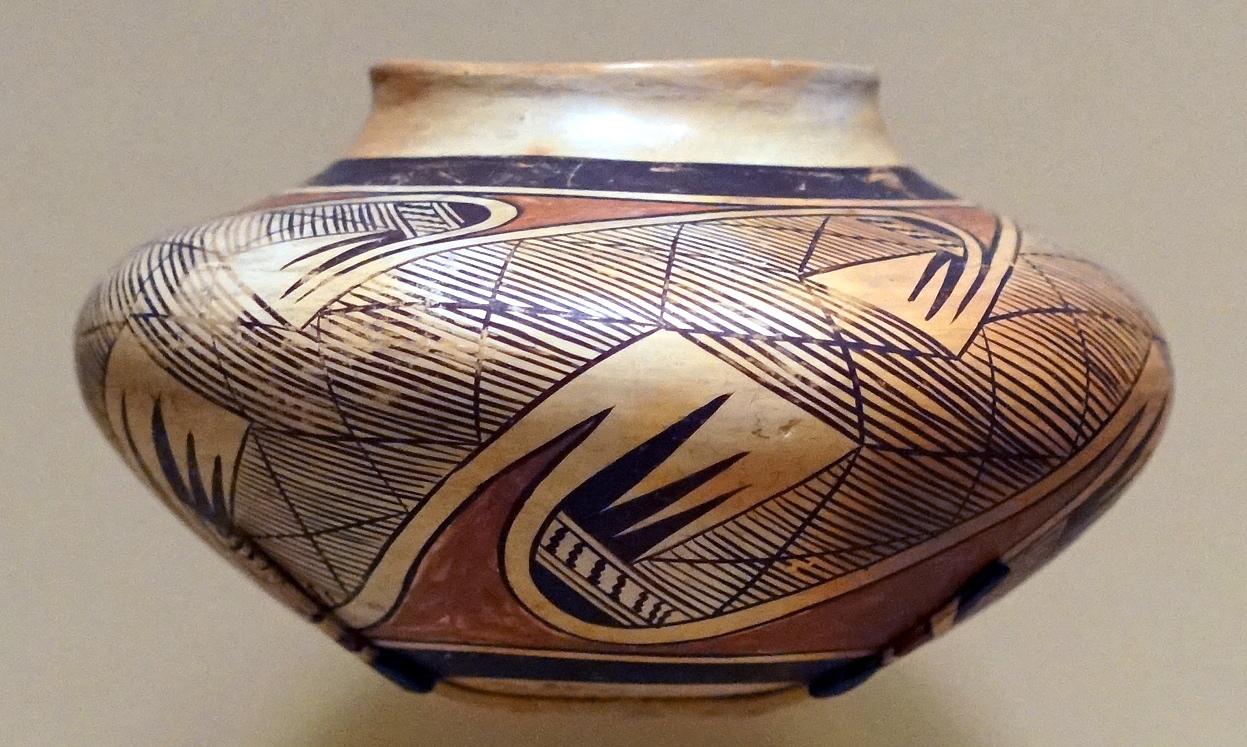
Mass culture offered new forms of entertainment in vaudeville, radio, film, phonographs, dance halls, and amusement parks. Increased leisure time and transportation in the form of affordable automobiles like Ford’s Model T, which hit markets in 1908, made entertainment and tourism accessible for a wider variety of Americans. Mainstream culture flourished, but so did artistic expression beyond the center such as African Americans in the Harlem Renaissance and American Indians in a burgeoning Southwestern art and tourist market (see for example, Nampeyo).
Mass culture and the growing entertainment industry spawned the Roaring Twenties—a time of carefree, youthful indulgence. When the Great Depression hit, that indulgence and optimism disappeared. Banks failed and people lost their savings, homes, farms, and businesses. Unemployment skyrocketed. Through its early years, federal aid came only for farmers and businesses; it did not reach those who needed it most.
In 1932, Franklin Delano Roosevelt promised a “new deal” for workers, winning the presidency where he remained for four terms. The New Deal actively placed restrictions on big business; sent direct aid to small businesses, farmers, and cultural workers; and created new jobs building infrastructure like roads, libraries, schools, and dams. It even employed cultural workers like photographers and artists who depicted Depression life and created public works of art. Anthropologists collected oral histories and folk songs.
The wars and the world
The U.S. initially sought not to be involved in World War I, though sympathy lay with the Allied Forces (The United Kingdom, France and Russia). In April 1917, however, Germany attacked American ships leading to the declaration of war. U.S. troops helped lead the Allies to victory in November 1918. President Woodrow Wilson imagined this was the “war that will end wars” (as H.G. Wells had written in 1914) and pushed the establishment of a League of Nations to keep peace, but in the end his own country favored isolation over involvement.
Isolationism remained strong during the start of World War II. Congress passed the neutrality act which banned the sale of war goods to fighting countries. In 1940, France surrendered to Germany and President Roosevelt sent supplies to England. The next year Japan bombed the U.S. naval base at Pearl Harbor and the U.S. declared war on Japan. After securing the European front at Normandy in 1944, the U.S. dropped two atomic bombs on Hiroshima and Nagasaki. Japan surrendered nine days later.
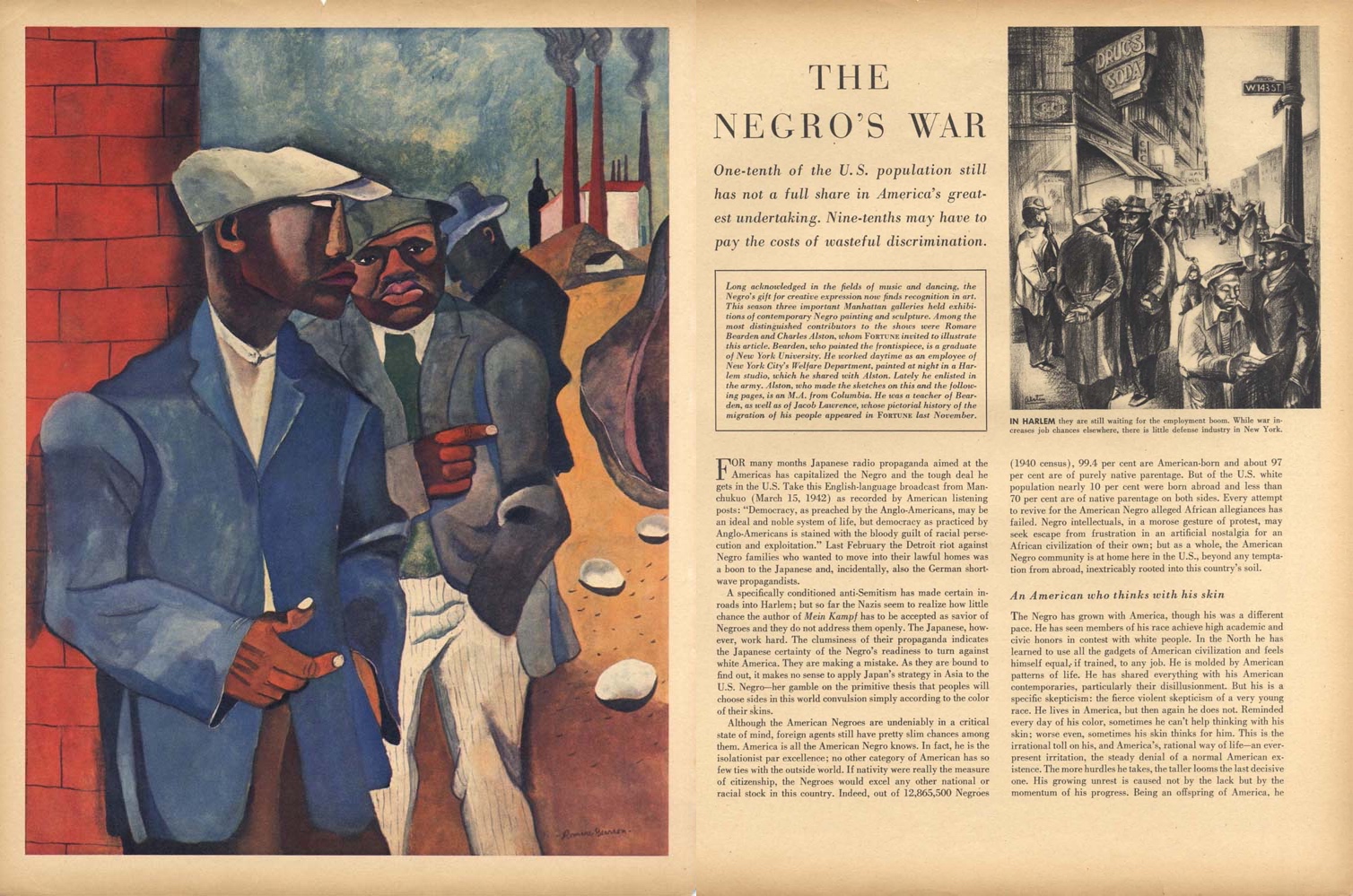
World War II increased opportunity for African Americans in the workplace with the signing of Executive Order 8802 preventing racial discrimination in federal hiring practices. Romare Bearden’s Factory Workers (1942) addressed such discrimination portraying workers being turned away from employment in the steel industry. Because the U.S. was at war with Japan, many people of Japanese descent living in the United States (like Ruth Asawa) were forced into internment camps, losing their homes, businesses, and freedoms.
During the war, women took the place of men in many fields of employment, including factory work to produce supplies needed both at home and overseas. In order to recruit women, the U.S. government printed posters of a strong female dressed in a blue jumpsuit and red bandanna saying, “We Can Do It.” Rosie the Riveter is still an icon of working women in America. Beneath the icon, however, women experienced much lower wages than men for the same positions and, when the soldiers came home, were expected to give up their jobs and resume more traditional roles.
The horrors of the Holocaust stunned people around the globe. America had refused to admit many of the Jews who sought to escape Nazi persecution though some who had secured employment were allowed entry including the scientist Albert Einstein. The United States was immeasurably strengthened by the many brilliant immigrants who fled Europe including composer Igor Stravinsky, author Thomas Mann, architect Walter Gropius, and artist George Grosz whose painting Remembering speaks the agony of have left friends and family behind in Nazi Germany.
Alfred Stieglitz and the 291—Little Galleries of the Photo Secession
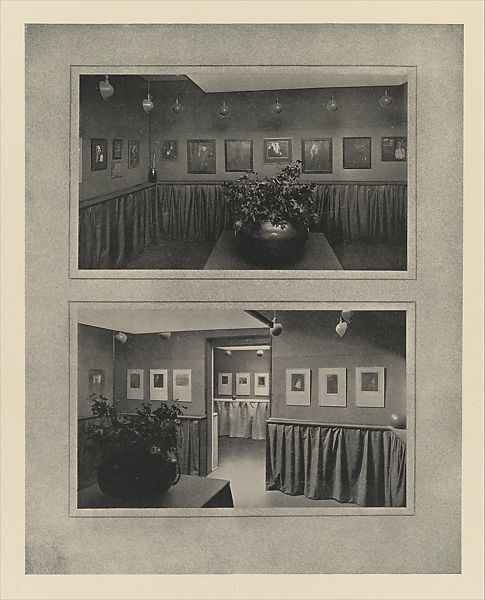
291 Fifth Avenue
If you walked into the “Little Galleries of the Photo Secession” at 291 Fifth Avenue run by New York photographer Alfred Stieglitz and his devotees between 1905–1917, you would likely have been surprised. You might have seen an exhibition of avant-garde photography or perhaps an exhibition of bizarre Cubist paintings. The latter, especially, would have been an unusual sight.
At the time, New York City was not yet well known as an artistic center. As a result, many artists and institutions in New York still looked to European cities—particularly Paris—as artistic and cultural beacons. Although Modernism was gaining ground in Europe, it held little appeal to American audiences outside of small artistic circles. Stieglitz’s 291 gallery, which exhibited modern European painting as well as the latest art photography, helped to change all of that.
Stieglitz and the art of photography
Stieglitz had become a well-known photographer—perhaps the most renowned photographer in the United States—a result of his advocacy for the relatively new medium, forming camera clubs (such as the Photo Secession, in 1902), and publishing photography journals. Photography had been used to create art since its invention in the mid-nineteenth century, but it was a relative late comer in comparison to easel painting and printmaking, which had been the preferred artistic media for two-dimensional work since the end of the Renaissance.
Because photographs were created using a mechanical device (an analog camera) rather than by the artist’s hand, many artists and critics debated whether it belonged within the realm of art exhibited in galleries and museums.
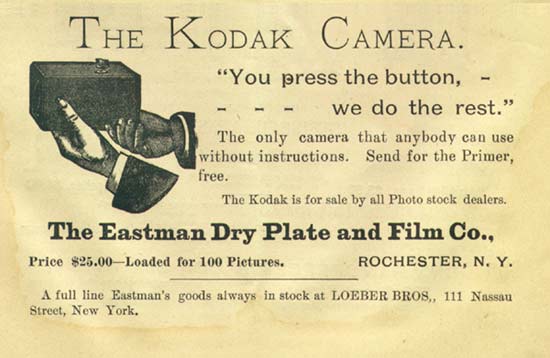
Further complicating photography’s claims to art status was the invention in 1888 by the Eastman Kodak Company of the first portable hand-held camera and the advertising slogan “you press the button, we do the rest,” making the ability to take pictures affordable and widely available to ordinary people for the first time. With photography in the hands of the masses as well as commercial studios concerned primarily with portraits, advertisements, and other practical matters, Stieglitz and fellow art photographers felt compelled to differentiate their photography from the production of commercial studios and the common snapshots of everyday life.
Pictorialism, and later, modern life
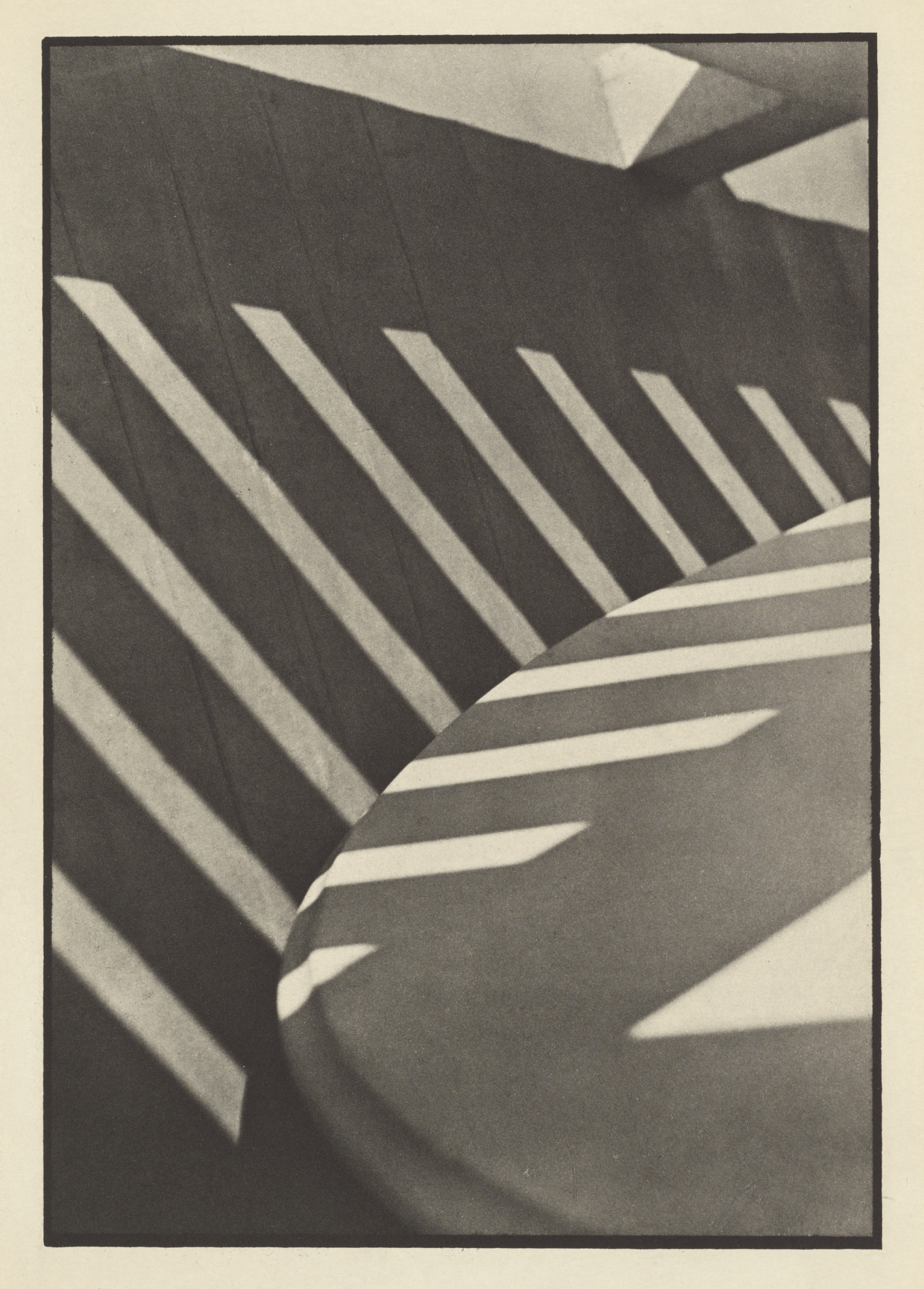
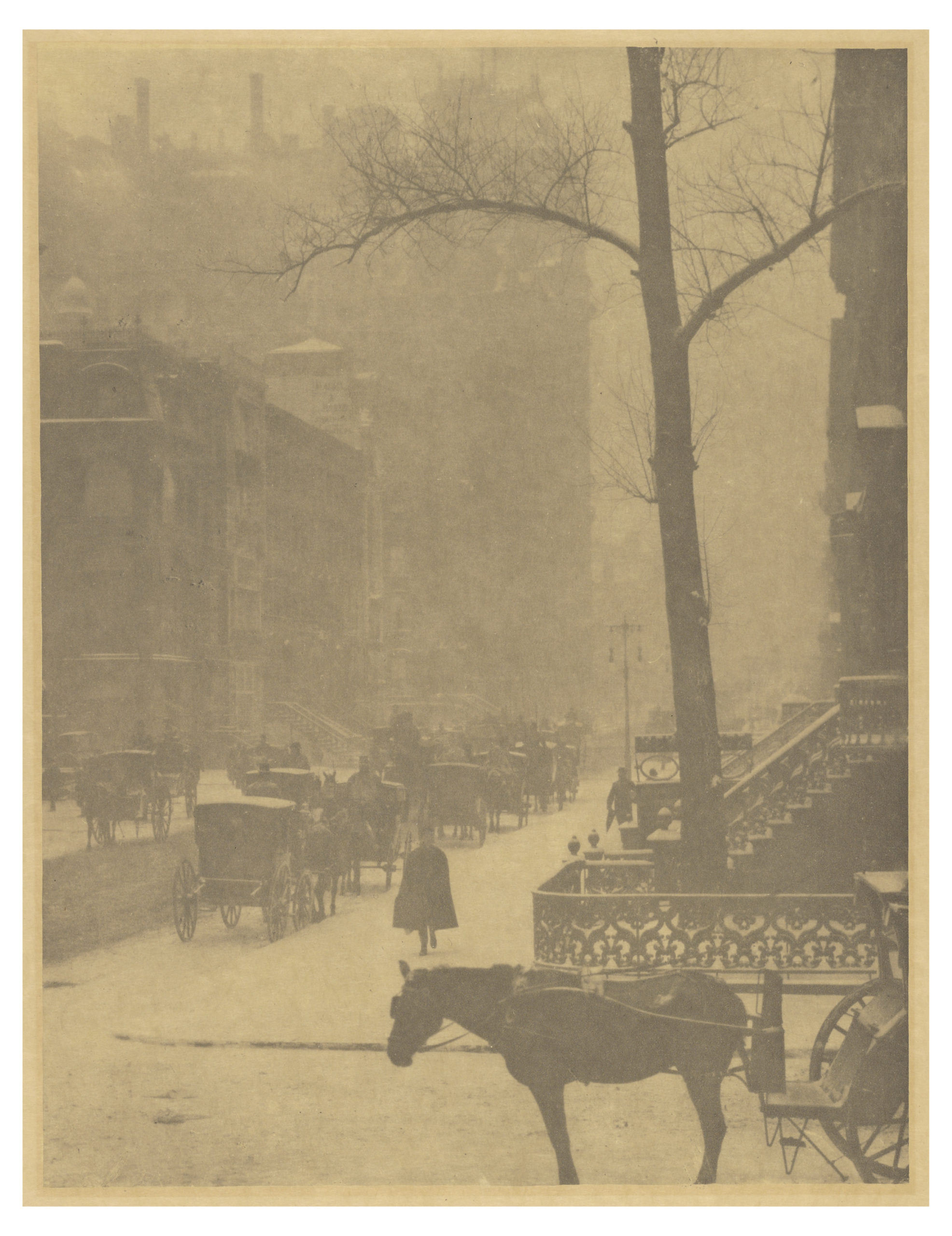
Early in his career, Stieglitz championed a photographic style known as Pictorialism, which sought to achieve artistic, even painterly, effects that included soft focus and altering of the photograph using cropping or marking the prints with chemicals. Pictorialist photographers also preferred idealized imagery over images of modern life. Over time, however, Stieglitz shifted his approach and helped to cultivate a photographic aesthetic grounded in the idea of “straight photography.” This meant renouncing the pictorialist alteration of photographs (a practice conceived of as being too rooted in nineteenth-century practices), in favor of more sharply focused images that featured modern forms and artistically emphasized the formal elements of the image. “Straight photographers” heralded in the era of the modern photographic image. In fact, the younger photographer, Paul Strand, instigated a decidedly modernist aesthetic in photography after seeing a Cubist exhibition at 291.
The modern age, the artistic avant-garde, and “Little Gallery” known as 291
The painter and photographer Edward Steichen and other notable artists were instrumental in developing the program of exhibitions at 291, which first highlighted Photo Secessionist photographers and then went on to feature exhibitions by prominent European artists including Henri Matisse, Paul Cézanne, and the Cubist works of Pablo Picasso that would influence artists across media around the world. But 291 also exhibited the work of emerging American artists whose paintings and photographs explored modernity (modern life as impacted by new industrial, social, and political developments) or Modernism (the radically different artistic sensibilities avant-garde artists thought best represented modern experiences).
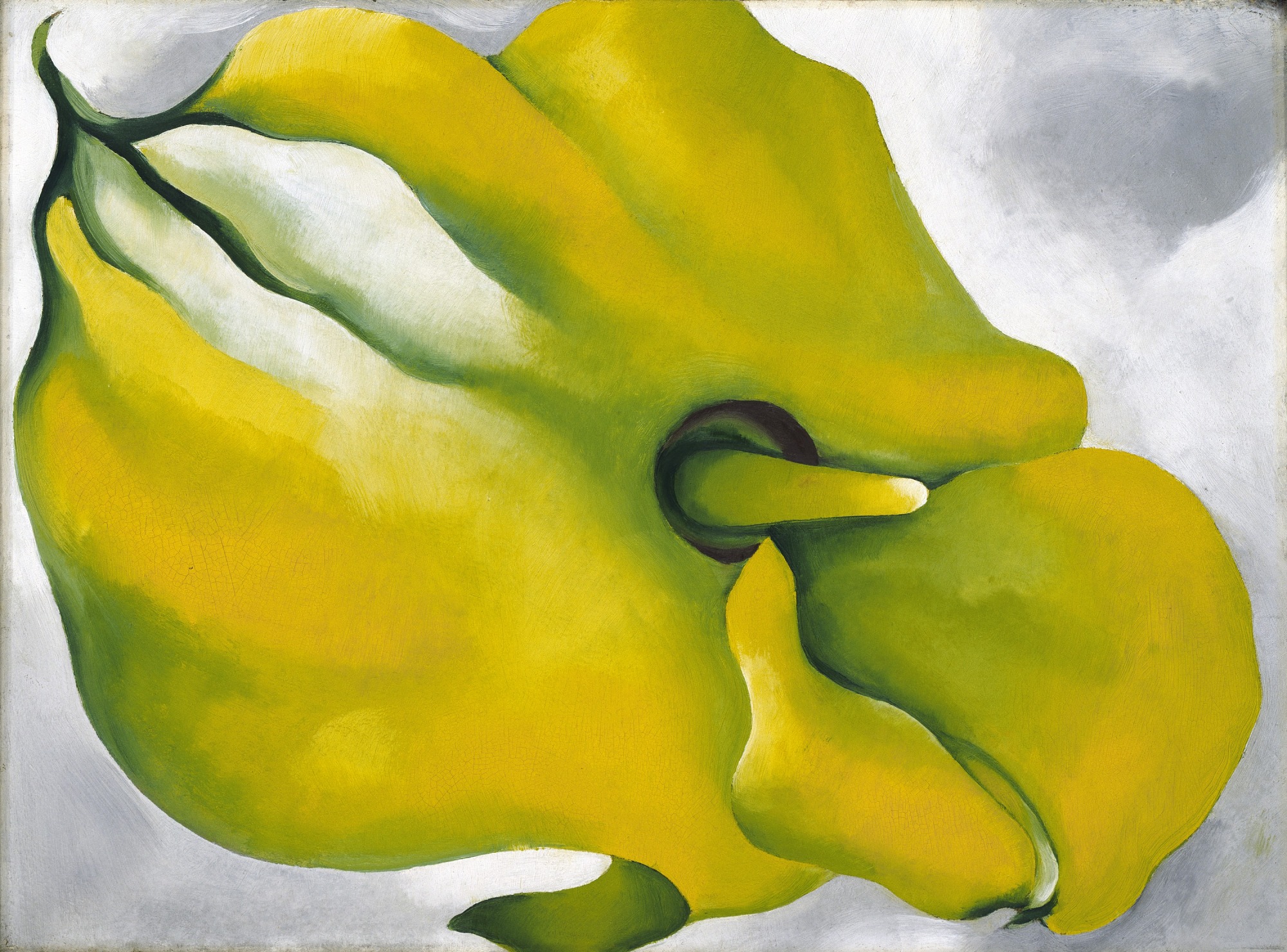
One of the American Modernists exhibiting at 291 was Georgia O’Keefe, whose abstracted urban and organic forms captivated Stieglitz and with whom he became romantically involved. The exhibitions of innovative photographs, paintings, and sculptures at 291 made it the preeminent venue for modern art in the United States in the early twentieth century.
The Modern Metropolis
The modern skyscrapers being built in New York appealed to Stieglitz, and he was known to roam the streets of the city looking to capture its essence in his photographs. The thriving metropolis also intrigued Strand, whose photographs of the city conveyed the new modernist aesthetic. New York attracted artists from Europe as well, including Francis Picabia, a French modernist who spearheaded the New York iteration of the Dada movement (artists associated with Dada responded to the horrors of WWI by creating works that featured chance, humor, and absurdity).
Picabia had developed a rapport with Stieglitz and the artists at 291 when he visited New York for the first large-scale exhibition of modern art at the Armory Show in 1913. When he returned to New York to escape serving in WWI he spent time helping out at 291, where artists also gathered for lively discussions. Picabia experimented with a new machine aesthetic and with the idea of the photograph as a work of mechanical reproduction that would change art—including painting—forever.
While at 291, Picabia made portraits called “Mechanomorphs” that portrayed the artists, photographers, and critics there as hybrid machines—depicting Stieglitz as an intriguing camera-like device. Such works also represented the wide array of practices supported by 291 and the idea that the gallery fostered the transmission of European Cubism and Collage (practices of cutting and rearranging images from visual culture) to artists in the United States.
Publishing, circulation, and art in visual culture
One of the activities at 291 that helped promote modern painting and photography was publishing. Stieglitz and his friend Steichen began publishing the journal Camera Work in 1903 and continued this project until 1917. During that time the journal featured illustrious art photographs and articles about photography as well as features on modern art from Europe.
The publishing efforts at 291 served as an important conduit for modern art in the United States (even for those viewers who did not pay a visit to the gallery). From 1915–1916 Stieglitz and companions at 291 published a journal of the same name. The short-lived journal 291 featured even more radically modern art—so radical in fact that few readers were interested.
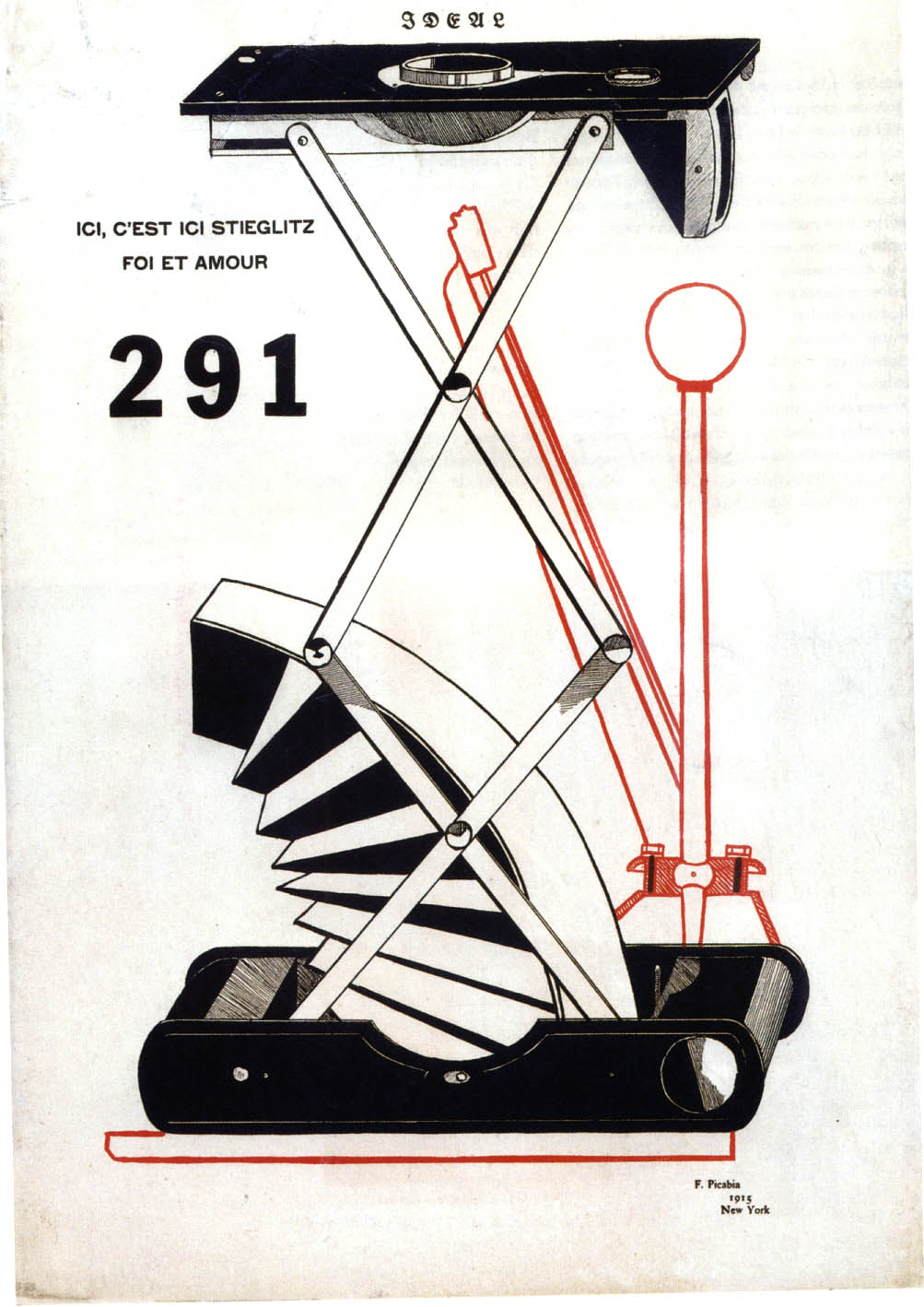
Picabia’s bizarre mechanical portrait of Stieglitz (see the Smarthistory essay “Ideal”) was featured on the cover of a 1915 edition of the journal but represented another conundrum. The tendencies of some contributing artists, such as Picabia, to embrace the newly emerging Dada movement made the publication too enigmatic for general audiences and, it is said, even to Stieglitz himself.
Despite the fact that this journal seemed relevant to only a small group of artists in early twentieth-century New York, its transnational contributions and cutting-edge content remain historically significant. Like the gallery at 291, the journal’s function as a conduit for modernism in the United States has earned it a prominent place in art history.
Alfred Stieglitz, The Steerage
Alfred Stieglitz championed modern “straight photography” featuring the medium’s innate characteristics and also promoted modern art in the United States.
Georgia O’Keeffe, Radiator Building—Night, New York
Influenced by modern photography and the close-up, Georgia O’Keeffe’s mature style used close-in detail and cropped views as a means to abstraction.
Practicing Visual Analysis
Often known for her paintings of flowers or the American southwest, Georgia O’Keeffe also painted the New York skyline. In Radiator Building—Night, New York, O’Keeffe centered a black rectangular skyscraper in the composition. The primary building is situated in the middle of other rectangular structures made mostly from varying tones of black and gray. The rectilinear forms of the buildings are simplified. Within the primary rectilinear forms are smaller rectangular shapes. O’Keeffe used these shapes to indicate lit windows through varying tones of white, gray, or yellow. The pictorial space is relatively flat. Foreground and background are condensed. At the same time, some overlap of structures and the variations in tone suggest minimal depth. Chiaroscuro lighting is not used. Rather color is used to designate minimal depth and light sources. Rectilinear beams of blue light project from rooftops to suggest search lights. On the right side of the composition, a white curvilinear form of smoke emits from a building rooftop. The smoke intersects with one of the rectilinear blue lights to suggest the dissipation of light through smoke. In this piece, O’Keeffe drew upon the modernist traditions coming from Europe. Mostly notably here, she borrowed ides from the Cubism and abstraction.
Harlem Renaissance
The Harlem Renaissance was the period when Harlem was the cultural capital of Black America; writers, musicians, and artists lived and worked in Harlem between the wars.
Aaron Douglas, Aspiration
A member of the New Negro Movement and a leading voice of Afrocentric modernist art in the Harlem Renaissance, Aaron Douglas studied in New York and Paris.
Jacob Lawrence, The Migration Series
Jacob Lawrence was an American painter known for his narrative series of Black history and contemporary life, Lawrence communicated through abstraction and color.
Social Realism in America
Around 1930 through 1945, Social Realism emerged in the United States as an art style that focused on the daily lives of the working classes and the poor. Social Realism critiqued the social structures that maintain these conditions. Social Realism demonstrates that not every American artist working in the early to mid-twentieth century were following the Modernist aesthetics prominent in avant-garde circles.
Grant Wood, American Gothic
Promoted as making American art in opposition to European Modernism, Regionalist Grant Wood painted rural and small-town themes and enjoyed national renown.
Hale Woodruff, The Banjo Player
An American artist who studied in Paris and Mexico, Hale Woodruff’s paintings and prints address the problems faced by Black Americans. In the Banjo Player, Woodruff reimagines racist tropes of Black banjo players with a figure who is confident and joyful. Please note, this video includes historical images that are racist.
Mexican muralism: Los Tres Grandes—David Alfaro Siqueiros, Diego Rivera, and José Clemente Orozco
Siqueiros and Mexican history
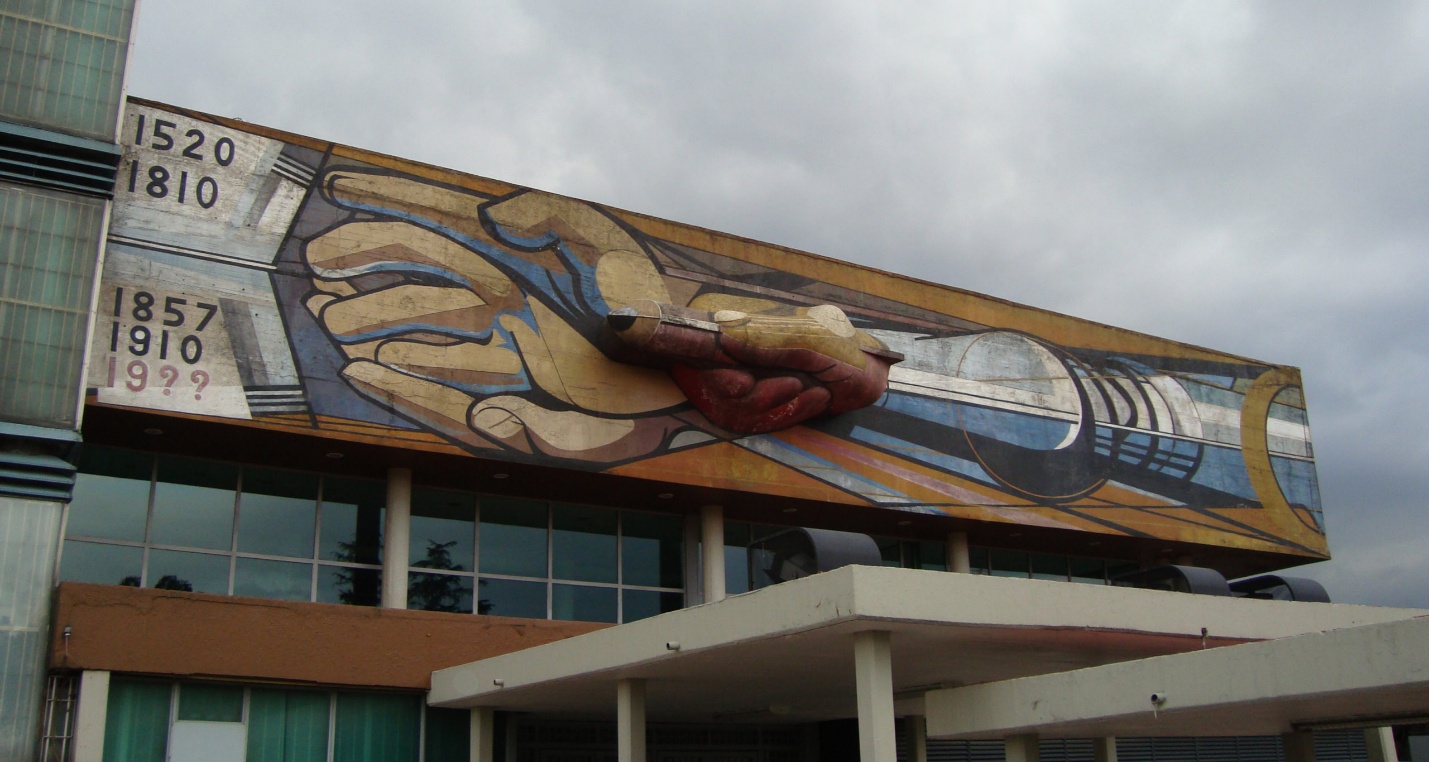
At the National Autonomous University of Mexico (UNAM) in Mexico City visitors enter the rectory (the main administration building), beneath an imposing three-dimensional arm emerging from a mural. Several hands, one with a pencil, charge towards a book, which lists critical dates in Mexico’s history: 1520 (the Conquest by Spain); 1810 (Independence from Spain); 1857 (the Liberal Constitution which established individual rights); and 1910 (the start of the Revolution against the regime of Porfirio Díaz). David Alfaro Siqueiros left the final date blank in Dates in Mexican History or the Right for Culture (1952–56), inspiring viewers to create Mexico’s next great historic moment.
The revolution
From 1910 to 1920 civil war ravaged the nation as citizens revolted against dictator Porfirio Díaz. At the heart of the Revolution was the belief—itself revolutionary—that the land should be in the hands of laborers, the very people who worked it. This demand for agrarian reform signaled a new age in Mexican society: issues concerning the popular masses—universal public education and health care, expanded civil liberties—were at the forefront of government policy.
Mexican muralism
At the end of the Revolution the government commissioned artists to create art that could educate the mostly illiterate masses about Mexican history. Celebrating the Mexican people’s potential to craft the nation’s history was a key theme in Mexican muralism, a movement led by Siqueiros, Diego Rivera, and José Clemente Orozco—known as Los tres grandes. Between the 1920s and 1950s, they cultivated a style that defined Mexican identity following the Revolution.
The muralists developed an iconography featuring atypical, non-European heroes from the nation’s illustrious past, present, and future—Aztec (Mexica) warriors battling the Spanish, humble peasants fighting in the Revolution, common laborers of Mexico City, and the mixed-race people who will forge the next great epoch, like in Siqueiros’s UNAM mural. Los tres grandes crafted epic murals on the walls of highly visible, public buildings using techniques like fresco, encaustic, mosaic, and sculpture-painting.
One of the earliest government commissions for a post-Revolution mural was for the National Preparatory School, a high school in Mexico City affiliated with UNAM. During the 1920s Los tres grandes and other artists completed works throughout the school’s expansive exteriors and interiors.
Destruction of the old order
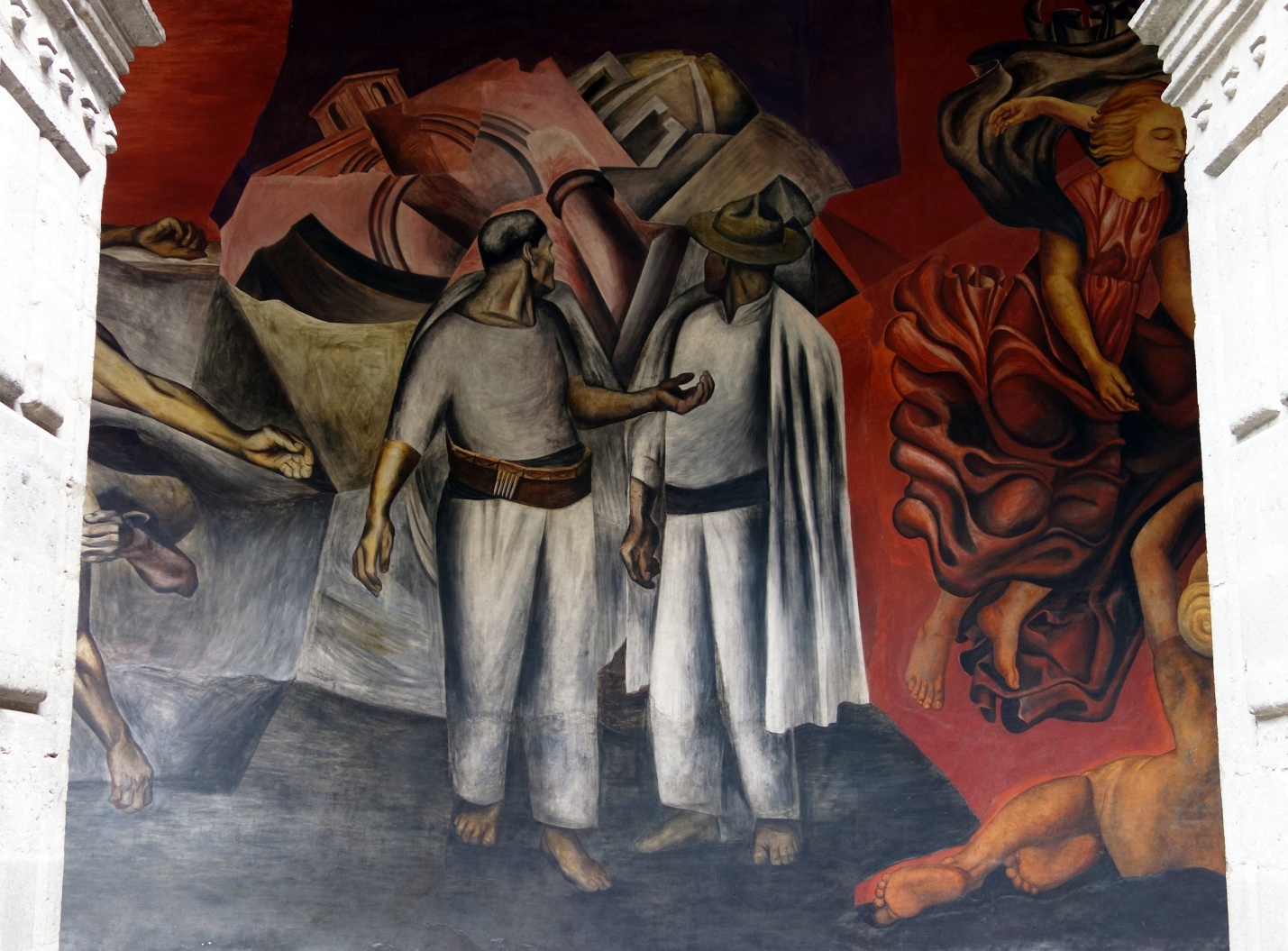
Orozco painted nearly two dozen murals at the school including Destruction of the Old Order, 1926. It depicts two figures in peasant attire who watch nineteenth-century neoclassical structures fracture into a Cubist-like pile, signaling the demise of the past. Just as Siqueiros’s UNAM murals anticipate an unrealized historic event, the “new order” implied in Orozco’s work is the world these men will encounter once they turn to face the viewer. These anonymous men are unlikely heroes given their modest attire, yet they represent a new age where the Revolution has liberated the masses from centuries of repression.
Murals for the Palace of Fine Arts
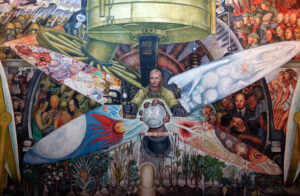
In 1934 the government inaugurated the Palace of Fine Arts Mexico City, which soon became the nation’s most important cultural institution. The Palace’s Museum, Mexico’s first art museum, opened the same year with works by two of Los tres grandes: Rivera’s Man, Controller of the Universe, 1934, a recreation of Man at the Crossroads (painted at Rockefeller Center and destroyed the year before), and Orozco’s Catharsis, 1934
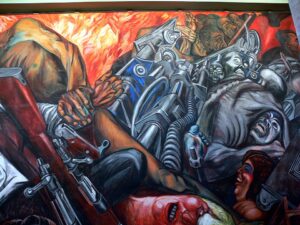
The title of Orozco’s painting dates to 1942, when an art historian speculated that the fire at the top of the composition symbolized catharsis, and thus “the only possibility of saving and purifying civilization” as it succumbed to the excesses of moral depravity. The laughing central figure jerks the viewer into an immoral world, where the malevolent aspects of modern life—senseless warfare, destructive technology, and prostitution—run rampant.
In Torment and Apotheosis of Cuauhtémoc, 1950–51, another mural at the Museum of the Palace of Fine Arts, Siqueiros explores the violent period of the Conquest. In this mural Spanish soldiers torture the Mexican tribal leader for information on the location of the treasure they seek. The Mexican motherland, symbolized by the blood-stained female figure, stretches her arms protectively over his still figure. Siqueiros’ penchant for sinewy limbs, showcased in the UNAM murals and exemplified here in the bodies of Cuauhtémoc and his praying companion, underscore the tension in this encounter.
The Mexican Revolution was a watershed moment in the twentieth century because it marked a true break from the past, ushering in a more egalitarian age. With its grand scale, innovative iconography, and socially relevant message, Mexican muralism remains a notable compliment to the Revolution. The way the muralists reoriented history, recovered lost stories, and drafted new narratives continues to stir audiences and inspire artists, like the Chicano muralists that emerged in the U.S. Southwest. The fact that their in-situ masterpieces can still be seen publicly in Mexico and beyond is a testament to their relevance, popularity, and the power of their didactic message.
The History of Mexico: Diego Rivera’s Murals at the National Palace
How is history told?
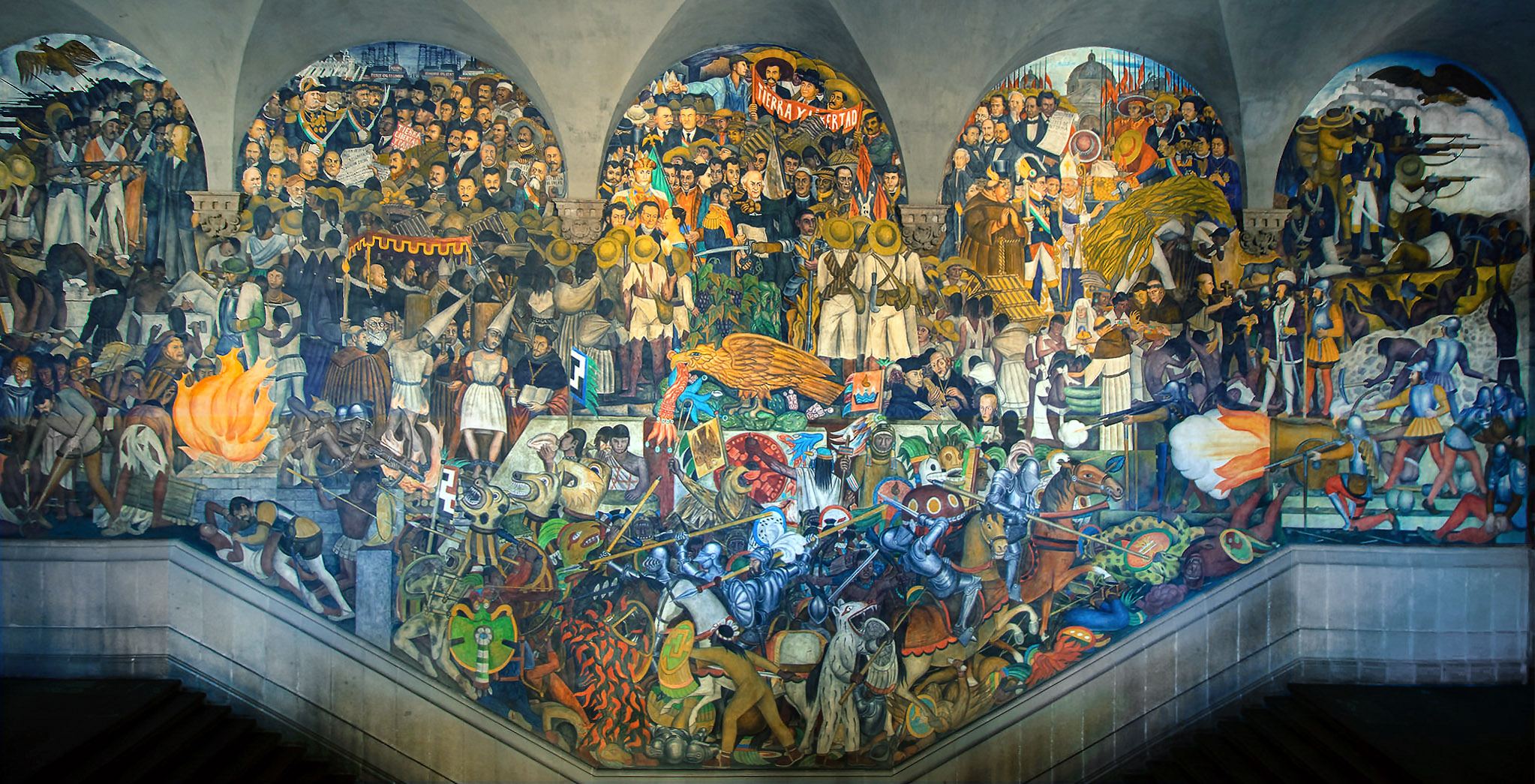
Typically, we think of history as a series of events narrated in chronological order. But what does history look like as a series of images? Mexican artist Diego Rivera responded to this question when he painted The History of Mexico, as a series of murals that span three large walls within a grand stairwell of the National Palace in Mexico City. In Rivera’s words, the mural represents “the entire history of Mexico from the Conquest through the Mexican Revolution . . . down to the ugly present.”[1]
In an overwhelming and crowded composition, Rivera represents pivotal scenes from the history of the modern nation-state, including scenes from the Spanish Conquest, the fight for independence from Spain, the Mexican-American war, the Mexican Revolution, and an imagined future Mexico in which a workers’ revolution has triumphed. Although this mural cycle spans hundreds of years of Mexican history, Rivera concentrated on themes that highlight a Marxist interpretation of history as driven by class conflict as well as the struggle of the Mexican people against foreign invaders and the resilience of Indigenous cultures.
A new national identity
In the immediate years following the Mexican Revolution (1910–1920), the newly formed government sought to establish a national identity that eschewed Eurocentrism (an emphasis on European culture) and instead heralded the Amerindian. The result was that Indigenous culture was elevated in the national discourse. After hundreds of years of colonial rule and the Eurocentric dictatorship of Porfirio Díaz, the new Mexican state integrated its national identity with the concept of indigenismo, an ideology that lauded Mexico’s past Indigenous history and cultural heritage (rather than acknowledging the ongoing struggles of contemporary Indigenous people and incorporating them into the new state governance).
José Vasconcelos, the new government’s Minister of Public Education, conceived of a collaboration between the government and artists. The result were state-sponsored murals such as those at the National Palace in Mexico City.
Why murals?
Rivera and other artists believed easel painting to be “aristocratic,” since for centuries this kind of art had been the purview of the elite. Instead they favored mural painting since it could present subjects on a large scale to a wide public audience. This idea—of directly addressing the people in public buildings—suited the muralists’ Communist politics. In 1922, Rivera (and others) signed the Manifesto of the Syndicate of Technical Workers, Painters, and Sculptors, arguing that artists must invest “their greatest efforts in the aim of materializing an art valuable to the people.”[2]
Rivera had to design his composition around the pre-existing built environment of the National Palace. Rivera painted in the historical buon fresco technique, in which the artist paints directly upon wet plaster that has been applied to a wall resulting in the pigment being permanently fused to the lime plaster. Such murals were common in pre-conquest Mexico as well as in Europe.
In the case of The History of Mexico, this meant creating a three-part allegorical portrayal of Mexico that was informed by the specific history of the site. Today the National Palace is the seat of executive power in Mexico, but it was built atop the ruins of the Aztec emperor Moctezuma II’s residence after the Spanish Conquest of the capital of Tenochtitlan in 1521. The site then served as the residence of the conquistador Hernán Cortés and later the Viceroy of New Spain until the end of the Wars of Independence in 1821. This site is a potent symbol of the history of conflict between Indigenous Aztecs and Spanish invaders.
The North Wall
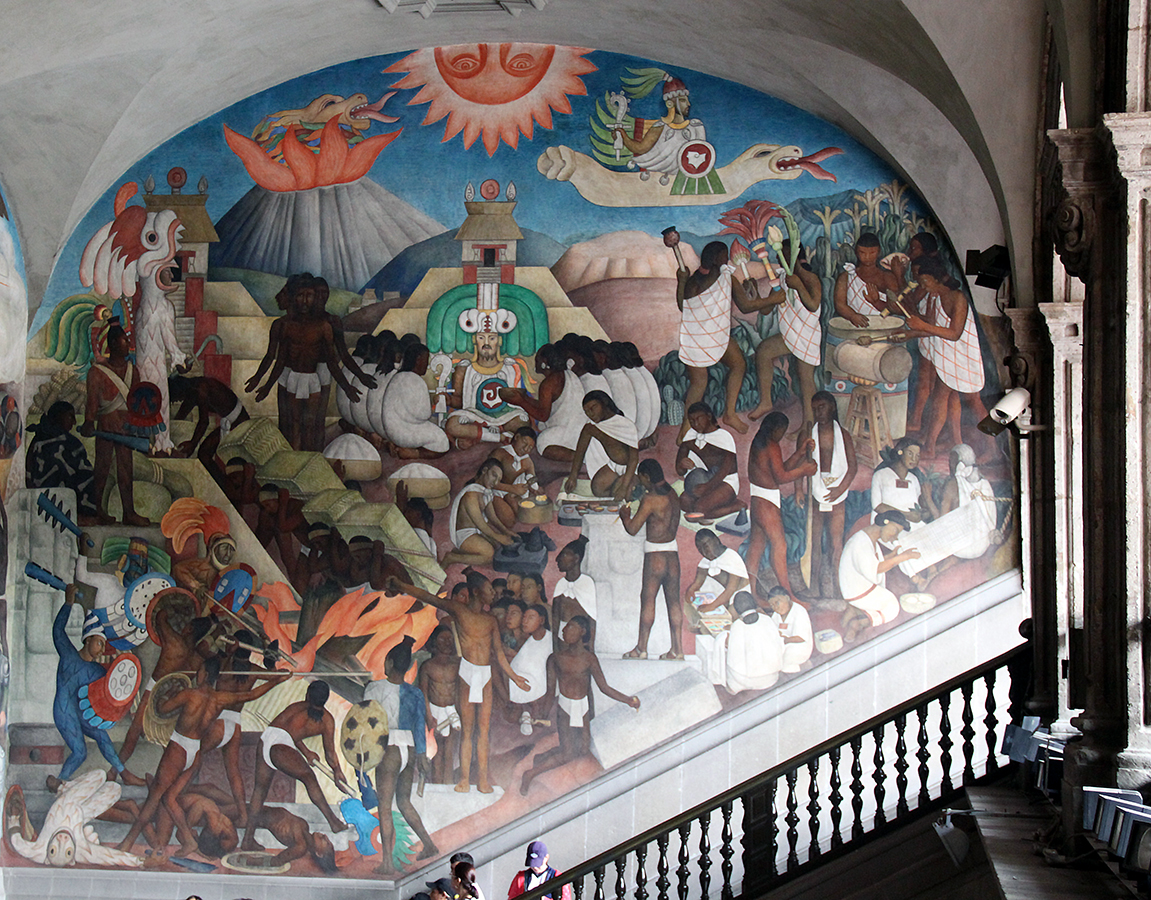
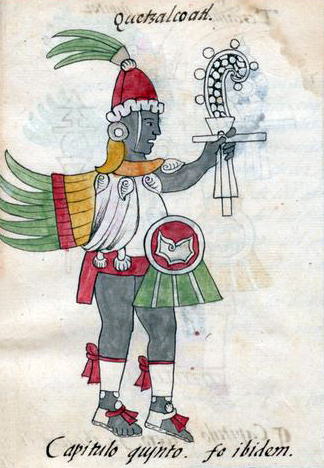
The Aztec World, the title of the mural on the North Wall, features Rivera’s first large-scale rendering of Mesoamerica before the Spanish invasion—here focused on the Aztecs (the Mexica). Rivera’s representation of the deity Quetzalcoatl (“feathered serpent”), seated in the center of the composition wearing a headdress of quetzal feathers—draws on imagery from colonial-era sources, in particular, an image of Quetzalcoatl from the Florentine Codex.
Against the backdrop of the Valley of Mexico (where Tenochtitlan and now Mexico City are located), Rivera renders a Mesoamerican pyramid and various aspects of Aztec life. He represents figures grinding maíz (corn) to make tortillas, playing music, creating paintings, sculpture, and leatherwork, and transporting goods for trade and imperial tribute.
Despite Rivera’s great admiration for pre-Conquest civilizations (he was a great collector of pre-Columbian art) he did not uncritically portray the Aztec world as utopian. In addition to rendering scenes of agriculture and cultural production, The Aztec World shows laborers building pyramids, a group resisting Aztec control, and scenes of the Aztecs waging the wars that created and maintained their empire. Rivera demonstrates the Marxist position that class conflict is the prime driver of history—here, even before the arrival of the Spaniards.
The West Wall
On the West Wall and in the center of the stairway, visitors are confronted with a chaotic composition titled From the Conquest to 1930. The wall is divided at the top by corbels from which spring five arches.
Across the top, In the outermost sections, Rivera represents the two nineteenth-century invasions of Mexico—by France and the United States respectively. From left to right, the three central sections depict: the dictatorship of Porfirio Díaz, figures associated with Independence and the Mexican Revolution, and the Constitution of 1857 (during the presidency of Benito Juárez) and the War of Reform. These historical events are somewhat distinguishable thanks to the arches that separate the scenes.
In the lower section of the mural however, there is no such distinction between, for example, scenes of the Spanish conquest of the Aztec empire, the subsequent destruction of Mesoamerican painted books (now called codices), the arrival of Christian missionaries, the destruction of pre-Columbian temples, and construction of new colonial structures—emphasizing the interrelated nature of these events.
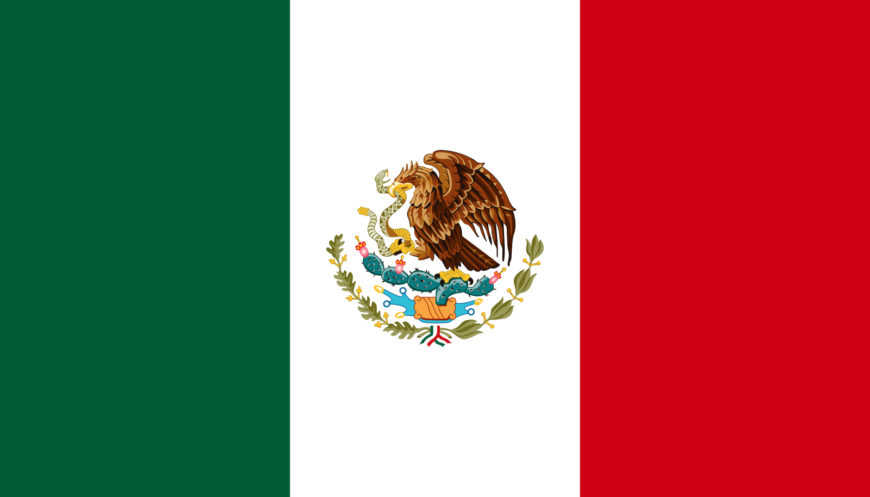
An eagle standing on a nopal cactus at the very center of the wall, mirrors the insignia at the center of the Mexican flag. These historical scenes have been compressed and flattened on the picture surface resulting in a dense visual mosaic of intertwining figures and forms. The lack of deep space in the composition makes it difficult to distinguish between different scenes, and results in an allover composition without a central focus or a clear visual pathway. This cacophony of historical figures and flurried action overwhelms viewers as they walk up the stairs.
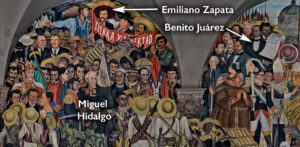
Given the breadth of the wall space, Rivera had to make critical decisions about which historical figures and narratives to include. Rivera’s formal choices—the flattening of the pictorial space, the nonlinear organization, and the monumental scale of the figures—create a non-hierarchical composition. These formal choices support Rivera’s decision to represent not just the historically well-known and recognizable figures, such as the independence fighter Miguel Hidalgo, revolutionary Emiliano Zapata (who holds a flag with the words tierra y libertad, or land and liberty), or the first Indigenous president Benito Juárez, but also anonymous workers, laborers, and soldiers. As Rivera later noted,
“Each personage in the mural was dialectically connected with his neighbors, in accordance with his role in history. Nothing was solitary; nothing was irrelevant.” [3]
The artist’s portrayal of the interconnection of social struggle throughout Mexico’s history and the non-hierarchical representation of the historical figures reflects his Marxist perspective.
The South Wall
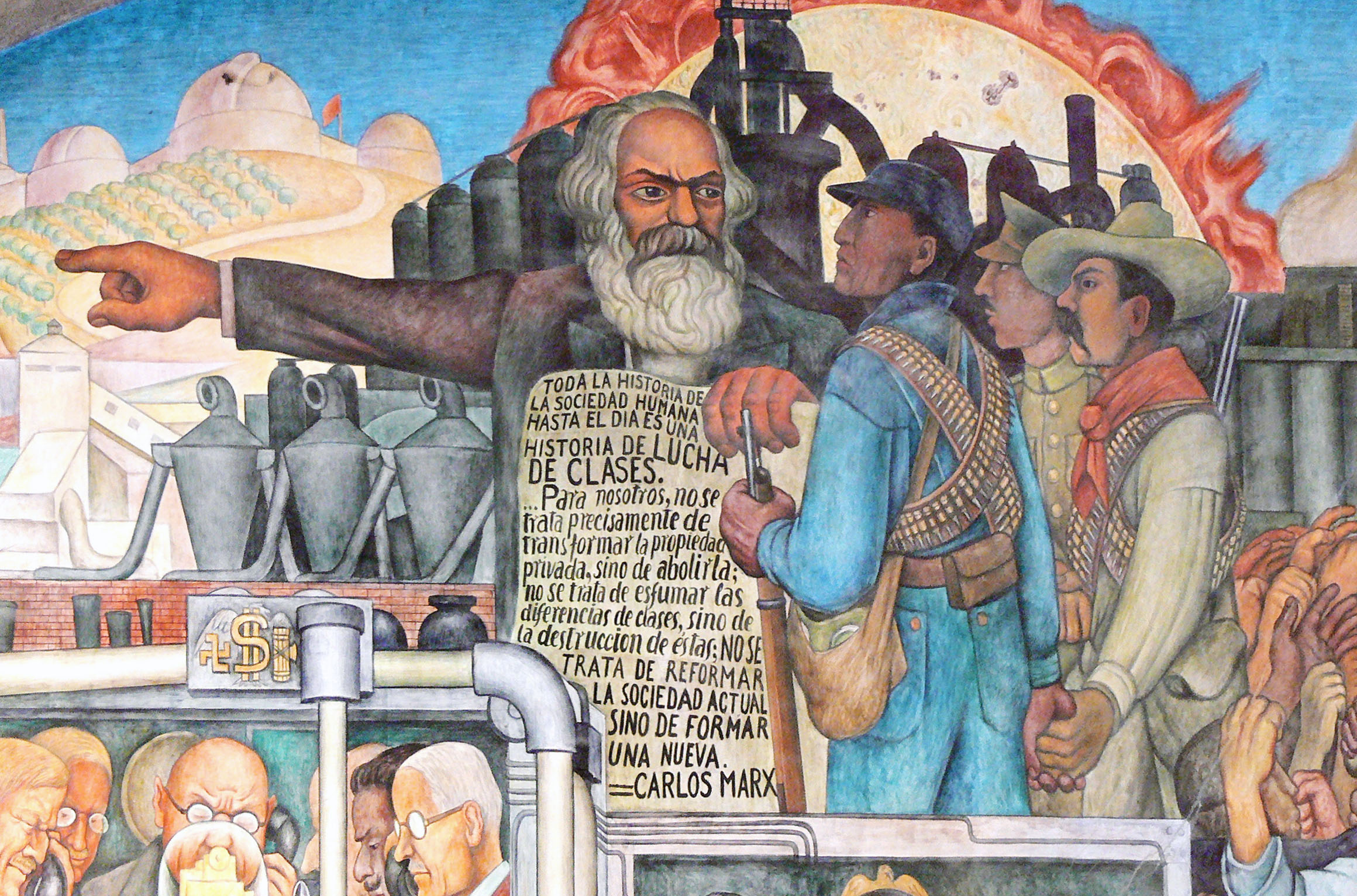
Rivera’s politics become more evident on the South Wall, titled Mexico Today and Tomorrow, which was painted years later in 1935. Mexico Today and Tomorrow depicts contemporary class conflict between industrial capitalism (using machinery and with a clear division of labor) and workers around the world.
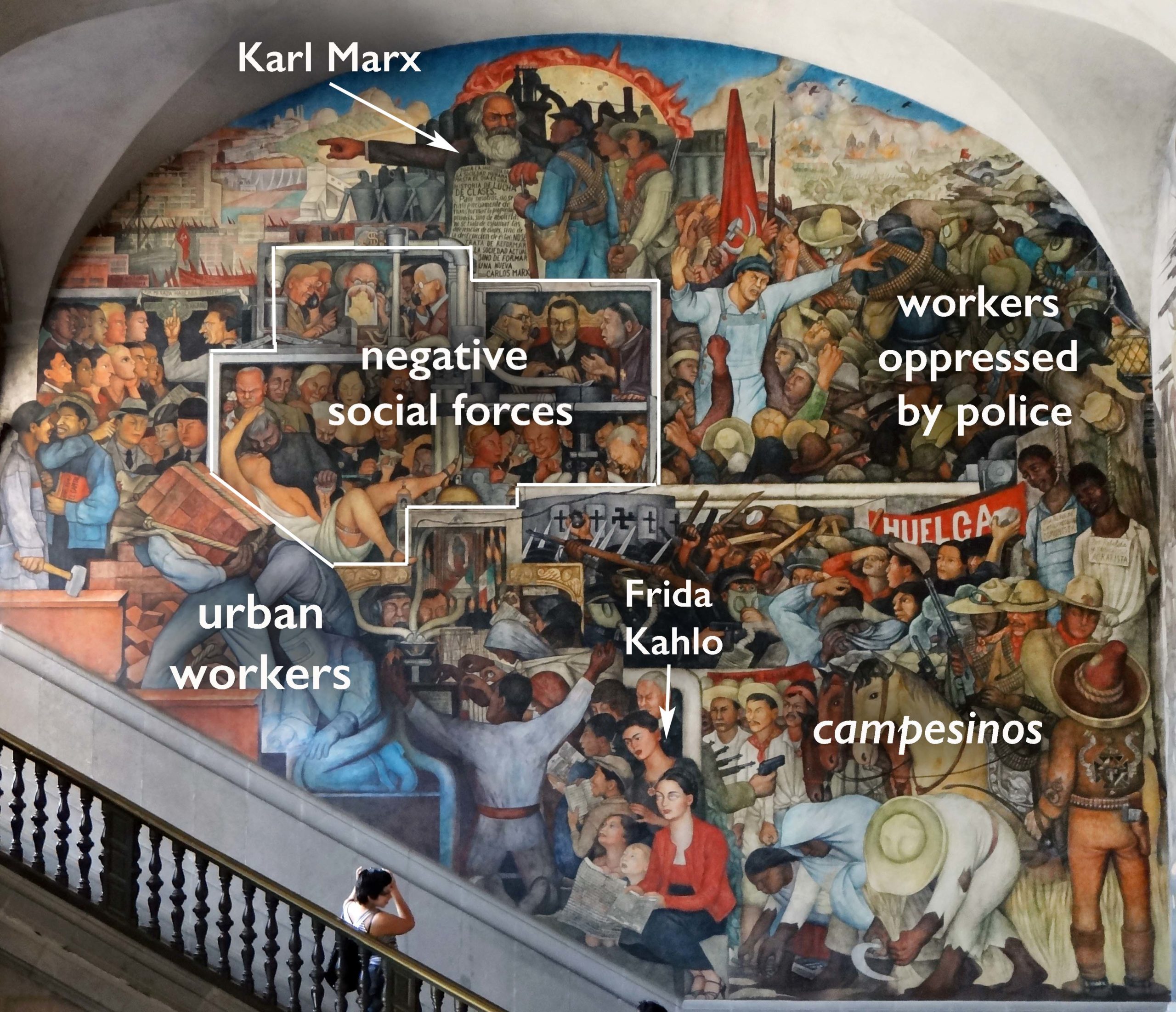
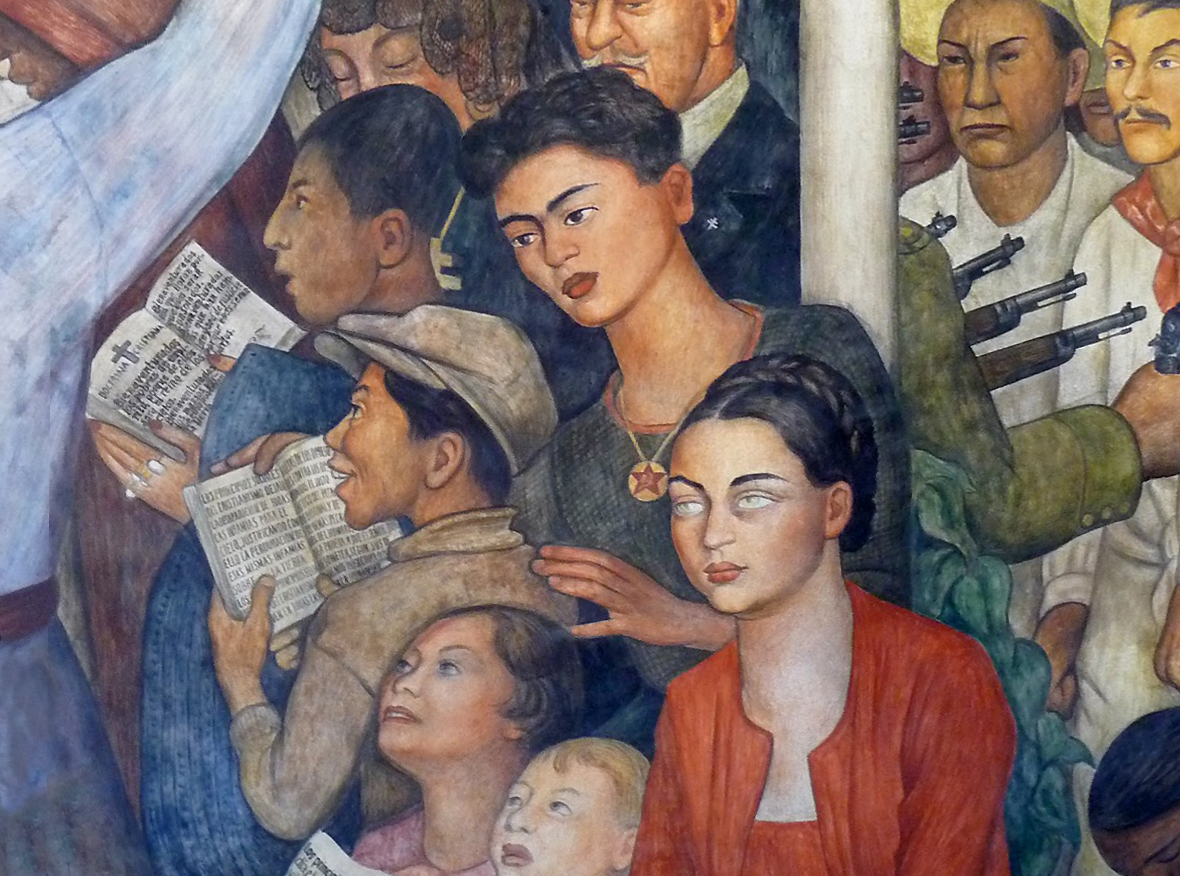
The narrative begins in the lower right and progresses upward in a boustrophedonic pattern (here, a reverse S-curve), similar to the compositional layout of pre-Conquest Mesoamerican painted manuscripts (such as the Codex Nuttall). In the lower section Rivera depicts campesinos (peasant farmers) laboring, urban workers constructing buildings, and his wife Frida Kahlo with a number of school children who are being taught as part of an expansion of rural education after the Revolution.
Following the narrative up, Rivera represents—using a pictorial structure unique to this wall—negative social forces such as high-society figures, corrupt and reactionary clergy, and the invasion of foreign capital—here represented by contemporaneous capitalists such as John D. Rockefeller, Jr. who was attempting to secure access to Mexican oil at the time.
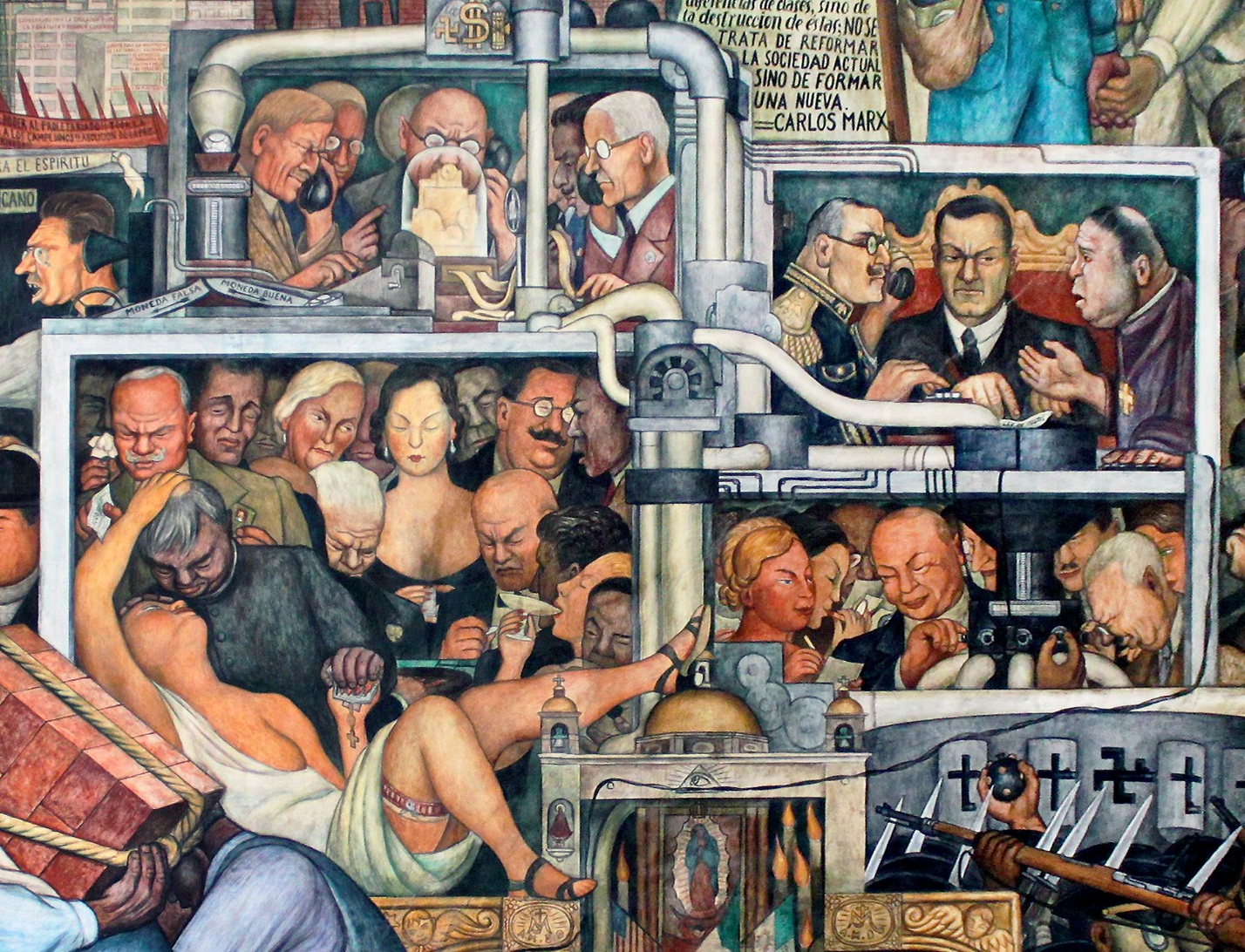
To the right, workers are being oppressed by police wearing gas masks, yet just above this scene a figure in blue emerges from a mass of uprising workers, their fists raised in the air against the backdrop of downtown Mexico City. The narrative culminates in a portrait of Karl Marx who is shown pointing wearied workers and campesinos towards a “vision of a future industrialized and socialized land of peace and plenty.”[4] Unlike the non-linear composition of the West Wall, here Rivera expresses his vision for the future of Mexico, a winding path that leaves oppression and corruption behind.
An alternative history
So what type of history has Rivera told us and how did he tell it? Is he the sole narrator? The History of Mexico was painted in a governmental building as part of a campaign to promote Mexican national identity, and yet, the mural cycle is not necessarily didactic. Rivera could have created a much simpler representation of Mexican history, one that directed the viewer’s experience more explicitly. Instead, the viewer’s response to this visual avalanche of history is to play an active role in the interpretation of the narrative. The lack of illusionistic space and the flattening of forms creates a composition that allows the viewer to decide where to look and how to read it. Moreover, the experiential and sensorial act of moving up the stairs allows the viewer to perceive the murals from multiple angles and vantage points. There is no “right way” to read this mural because there is no clear beginning or end to the story. The viewer is invited to synthesize the narrative to construct their own history of Mexico.
Frida Kahlo, The Two Fridas (Las dos Fridas)
Frida Kahlo’s paintings reflect an extended examination of her personal and cultural identity, depicted in a meticulous and realistic style.
Indelible marks
Facial hair indelibly marks the self-portraits of Mexican artist Frida Kahlo. In an era when women still wore elaborate hairstyles, hosiery, and attire, Kahlo was a rebellious loner, often dressed in Indigenous clothing. Moreover, she lived as an artist during a period when many middle-class women sacrificed their ambitions to live entirely in the domestic sphere. Kahlo flouted both conventions of beauty and social expectations in her self-portraits. These powerful and unflinching self-images explore complex and difficult topics including her culturally mixed heritage, the harsh reality of her medical conditions, and the repression of women.
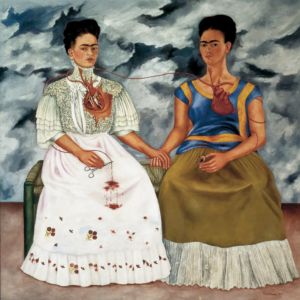
The double self-portrait The Two Fridas, 1939 features two seated figures holding hands and sharing a bench in front of a stormy sky. The Fridas are identical twins except in their attire, a poignant issue for Kahlo at this moment. The year she painted this canvas she was divorced from Diego Rivera, the acclaimed Mexican muralist. Before she married Rivera in 1929, she wore the modern European dress of the era, evident in her first self-portrait (left) where she dons a red velvet dress with gold embroidery. With Rivera’s encouragement, Kahlo embraced attire rooted in Mexican customs.
Dress
In her second self-portrait (left) her accessories reference distinct periods in Mexican history (her necklace is a reference to the pre-Columbian Jadite of the Aztecs and the earrings are Spanish colonial in style) while her simple white blouse is a nod to peasant women.
The portraits from the 1930s reflect Kahlo’s growing penchant for Indigenous attire and hair-styling, as is evident in Frieda and Diego Rivera, 1931 and The Two Fridas. Yet Kahlo never abandoned dressing her subjects and herself in mainstream, European dress; her female relatives wear non-Indigenous clothing in My Grandparents, My Parents, and I (Family Tree), 1936 (below).
In this painting, the bridal dress Kahlo’s mother wears is reminiscent of the white, stiff-collared dress the artist wears in The Two Fridas. Indeed, the grotesque view into each woman’s insides is heightened by the virginal whiteness of both dresses.
In her brief lifetime, Kahlo painted about two hundred works of art, many of which are self-portraits. With the exception of a few family trees, the double-portrait with Rivera and The Two Fridas represents a departure in her oeuvre. If a self-portrait by definition is a painting of one’s self, why would Kahlo paint herself twice? One way to answer this question is to examine The Two Fridas as a bookend to the 1931 portrait, Frieda and Diego Rivera. Though this painting was meant to celebrate the birth of their union, their tentative grasp seems to reflect Kahlo’s misgivings about her husband’s fidelity. By contrast, the double self-portrait, though laden with suffering, exhibits resilience.
Anatomy of Two Fridas
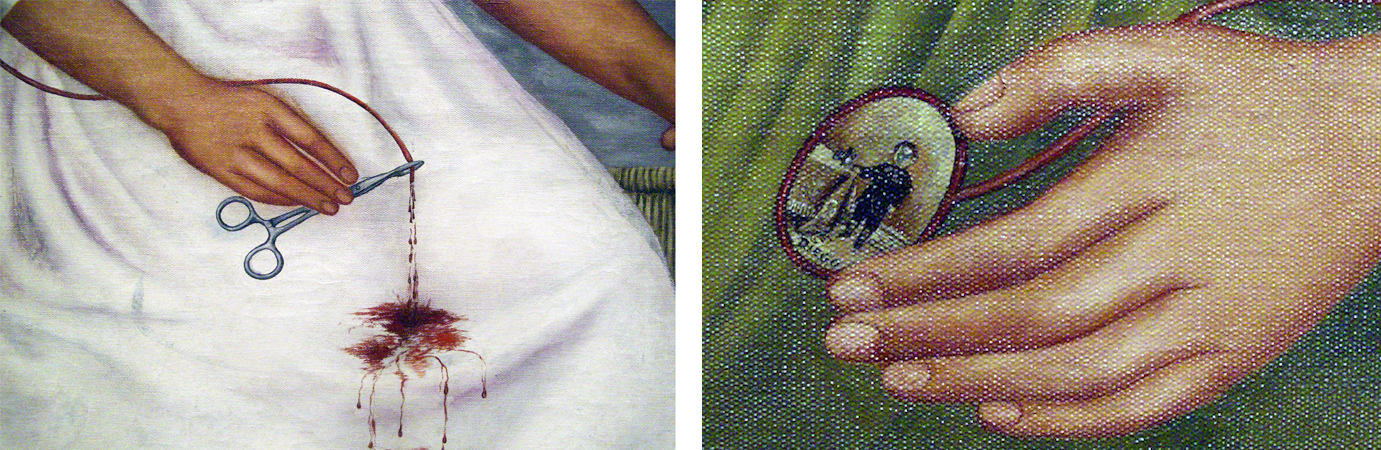
The two Fridas clasp hands tightly. This bond is echoed by the vein that unites them. Where one is weakened by an exposed heart, the other is strong; where one still pines for her lost love (as underscored by the vein feeding Rivera’s miniature portrait), the other clamps down on that figurative and literal tie with a hemostat.
Human anatomy is often graphically exposed in Kahlo’s work, a topic she knew well after a childhood bout with polio deformed her right leg and a bus accident when she was eighteen years old left her disabled and unable to bear children. She would endure 32 operations as a result. Kahlo utilized blood as a visceral metaphor of union, as in the 1936 family portrait (above) where she honors her lineage through these bloody ties. She returns to this metaphor in The Two Fridas though with the added impact of two hearts, both vulnerable and laid bare to the viewer as a testament to her emotional suffering.
“I am the person I know best”
Photographs by artists within her milieu, like Manuel Alvarez Bravo and Imogen Cunningham, confirm that Kahlo’s self-portraits were largely accurate and that she avoided embellishing her features. The solitude produced by frequent bed rest—stemming from polio, her near-fatal bus accident, and a lifetime of operations—was one of the cruel constants in Kahlo’s life. Indeed, numerous photographs feature Kahlo in bed, often painting despite restraints. Beginning in her youth, in order to cope with these long periods of recovery, Kahlo became a painter. Nevertheless, the isolation caused by her health problems was always present. She reflected, “I paint self-portraits because I am so often alone, because I am the person I know best.”
Conclusion
In Mexico and the United States, avant-garde artists reworked European modernist styles to fit their own cultural contexts. In Mexico, artists like Frida Kahlo and Diego Rivera blended the cultural heritage of Pre-Columbian Mesoamerica with elements of Surrealism and Cubism. In the United States, artists like Georgia O’Keeffe and Jacob Lawrence brought together components of abstraction and Cubism in their works. Within the turbulent cultural context of 1900-1945, artists in the United States and Mexico used the aesthetics of modern art to communicate about larger social issues and advocate for change. The early 20th century began to establish North America as an international artistic center. This would be further emphasized during and after World War II.
Citation and Licensing
The following sections were written by Chelsea Wright and licensed CC BY-NC-SA 4.0:
- Chapter Overview and Introduction
- Focus artwork and term list compiled by Chelsea Wright
- Practicing Visual Analysis
- Conclusion
The following articles from Smarthistory licensed CC BY-NC-SA 4.0 were remixed and adapted for the chapter:
- Dr. Kelly Enright, “1898–1945 in the United States, an introduction,” in Smarthistory, June 25, 2024.
- Dr. Stephanie Chadwick, “291—Little Galleries of the Photo Secession,” in Smarthistory, August 20, 2020.
- Smarthistory, “Alfred Stieglitz,” in Smarthistory.
- Dr. Kris Belden-Adams, “Alfred Stieglitz, The Steerage,” in Smarthistory, August 9, 2015.
- Smarthistory, “Georgia O’Keeffe,” in Smarthistory.
- Dr. Jennifer Padgett, Crystal Bridges Museum of American Art and Dr. Steven Zucker, “Georgia O’Keeffe, Radiator Building—Night, New York,” in Smarthistory, October 4, 2022.
- Smarthistory, “Harlem Renaissance,” in Smarthistory.
- Smarthistory, “Aaron Douglas,” in Smarthistory.
- Timothy Anglin Burgard, Fine Arts Museums of San Francisco and Dr. Beth Harris, “Aaron Douglas, Aspiration,” in Smarthistory.
- Smarthistory, “Jacob Lawrence,” in Smarthistory.
- Dr. Steven Zucker and Dr. Beth Harris, “Jacob Lawrence, The Migration Series,” in Smarthistory, August 9, 2015.
- Smarthistory, “Social Realism,” in Smarthistory.
- Smarthistory, “Grant Wood,” in Smarthistory.
- Dr. Beth Harris and Dr. Steven Zucker, “Grant Wood, American Gothic,” in Smarthistory, December 4, 2015.
- Smarthistory, “Hale Woodruff,” in Smarthistory.
- Dr. Leo G. Mazow and Dr. Beth Harris, “Hale Woodruff, The Banjo Player,” in Smarthistory, December 1, 2021.
- Dr. Doris Maria-Reina Bravo, “Mexican muralism: Los Tres Grandes—David Alfaro Siqueiros, Diego Rivera, and José Clemente Orozco,” in Smarthistory, August 9, 2015.
- Megan Flattley, “The History of Mexico: Diego Rivera’s Murals at the National Palace,” in Smarthistory, September 22, 2020.
- Smarthistory, “Frida Kahlo,” in Smarthistory.
- Dr. Doris Maria-Reina Bravo, “Frida Kahlo, The Two Fridas (Las dos Fridas),” in Smarthistory, August 9, 2015.
- Diego Rivera, My Art, My Life: An Autobiography (New York: Dover Publications, 1991), pp. 94–95. ↵
- “Manifesto of the Syndicate of Technical Workers, Painters, and Sculptors,” published in Alejandro Anreus, et.al, Mexican Muralism : A Critical History (Berkeley: University of California Press, 2012) pp. 319–321. Signed by Diego Rivera, Davíd Alfaro Siqueiros, Xavier Guerrero, Fermín Revueltas, José Clemente Orozco, Ramón Alva Guadarrama, Germán Cueto, and Carlos Mérida and published in the journal El Machete in June 1924. ↵
- Diego Rivera, My Art, My Life: An Autobiography, pp. 100–101. ↵
- Diego Rivera, My Art, My Life: An Autobiography, p. 131. ↵