
Romanticism and Realism
Chapter Overview and Introduction
In the early 19th century, the Neoclassical style was still prominent, particularly under Napoleon’s authority and the stylistic dominance of Jacques-Louis David. However, two new styles developed in the early to mid-19th century in rejection of the cool logic of the Neoclassical: Romanticism and Realism. The styles of Romanticism and Realism correspond to major historical and societal shifts in the 19th century (1800-1900). The status of the artist began to change and the concept of “modern” emerged. Romanticism as a movement introduced the theme of social justice into the visual arts along with new ways of representing the natural world. In the mid-19th century, Realism turned to focus on labor and the working class. With Realism, the avant-garde was born and new forms of subject matter and technique emerged, including American Realism. The 19th century also introduced the revolutionary medium of photography.
Focus Artworks
- Jean-Auguste-Dominique Ingres, Napoleon on his Imperial Throne, 1806, oil on canvas
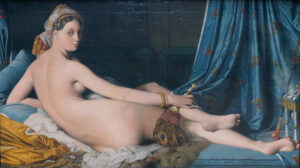
- Jean-Auguste-Dominique Ingres, La Grande Odalisque, 1814, oil on canvas
- Eugène Delacroix, Liberty Leading the People (July 28, 1830), September–December 1830, oil on canvas
- Théodore Gericault, Raft of the Medusa, 1818-1819, oil on canvas
- Francisco Goya, Plate 43, The sleep of reason produces monsters from Los Caprichos, 1799, etching, aquatint, drypoint, and burin
- Francisco Goya, The Third of May 1808 in Madrid or “The Executions,” 1814, oil on canvas
- Joseph Mallord William Turner, The Slave Ship, 1840, oil on canvas
- Gustave Courbet, The Stone Breakers, 1849, oil on canvas
- Édouard Manet, Olympia, 1863, oil on canvas
- Joseph Nicéphore Niépce, View from the Window at Gras, 1826, heliograph
- Henry Ossawa Tanner, The Banjo Lesson, 1893, oil on canvas
Term List
- Romanticism
- Napoleonic Wars
- Odalisque
- Orientalism
- Poussinists
- Rubenists
- Aquatint
- Sublime
- Beautiful
- Picturesque
- Realism
- Industrial Revolution
- The Communist Manifesto
- Modern
- Capitalism
- Avant-garde
- Photography
- Daguerreotype
- Calotype
- Collodion
- Pre-Raphaelites
Jean-Auguste-Dominique Ingres, Napoleon on His Imperial Throne
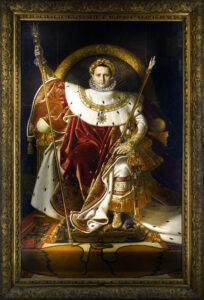
Napoleon, art, and politics
Few world leaders have had a better understanding of the ways in which visual art can do political work on their behalf than did Napoleon Bonaparte. From the time he ascended to power during the French Revolution until his ultimate removal from office in 1815, Napoleon utilized art (and artists) to speak to his political (and sometimes his military) might. One of the best-known images that serves this exact end is Jean-Auguste-Dominique Ingres’s 1806 painting Napoleon on His Imperial Throne. In this painting, Ingres shows Napoleon not only as an emperor of the France, but almost as if he were a divine ruler.
One could say that with Napoleon’s conquest of much of Europe, the old power centers of the church and the monarchy were replaced by more modern, more rational administrative systems. Though he ultimately declared himself emperor (1804), Napoleon wrote a code of laws and dissolved many monasteries and religious institutions. This was the culmination of anticlerical sentiment that was apparent during the Revolution, when so much religious art (associated as it was with the monarchy), was defaced and destroyed. The revolutionaries also looted collections and took control of historic and sacred sites and the Louvre (once the royal palace) was remade as a public museum. Napoleon also confiscated (and just outright looted) art from across Europe and brought many of the finest works to Paris. Much, though not all of this, was returned when he was defeated.
Transforming Napoleon
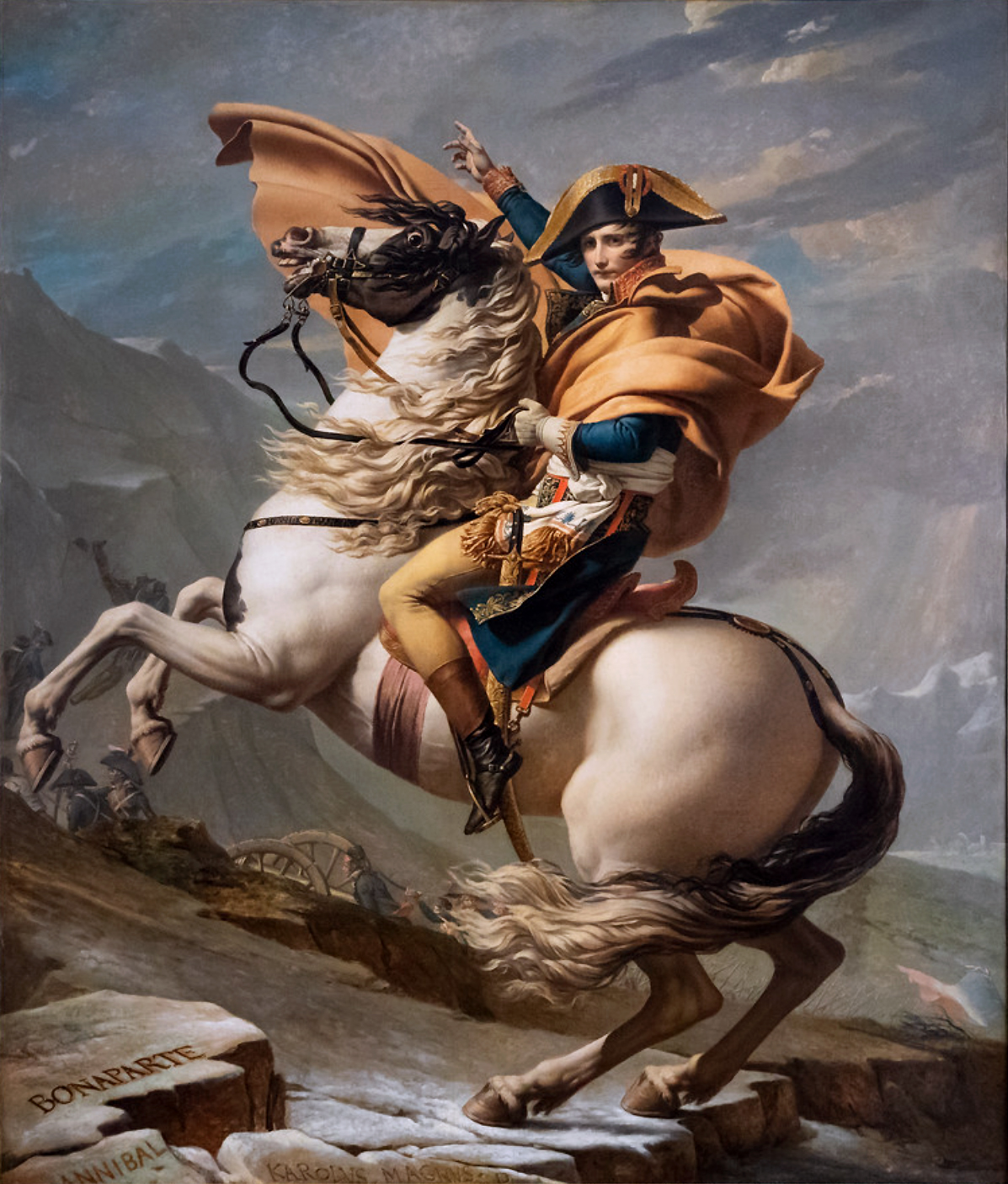
Shortly after the turn of the 19th century, Ingres was one of the rising stars and fresh voices of the French Neoclassical movement, an artistic style that was in part founded by Ingres’s prestigious teacher, Jacques-Louis David. By 1806, David had painted Napoleon many times. Two of the most famous of these works are Napoleon Crossing the Alps and The Coronation of Napoleon, the latter, a painting that is contemporary with Ingres’s portrait. In both of these images, David went out of his way to glorify his patron. This, too, was one of Ingres’s primary goals, and the portraitist utilized furniture, attire, and setting to transform Napoleon from a mere mortal to a powerful god.
Throne and armrest
Napoleon sits on an imposing, round-backed, and gilded throne, one that is similar to those that God sits upon in Jan van Eyck’s Flemish masterwork, the Ghent Altarpiece. It’s worth noting that, as a result of the Napoleonic Wars, the central panels of the Ghent Altarpiece, which include the image of God upon a throne, were in the Musée Napoléon (now the Louvre) when Ingres painted this portrait. The armrests in Ingres’s portrait are made from pilasters that are topped with carved imperial eagles and highly polished ivory spheres.
Rug
A similarly spread-winged imperial eagle appears on the rug in the foreground. Two cartouches can be seen on the left-hand side of the rug. The uppermost is the scales of justice (some have interpreted this as a symbol for the zodiac sign for Libra), and the second is a representation of Raphael’s Madonna della Seggiola, an artist and painting Ingres particularly admired.
Crest
One final ancillary element should be mentioned. On the back wall over Napoleon’s left shoulder is a partially visible heraldic shield. The iconography for this crest, however, is not that of France, but is instead Italy and the Papal States. This visually ties the Emperor of the French to his position—since 1805—as the King of Italy.
It is not only the throne that speaks to rulership. He unblinkingly faces the viewer. In addition, Napoleon is bedazzled in attire and accouterments of his authority. He wears a gilded laurel wreath on his head, a sign of rule (and more broadly, victory) since classical times.
In his left hand, Napoleon supports a rod topped with the hand of justice, while with his right hand he grasps the scepter of Charlemagne. Indeed, Charlemagne was one of the rulers Napoleon most sought to emulate (one may recall that Charlemagne’s name was incised on a rock in David’s earlier Napoleon Crossing the Alps). An extravagant medal from the Légion d’honneur hangs from the Emperor’s shoulders by an intricate gold and jewel-encrusted chain.
Although not immediately visible, a jewel-encrusted coronation sword hangs from his left hip. The reason why the sword—one of the most recognizable symbols of rulership—can hardly be seen is because of the extravagant nature of Napoleon’s coronation robes. An immense ermine collar is under Napoleon’s Légion d’honneur medal. Ermine—a kind of short-tailed weasel—have been used for ceremonial attire for centuries and are notable for their white winter coats that are accented with a black tip on their tail. Thus, each black tip on Napoleon’s garments represents a separate animal. Clearly, then, Napoleon’s ermine collar—and the ermine lining under his gold-embroidered purple velvet robes—has been made with dozens of pelts, a certain sign of opulence. The purple color of the garment was a deliberate choice, and has a long tradition as a hue restricted for imperial use. Indeed, Roman emperors had the exclusive right to wear purple, and it was through this tradition that Jesus also came to wear violet robes. All these elements—throne, scepters, sword, wreath, ermine, purple, and velvet—speak to Napoleon’s position as Emperor.
Position
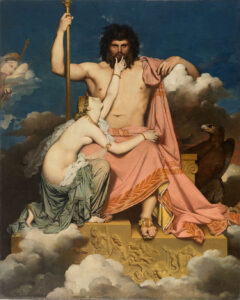
But it is not only what Napoleon wears. It is also how the emperor sits. In painting this portrait, Ingres borrowed from other well-known images of powerful male figures. Perhaps the most notable was a long-since-destroyed but still well-known image of Zeus (the ancient Greek God, king of the gods of Mount Olympus) that Phidias, one of the most famous Greek sculptors, made around 435 B.C.E. This “type” showed Zeus seated, frontal, and with one arm raised while the other was more at rest. Indeed, this is the posture Jupiter takes in a slightly later Ingres painting, Jupiter and Thetis. Thus, Ingres is working in yet another rich visual tradition and, in doing so, seems to remove Napoleon Bonaparte from the ranks of the mortals of the earth and transforms him into a Greek or Roman god of Mount Olympus. Never once accused of modesty, there is no doubt that Napoleon approved of such a comparison.
Looking at Ingres’s Napoleon on His Imperial Throne is a visually overwhelming experience. Its colossal size (it measures 260 x 163 cm) and Neoclassical precision eloquently speak to Napoleon’s political authority and military power. The low eye level—about that of Napoleon’s knees—also indicates that the viewer is looking up at the seated ruler, as if kneeling before him. The sum total of this painting is not just the coronation of Napoleon but almost his divine apotheosis. Ingres shows him not just as a ruler, but as an omnipotent immortal.
Painting colonial culture: Ingres’s La Grande Odalisque
A quick study
Jean-Auguste-Dominique Ingres was an artist of immense importance during the first half of the nineteenth century. Ingres was a quick study. In 1797, at the tender age of 16 years, he won the Académie Royale de Peinture, Sculpture et Architecture in Toulouse first prize in drawing. Clearly destined for great things, Ingres packed his trunks less than six months later and moved to Paris to begin his instruction in the studio of Jacques-Louis David, the most strident representative of the Neoclassical style. David stressed to those he instructed the importance of drawing and studying from the nude model. In the years that followed, Ingres not only benefitted from David’s instruction—and the prestige and caché that such an honor bestowed—but also learned from many of David’s past students who frequented their former teacher’s studio.
The Rome Prize—a bright future
The Prix de Rome—the Rome Prize—was the most prestigious fellowship that the French government awarded to a student at the Paris École des Beaux-Arts (School of Fine Arts), the leading art school in France from its founding in 1663 until it was finally dissolved in 1968. The recipient of the Prix de Rome was provided with a living stipend, studio space at the French Academy in Rome, and the opportunity to immerse themselves in Rome’s classical ruins and the works of Renaissance and Baroque masters. It promised to be a great five years for any aspiring artist. Joseph-Marie Vien, David’s own teacher, had won the award in 1743. David won the award in 1774—after four unsuccessful attempts. Ingres was formally admitted to the painting department of the École des Beaux-Arts in October 1799. The following year—in only his first attempt—Ingres tied for second place. In 1801, his painting of The Ambassadors of Agamemnon in the Tent of Achilles won him the Prix de Rome. He turned 21 years old that August. Ingres had a bright future indeed.
Hierarchy of subjects
The Prix de Rome—to say nothing of the instruction Ingres received within David’s studio and at the École des Beaux-Arts—reinforced the hierarchy of the subjects of painting that had been a foundational element of French art instruction for more than a century. Artists with the greatest skill aspired to complete grand manner history paintings. These were immense compositions often depicting narratives from the classical past or from the Jewish and Christian Bibles. In addition to being large—and expensive—these works allowed the most accomplished and intellectually engaged artists to provide the art-viewing public with an important moral message—an exemplum virtutis (an example of virtue). David’s 1784 masterwork Oath of the Horatii is one such example.
The nude (and not the classical past)
By 1808, Ingres was beginning to walk on both sides of the neoclassical/romantic divide. In few works is a Neoclassical style fused with a romantic subject matter more clearly than in Ingres’s 1814 painting La Grande Odalisque. Ingres completed his time at the French Academy in Rome in 1810. Rather than immediately return to Paris however, he remained in the Eternal City and completed several large-scale history paintings. In 1814 he traveled to Naples and was employed by Caroline Murat, the Queen of Naples (who also happened to be Napoleon Bonaparte’s sister). She commissioned La Grande Odalisque, a composition that was intended to be a pendant to his earlier composition, Sleeper of Naples.
At first glance, Ingres’s subject matter is of the most traditional sort. Certainly, the reclining female nude had been a common subject matter for centuries. Ingres was working within a visual tradition that included artists such as Giorgione (Sleeping Venus, 1510), Titian (Venus of Urbino, 1538) and Velazquez (Rokeby Venus, 1647-51). But the titles for all three of those paintings have one word in common: Venus. Indeed, it was common to cloak paintings of the female nude in the disguise of classical mythology.

Ingres (and Goya, who was working within a similar vein with his La Maja Desnuda) refused to disguise who and what his female figure was. She was not the Roman goddess of love and beauty. Instead, she was an odalisque, a concubine who lived in a harem and existed for the sexual pleasure of the sultan.
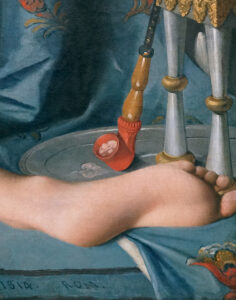
In his painting La Grande Odalisque (below), Ingres transports the viewer to the Orient, a far-away land for a Parisian audience in the second decade of the nineteenth century (in this context, “Orient” means Near East more so than the Far East). The woman—who wears nothing other than jewelry and a turban—lies on a divan, her back to the viewer. She seemingly peeks over her shoulder, as if to look at someone who has just entered her room, a space that is luxuriously appointed with fine damask and satin fabrics. She wears what appears to be a ruby and pearl encrusted broach in her hair and a gold bracelet on her right wrist. In her right hand she holds a peacock fan, another symbol of affluence, and another piece of metalwork—a facedown bejeweled mirror, perhaps?—can be seen along the lower left edge of the painting.
Along the right side of the composition we see a hookah, a kind of pipe that was used for smoking tobacco, hashish and opium. All of these Oriental elements—fabric, turban, fan, hookah—did the same thing for Ingres’s odalisque as Titian’s Venetian courtesan being labeled “Venus”—that is, it provided a distance that allowed the (male) viewer to safely gaze at the female nude who primarily existed for his enjoyment.
Orientalism
Snake charmers, carpet vendors, and veiled women may conjure up ideas of the Middle East, North Africa, and West Asia, but they are also partially indebted to Orientalist fantasies. To understand these images, we have to understand the concept of Orientalism, beginning with the word “Orient” itself. In its original medieval usage, the “Orient” referred to the “East,” but whose “East” did this Orient represent? East of where?
We understand now that this designation reflects a Western European view of the “East,” and not necessarily the views of the inhabitants of these areas. We also realize today that the label of the “Orient” hardly captures the wide swath of territory to which it originally referred: the Middle East, North Africa, and Asia. These are at once distinct, contrasting, and yet interconnected regions. Scholars often link visual examples of Orientalism alongside the Romantic literature and music of the early nineteenth century, a period of rising imperialism and tourism when Western artists traveled widely to the Middle East, North Africa, and Asia. We now understand that the world has been interconnected for much longer than we initially acknowledged and we can see elements of Orientalist representation much earlier—for example, in religious objects of the Crusades, or Gentile Bellini’s painting of the Ottoman sultan (ruler) Mehmed II, or in the arabesques (flowing s-shaped ornamental forms) of early modern textiles.
The politics of Orientalism
In his groundbreaking 1978 text Orientalism, the late cultural critic and theorist Edward Saïd argued that a dominant European political ideology created the notion of the Orient in order to subjugate and control it. Saïd explained that the concept embodied distinctions between “East” (the Orient) and “West” (the Occident) precisely so the “West” could control and authorize views of the “East.” For Saïd, this nexus of power and knowledge enabled the “West” to generalize and misrepresent North Africa, the Middle East and Asia. Though his text has itself received considerable criticism, the book nevertheless remains a pioneering intervention. Saïd continues to influence many disciplines of cultural study, including the history of art.
Representing the “Orient”
As art historian Linda Nochlin argued in her widely read essay, “The Imaginary Orient,” from 1983, the task of critical art history is to assess the power structures behind any work of art or artist. [1] Following Nochlin’s lead, art historians have questioned underlying power dynamics at play in the artistic representations of the “Orient,” many of them from the nineteenth century. In doing so, these scholars challenged not only the ways that the “West” represented the “East,” but they also complicate the long-held misconception of a unidirectional westward influence. Similarly, these scholars questioned how artists have represented people of the Orient as passive or licentious subjects.
Representing the Nude
When glancing at the painting, one can immediately see the linearity that was so important to David in particular, and the French neoclassical style more broadly. But when looking at the odalisque’s body, the same viewer can also immediately notice how far Ingres has strayed from David’s particular style of rendering the human form—look for instance at her elongated back and right arm. David was largely interested in idealizing the human body, rendering it not as it existed, but as he wished it did, in an anatomically perfect state.
Students often stray from their teacher’s instruction, however. In La Grande Odalisque, Ingres rendered the female body in an exaggerated, almost unbelievable way. Much like the Mannerists centuries earlier—Parmigianino’s Madonna of the Long Neck (c. 1535) immediately comes to mind—Ingres distorted the female form in order to make her body more sinuous and elegant. Her back seems to have two or three more vertebrae than are necessary, and it is anatomically unlikely that her lower left leg could meet with the knee in the middle of the painting, or that her left thigh attached to this knee could reach her hip. Clearly, this is not the female body as it really exists. It is the female body, perhaps, as Ingres wished it to be, at least for the composition of this painting. And in this regard, David and his student Ingres have attempted to achieve the same end—idealization of the human form—though each strove to do so in markedly different ways.
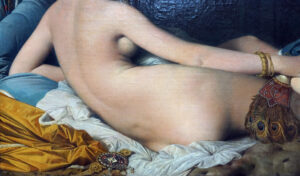
A brief comparison between teacher and student makes clear how far Ingres had strayed from the neoclassical path David had laid. In some ways, La Grande Odalisque is based upon David’s 1800 portrait of Madame Récamier.
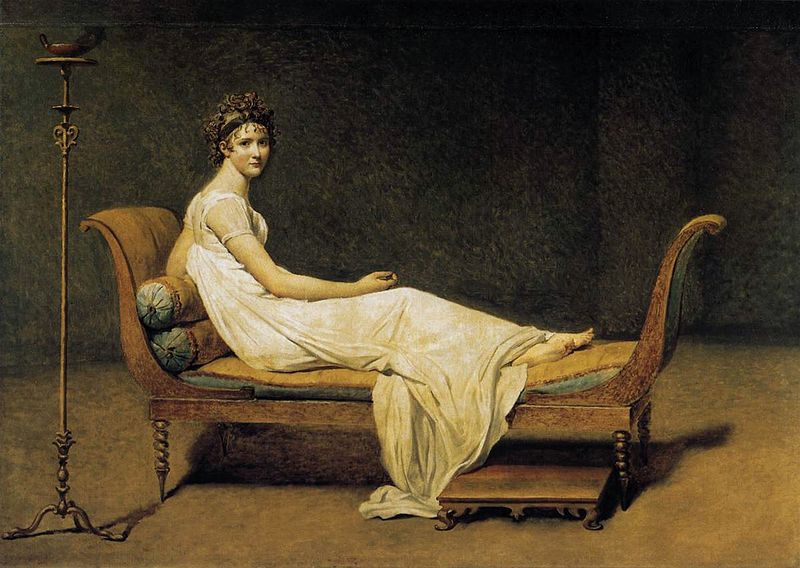
Both images show a recumbent woman who peers over her shoulder to look at the viewer. David and Ingres utilize line in a similar way. However, David depicts Récamier at the height of neoclassical fashion, wearing an Empire waistline dress and an à la grecque hairstyle. One gets the sense that there is real a body underneath that dress. In contrast, Ingres’s odalisque is a naked “other” from the Orient, and no clothing could disguise the elongations and anatomical inaccuracies of her body. David remained a committed neoclassicist, while his former student retained his neoclassical line to embrace, in this case, a geographically distant and romantic subject. This tension between Neoclassicism and Romanticism will continue throughout the first half of the nineteenth century as painters will tend to side with either Ingres and his precise linearity or the painterly style of the younger painter Eugène Delacroix.
Romanticism, an introduction
19th-century stylistic developments
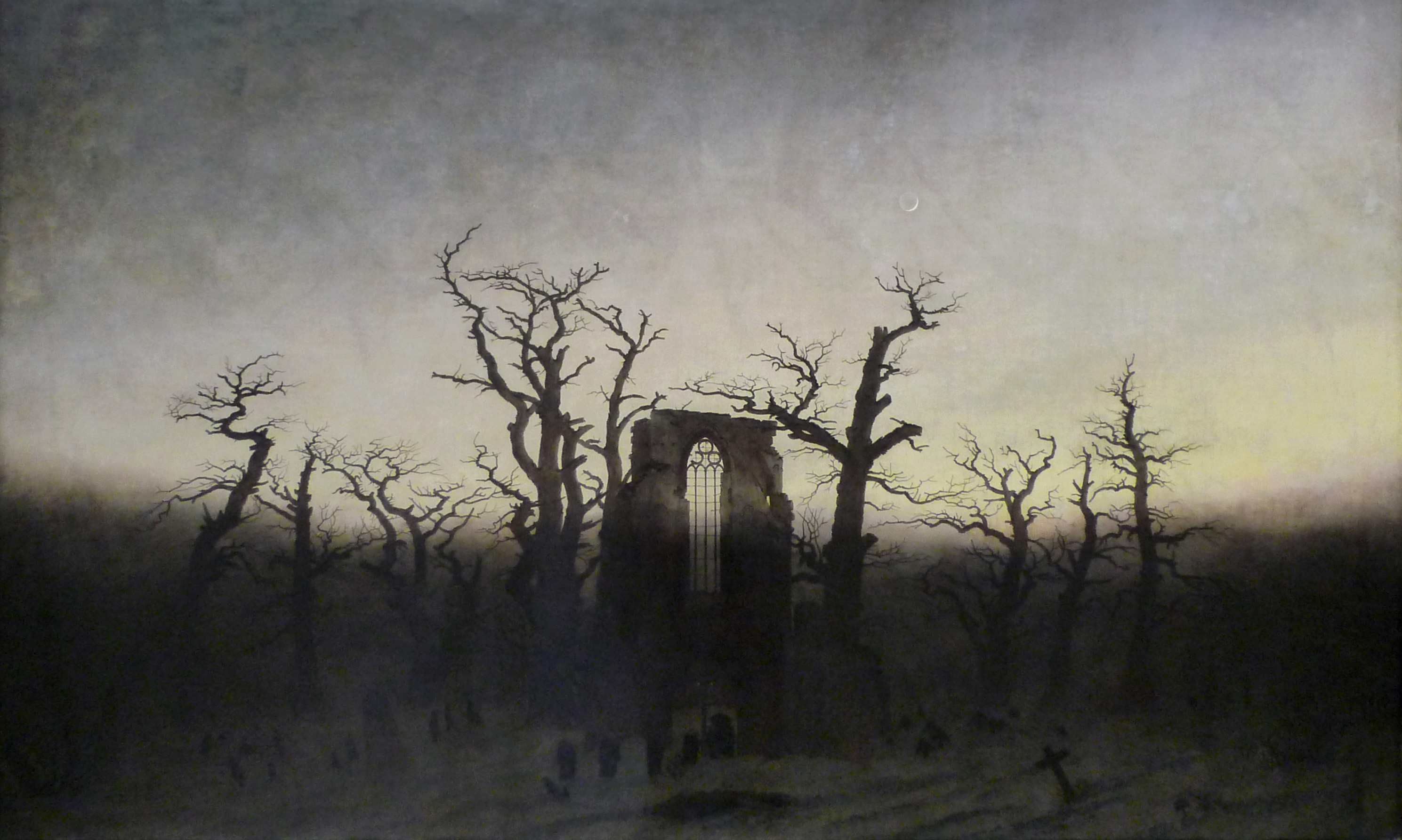
As is fairly common with stylistic rubrics, the word “Romanticism” was not developed to describe the visual arts but was first used in relation to new literary and musical schools in the beginning of the 19th century. Art came under this heading only later. Think of the Romantic literature and musical compositions of the early 19th century: the poetry of Lord Byron, Percy Shelley, and William Wordsworth and the scores of Ludwig van Beethoven, Richard Strauss, and Frédéric Chopin—these Romantic poets and musicians associated with visual artists. A good example of this is the friendship between composer and pianist Chopin and painter Eugène Delacroix. Romantic artists were concerned with the spectrum and intensity of human emotion.
Even if you do not regularly listen to classical music, you’ve heard plenty of music by these composers. In his epic film, 2001: A Space Odyssey, the late director Stanley Kubrick used Strauss’ “Thus Spake Zarathustra” (written in 1896, Strauss based his composition on Friedrich Nietzsche’s book of the same name). Kubrick’s A Clockwork Orange similarly uses the sweeping ecstasy and drama of Beethoven’s Ninth Symphony, in this case to intensify the cinematic violence of the film.
Romantic music expressed the powerful drama of human emotion: anger and passion, but also quiet passages of pleasure and joy. So too, the French painter Eugène Delacroix and the Spanish artist Francisco Goya broke with the cool, cerebral idealism of Jacques-Louis David and Jean-Auguste-Dominique Ingres‘ neoclassicism. They sought instead to respond to the cataclysmic upheavals that characterized their era with line, color, and brushwork that was more physically direct and emotionally expressive.
Eugène Delacroix, Liberty Leading the People
Poussinists vs. Rubenists
If Jacques-Louis David is the most perfect example of French Neoclassicism, and his most accomplished pupil Jean-Auguste-Dominique Ingres, represents a transitional figure between Neoclassicism and Romanticism, then Eugène Delacroix stands (with, perhaps, Theodore Gericault) as the most representative painter of French romanticism.
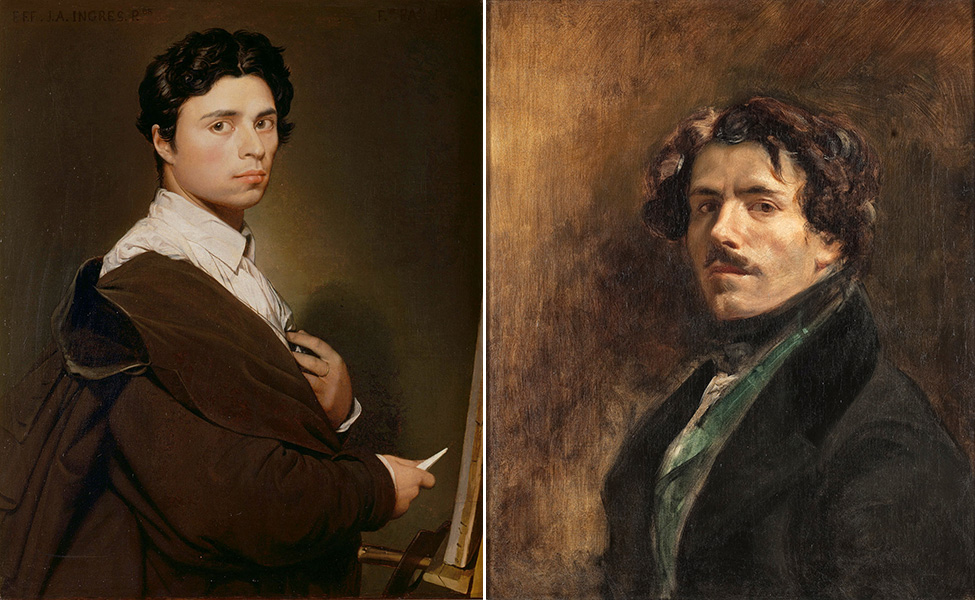
French artists in early nineteenth century could be broadly placed into one of two different camps. The Neoclassically trained Ingres led the first group, a collection of artists called the Poussinists (named after the French baroque painter Nicolas Poussin). These artists relied on drawing and line for their compositions. The second group, the Rubenists (named in honor of the Flemish master Peter Paul Rubens), instead elevated color over line. By the time Delacroix was in his mid-20s—that is, by 1823—he was one of the leaders of the ascending French romantic movement.
From an early age, Delacroix had received an exceptional education. He attended the Lycée Imperial in Paris, an institution noted for instruction in the Classics. While a student there, Delacroix was recognized for excellence in both drawing and Classics. In 1815—at the age of only 17—he began his formal art education in the studio of Pierre Guérin, a former winner of the prestigious Prix de Rome (Rome Prize) whose Parisian studio was considered a particular hotbed for romantic aesthetics. In fact, Theodore Gericault, who would soon become a romantic superstar with his Raft of the Medusa (1818–19), was still in Guérin’s studio when Delacroix arrived in 1815. The young artist’s innate skill and his teacher’s able instruction were an excellent match and prepared Delacroix for his formal admission to the Ecole des Beaux-Arts (the School of Fine Arts) in 1816.
Liberty Leading the People
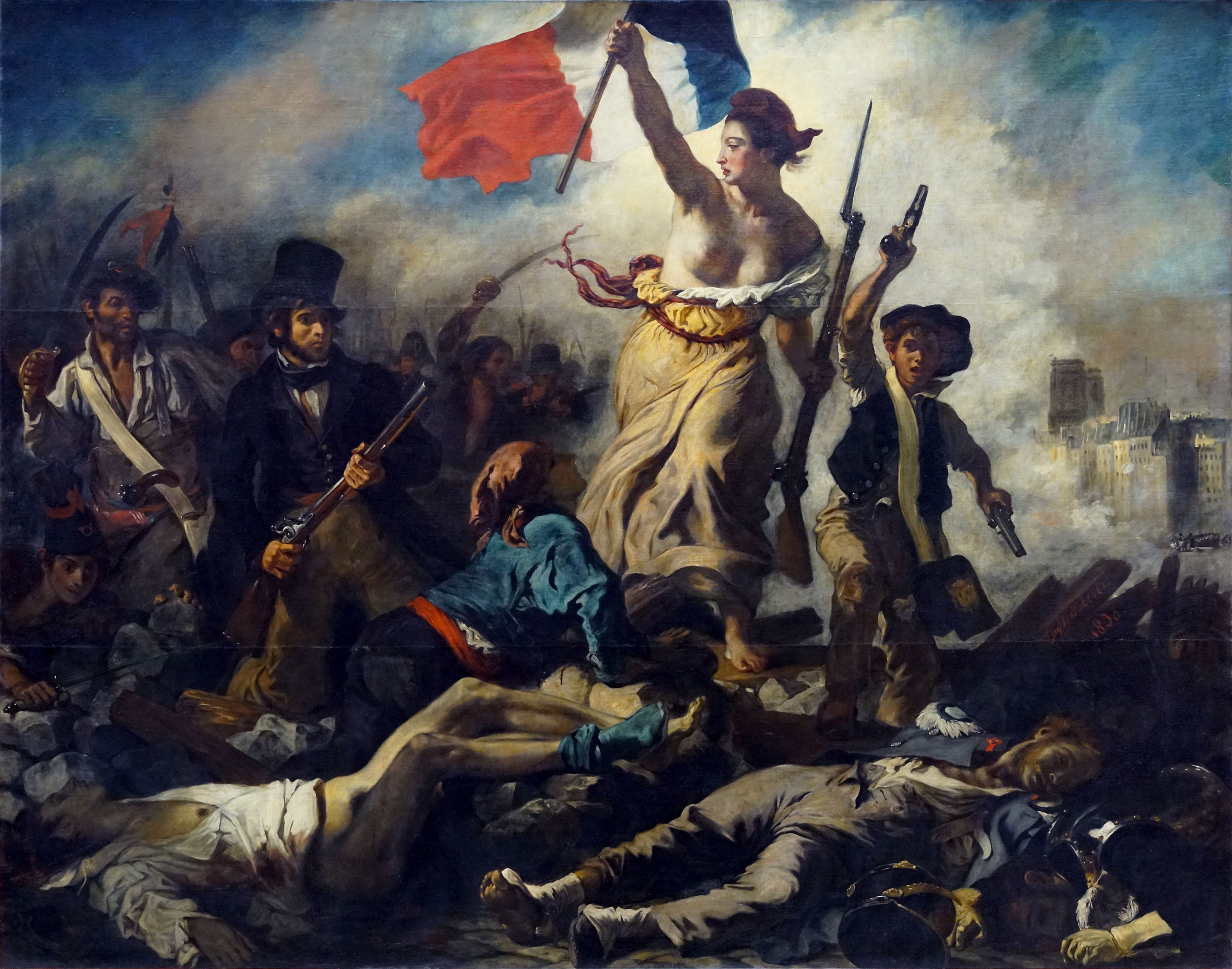
Although Delacroix completed this painting during same year in which the event occurred, it is, at its core, a history painting. Indeed, Delacroix depicts an event from the July Revolution of 1830, an event that replaced the abdicated King Charles X (r. 1824–30)—a member of the Bourbon family and the younger brother of the guillotined King Louis XVI (r. 1774–1792)—with Louis Philippe I (r. 1830–48), the so-called Citizen King. This uprising of 1830 was the historical prelude to the June Rebellion of 1832, an event featured in Victor Hugo’s famous novel, Les Misérables (1862), and the musical (1980) and films that followed. Anyone familiar with Claude-Michel Schönberg and Alain Boublil’s musical can look at Delacroix’s Liberty Leading the People and hear the lyrics of the song that serves as a call to revolution:
“Do you hear the people sing? Singing a song of angry men? It is the music of a people. Who will not be slaves again.”
Liberty
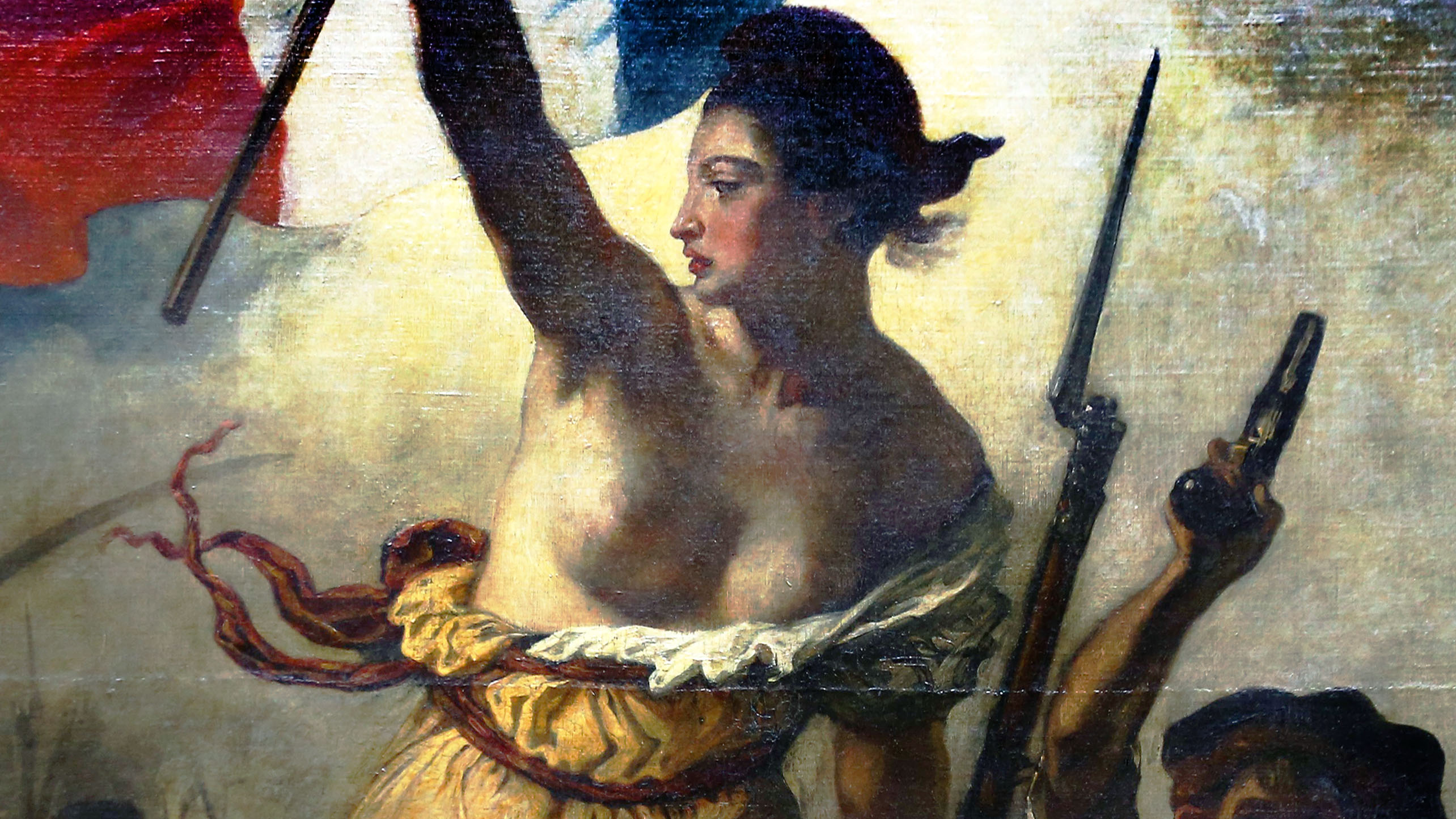
Delacroix’s painting, Liberty Leading the People, at first seems to be overpowered by chaos, but on closer inspection, it is a composition filled with subtle order. The first thing a viewer may notice is the monumental—and nude to the waist—female figure. Her yellow dress has fallen from her shoulders, as she holds a bayonetted musket in her left hand and raises the tricolor—the French national flag—with her right. This red, white, and blue arrangement of the flag is mimicked by the attire worn by the man looking up at her. She powerfully strides forward and looks back over her right shoulder as if to ensure those who she leads are following. Her head is shown in profile—like a ruler on a classical coin—and she wears atop her head a Phrygian cap, a classical signifier of freedom. This is an important bit of costuming—in ancient Rome, freed slaves were given one to wear to indicate their newly liberated status, and this headwear became a symbol of freedom and liberty on both sides of the Atlantic Ocean during the eighteenth and nineteenth centuries.
Clearly, this figure is not meant to be a portrait of a specific individual, and Delacroix did not mean to suggest that there was a half-naked woman running around carrying a loaded firearm and a flag during the Trois Glorieuses—the Three Glorious Days as it came to be known—of the July Revolution. Instead, she serves as an allegory—in this instance, a pictorial device intended to reveal a moral or political idea—of Liberty. In this, she is similar to an example familiar to those in the United States, Frédéric Auguste Bartholdi’s Statue of Liberty (1886). Clearly, this monumental statue is not a portrait of a woman named Liberty who wears a Roman toga, carries a torch, and an inscribed tablet. Instead, she represents an idea. The same is true of Delacroix’s painted Liberty.
A revolution for everyone
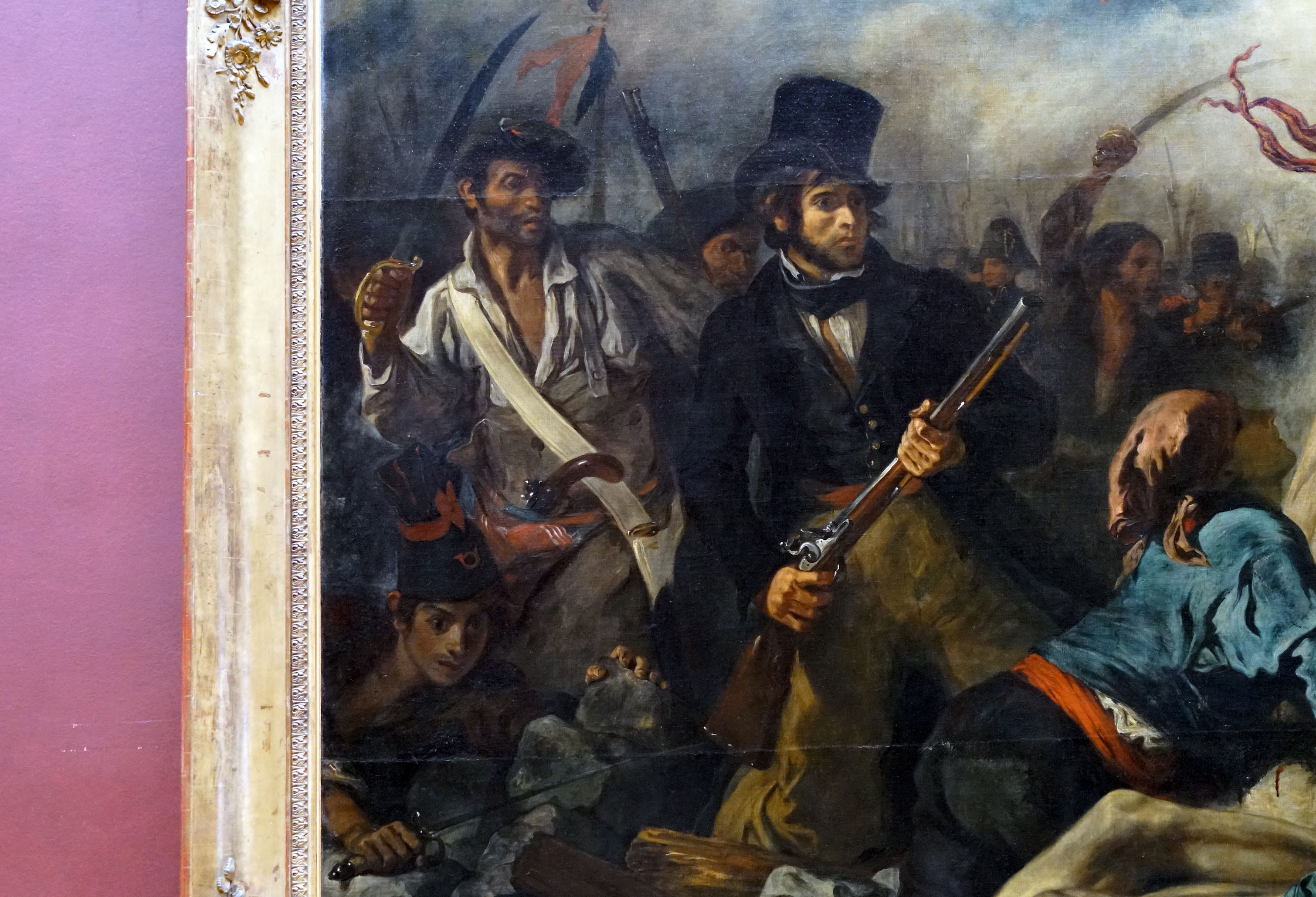
But if the female figure represents an allegory, those who surround her represent different types of people. The man on the far left holds a briquet (an infantry saber commonly used during the Napoleonic Wars). His clothing—apron, working shirt, and sailor’s trousers—identify him as a factory worker, a person in the lower end of the economic ladder. His other attire identifies his revolutionary leanings. The handkerchief around his waist, that secures a pistol, has a pattern similar to that of the Cholet handkerchief, a symbol used by François Athannase de Charette de la Contrie, a Royalist solider who led an ill-fated uprising against the First Republic, the government established as a result of the French Revolution. The white cockade and red ribbon secured to his beret also identify his revolutionary sensibilities.
This factory worker provides a counterpoint to the younger man beside him who is clearly of a different economic status. He wears a black top hat, an open-collared white shirt and cravat, and an elegantly tailored black coat. Rather than hold a military weapon like his older brother-in-arms, he instead grasps a hunting shotgun. These two figures make clear that this revolution is not just for the economically downtrodden, but for those of affluence, too.
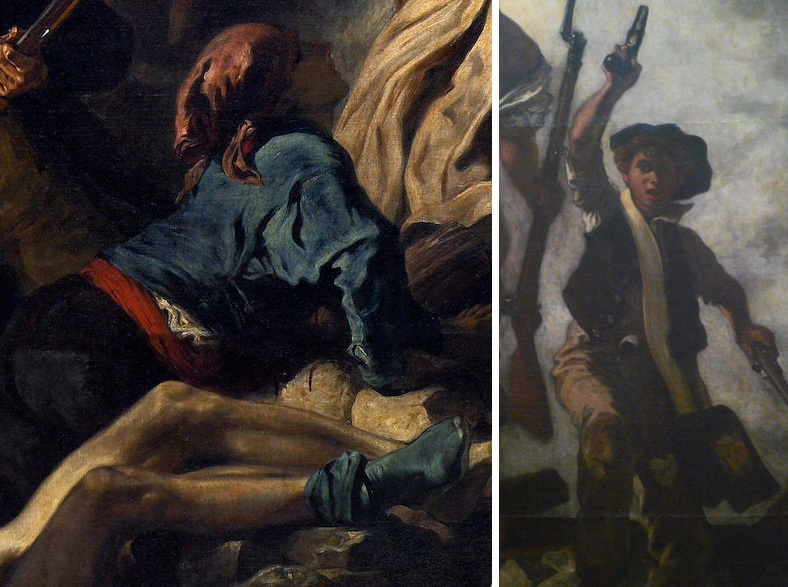
This revolution is not only for the adults—two young boys can be identified among the insurgents. On the left, a fallen adolescent who wears a light infantry bicorne and holds a short saber, struggles to regain his footing amongst the piled cobblestones that make up a barricade. The more famous of the pair, however, is on the right side of the painting (image, right). Often thought to be the visual inspiration for Hugo’s character of Gavroche in Les Misérables, this boy wildly wields two pistols. He wears a faluche—a black velvet beret common to students—and carries what appears to be a school or cartridge satchel (with a crest that may be embroidered) across his body.
A modern subject
With no less than five guns and three blades among these six primary figures, it is not surprising that the ground is littered with the dead. Some are members of the military, note the uniform decorated with shoulder epaulettes on the figure in the lower right, while others are likely revolutionaries. In total, the painting accurately renders the fervor and chaos of urban conflict. And it is, of course, an urban conflict. Notre Dame, perhaps the defining architectural monument of Paris (at least until the Eiffel Tower arrived at the end of the nineteenth century) can be clearly seen on the right side of the painting. Importantly, Delacroix signed and dated his painting immediately underneath this monument.
Although not everyone can pick up a weapon and stand a post in a war, Delacroix would have us believe that everyone can be a revolutionary. When corresponding with his brother on 28 October 1830—less than three months after the July Revolution, Delacroix wrote, “I have undertaken a modern subject, a barricade, and although I may not have fought for my country, at least I shall have painted for her. It has restored my good spirits.” In doing so, Delacroix completed what has become both a defining image of French romanticism and one of the most enduring modern images of revolution. It has even been appropriated—although slightly altered—by the British rock band Coldplay as an album cover for their 2006 release Viva la Vida or Death and All His Friends.
Théodore Géricault, Raft of the Medusa
A radical work of art
In 1819, a young man bolted through the streets of Paris. Years later, he said he must have looked crazy as he ran all the way home. He was the painter, Eugène Delacroix, and he had just seen Théodore Géricault’s astonishing painting, Raft of the Medusa, in the painter’s studio. Today, visitors to the Louvre museum stop in front of the painting as they make their way through the galleries, but in 1819 it was a truly radical work of art that astonished everyone.
There had never been a painting like Raft of the Medusa. It was on the grand scale of French history painting (think, for example, of Jacques Louis David’s Oath of the Horatii) but instead of ideal forms and a moralizing story from history, Géricault offered the Salon audience a thoroughly modern, Romantic depiction of death and suffering based on a contemporary event that was in the news. To create his painting, Géricault investigated everything about the story of the raft and talked with many of the survivors. He then brought all of the research together to create a radical painting that responded to the conservative tradition of history paintings.
No one who wrote about the painting in 1819 was unmoved. Conservative critics and writers were appalled and accused Géricault of creating a disgusting, repulsive mistake. More progressive writers who supported the modern, Romantic approach marveled at the artist’s shocking painting that caused them to tremble and admire the scene of the horrific events on the raft. When he ran through Paris after seeing Raft of the Medusa, completed in Géricault’s studio, young Delacroix experienced that same shock. He had seen something completely new that challenged every expectation for history painting and experienced an entirely kind of painting on a grand scale.
Romanticism in Spain: Francisco Goya, The Sleep of Reason Produces Monsters
A dark vision
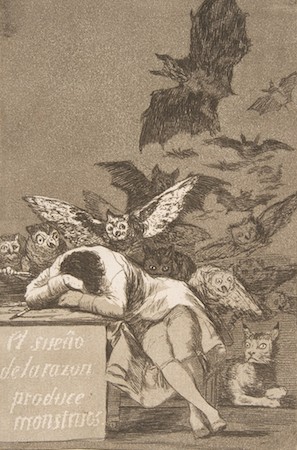
In this ominous image, we see the dark vision of humanity that characterizes Goya’s work for the rest of his life.
A man sleeps, apparently peacefully, even as bats and owls threaten from all sides and a lynx lays quiet, but wide-eyed and alert. Another creature sits at the center of the composition, staring not at the sleeping figure, but at us. Goya forces the viewer to become an active participant in the image––the monsters of his dreams even threaten us.
Los Caprichos
On 6 February 1799, Francisco Goya put an advertisement in the Diario de Madrid. “A Collection of Prints of Capricious Subjects,” he tells the reader, “Invented and Etched by Don Francisco Goya,” is available through subscription. We know this series of eighty prints as Los Caprichos (caprices, or follies).
Los Caprichos was a significant departure from the subjects that had occupied Goya up to that point––tapestry cartoons for the Spanish royal residences, portraits of monarchs and aristocrats, and a few commissions for church ceilings and altars.
Many of the prints in the Caprichos series express disdain for the pre-Enlightenment practices still popular in Spain at the end of the Eighteenth century (a powerful clergy, arranged marriages, superstition, etc.). Goya uses the series to critique contemporary Spanish society. As he explained in the advertisement, he chose subjects “from the multitude of follies and blunders common in every civil society, as well as from the vulgar prejudices and lies authorized by custom, ignorance or interest, those that he has thought most suitable matter for ridicule.”
The Caprichos was Goya’s most biting critique to date, and would eventually be censored. Of the eighty aquatints, number 43, “The Sleep of Reason Produces Monsters,” can essentially be seen as Goya’s manifesto and it should be noted that many observers believe he intended it as a self-portrait.
Imagination united with reason
In the image, an artist, asleep at his drawing table, is besieged by creatures associated in Spanish folk tradition with mystery and evil. The title of the print, emblazoned on the front of the desk, is often read as a proclamation of Goya’s adherence to the values of the Enlightenment—without Reason, evil and corruption prevail.
However, Goya wrote a caption for the print that complicates its message, “Imagination abandoned by reason produces impossible monsters; united with her, she is the mother of the arts and source of their wonders.”
In other words, Goya believed that imagination should never be completely renounced in favor of the strictly rational. For Goya, art is the child of reason in combination with imagination.
The beginnings of Romanticism
With this print, Goya is revealed as a transitional figure between the end of the Enlightenment and the emergence of Romanticism. The artist had spent the early part of his career working in the court of King Carlos III who adhered to many of the principles of the Enlightenment that were then spreading across Europe––social reform, the advancement of knowledge and science, and the creation of secular states. In Spain, Carlos reduced the power of the clergy and established strong support for the arts and sciences.
However, by the time Goya published the Caprichos, the promise of the Enlightenment had dimmed. Carlos III was dead and his less respected brother assumed the throne. Even in France, the political revolution inspired by the Enlightenment had devolved into violence during an episode known as the Reign of Terror. Soon after, Napoleon became Emperor of France.
Goya’s caption for “The Sleep of Reason,” warns that we should not be governed by reason alone—an idea central to Romanticism’s reaction against Enlightenment doctrine. Romantic artists and writers valued nature which was closely associated with emotion and imagination in opposition to the rationalism of Enlightenment philosophy. But “The Sleep of Reason” also anticipates the dark and haunting art Goya later created in reaction to the atrocities he witnessed—and carried out by the standard-bearers of the Enlightenment—the Napoleonic Guard.
Goya brilliantly exploited the atmospheric quality of aquatint to create this fantastical image. This printing process creates the grainy, dream-like tonality visible in the background of “The Sleep of Reason.”
Aquatint
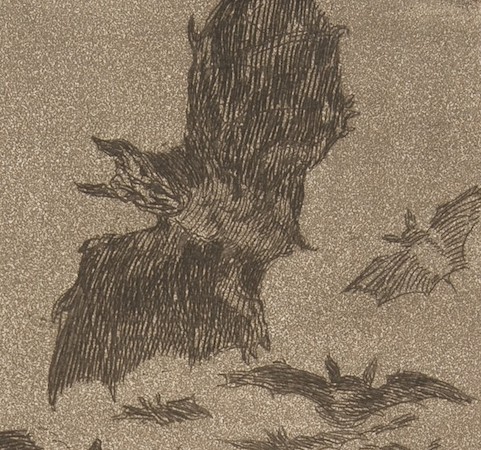
Although the aquatint process was invented in 17th century by the Dutch printmaker, Jan van de Velde, many consider the Caprichos to be the first prints to fully exploit this process.
Aquatint is a variation of etching. Like etching, it uses a metal plate (often copper or zinc) that is covered with a waxy, acid-resistant resin. The artist draws an image directly into the resin with a needle so that the wax is removed exposing the metal plate below. When the scratch drawing is complete, the plate is submerged in an acid bath. The acid eats into the metal where lines have been etched. When the acid has bitten deeply enough, the plate is removed, rinsed and heated so that the remaining resin can be wiped away.
Aquatint requires an additional process, the artist sprinkles layers of powdery resin on the surface of the plate, heats it to harden the powder and dips it in an acid bath.
The acid eats around the resin powder creating a rich and varied surface. Ink is then pressed into the pits and linear recesses created by the acid and the flat surface of the plate is once again wiped clean. Finally, a piece of paper is pressed firmly against the inked plate and then pulled away, resulting in the finished image.
Romanticism in Spain: Francisco Goya, The Third of May, 1808
The 2nd and 3rd of May, 1808
In 1807, Napoleon, bent on conquering the world, brought Spain’s king, Charles IV, into alliance with him in order to conquer Portugal. Napoleon’s troops poured into Spain, supposedly just passing through. But Napoleon’s real intentions soon became clear: the alliance was a trick. The French were taking over. Joseph Bonaparte, Napoleon’s brother, was the new king of Spain.
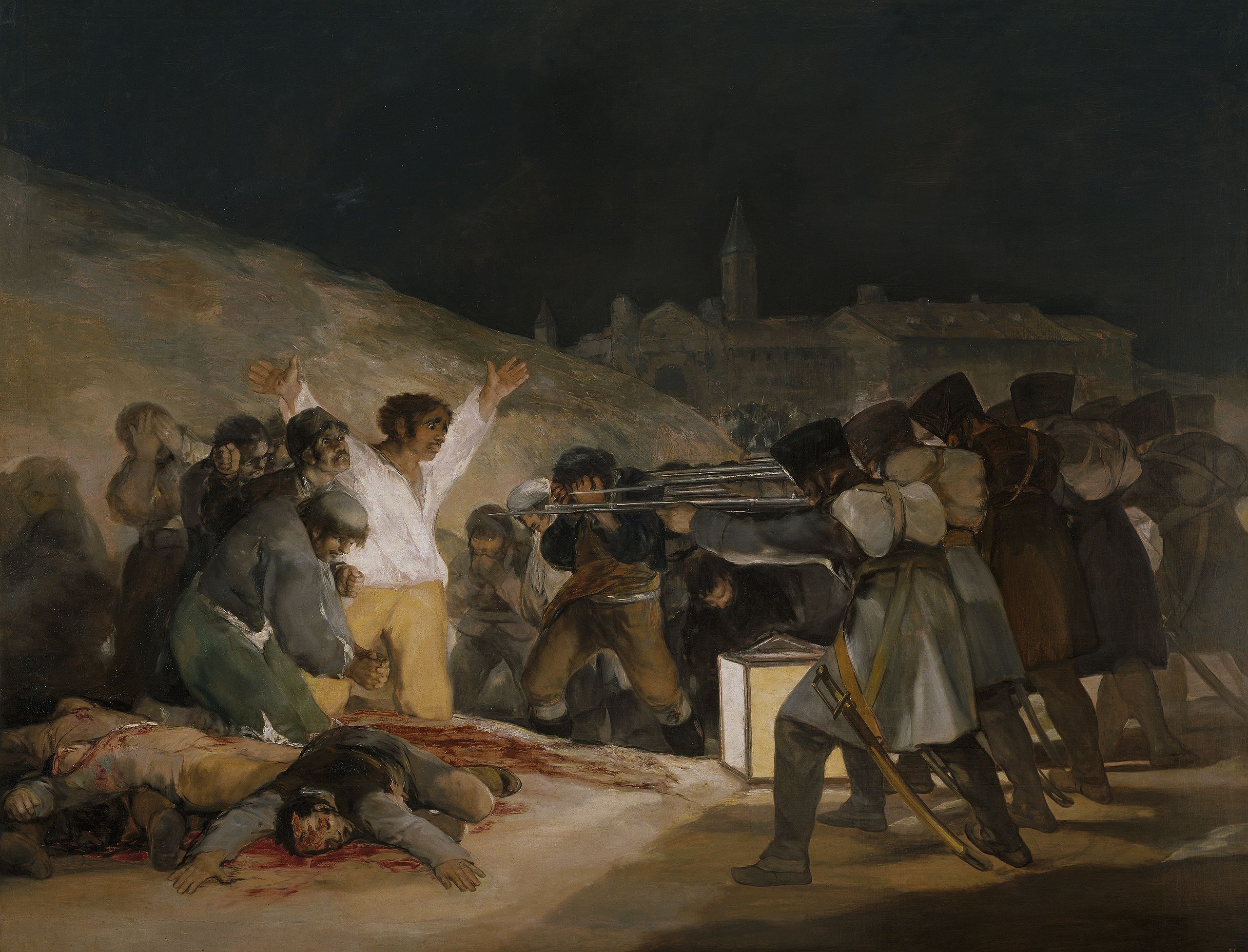
On May 2, 1808, hundreds of Spaniards rebelled. On May 3, these Spanish freedom fighters were rounded up and massacred by the French. Their blood literally ran through the streets of Madrid. Even though Goya had shown French sympathies in the past, the slaughter of his countrymen and the horrors of war made a profound impression on the artist. He commemorated both days of this gruesome uprising in paintings. Although Goya’s Second of May is a tour de force of twisting bodies and charging horses reminiscent of Leonardo’s Battle of Anghiari, his The Third of May, 1808 in Madrid is acclaimed as one of the great paintings of all time, and has even been called the world’s first modern painting.
Romanticism in England: J. M. W. Turner, Slave Ship
Turner’s sublime Romanticism
An influential painter in oils and watercolor who was famous in his time, J.M.W. Turner worked to have landscape recognized as a serious art form. Turner’s Slave Ship aligns with the “sublime” aesthetic in art. The sublime was one of three major ways of depicting landscapes in the early 19th century. The “beautiful” was pleasurable, soft, and calm. The “picturesque” presented objects of interest in a tranquil scene that had some degree of rustic roughness. The “sublime,” however, inspired terror through immense scale, darkness, and other effects meant to make the viewer feel threatened. In the early 19th century, all these modes were popular, but the sublime was favored by one of the most influential movements of the period: Romanticism.
Realism, an introduction
Realism and the painting of modern life
The Royal Academy supported the age-old belief that art should be instructive, morally uplifting, refined, inspired by the classical tradition, a good reflection of the national culture, and, above all, about beauty.
But trying to keep young 19th-century artists’ eyes on the past became an issue!
The world was changing rapidly and some artists wanted their work to be about their contemporary environment—about themselves and their own perceptions of life. In short, they believed that the modern era deserved to have a modern art.
The modern era begins with the Industrial Revolution in the late 19th century. Clothing, food, heat, light and sanitation are a few of the basic areas that “modernized” the 19th century. Transportation was faster, getting things done got easier, shopping in the new department stores became an adventure, and people developed a sense of “leisure time”—thus the entertainment businesses grew.
Paris transformed
In Paris, the city was transformed from a medieval warren of streets to a grand urban center with wide boulevards, parks, shopping districts, and multi-class dwellings (so that the division of class might be from floor to floor—the rich on the lower floors and the poor on the upper floors in one building—instead by neighborhood).
Therefore, modern life was about social mixing, social mobility, frequent journeys from the city to the country and back, and a generally faster pace which has accelerated ever since.
How could paintings and sculptures about classical gods and biblical stories relate to a population enchanted with this progress?
In the middle of the 19th century, the young artists decided that it couldn’t and shouldn’t. In 1863 the poet and art critic Charles Baudelaire published an essay entitled “The Painter of Modern Life,” which declared that the artist must be of his/her own time.
Becoming modern in 19th-century Europe, an introduction
People use the term “modern” in a variety of ways, often very loosely, with a lot of implied associations relating to the new, contemporary, up-to-date, and technological. In 19th-century Europe, however, modernity and its connection with art had certain specific associations that people began recognizing and using as barometers to distinguish themselves and their culture from earlier moments in history.
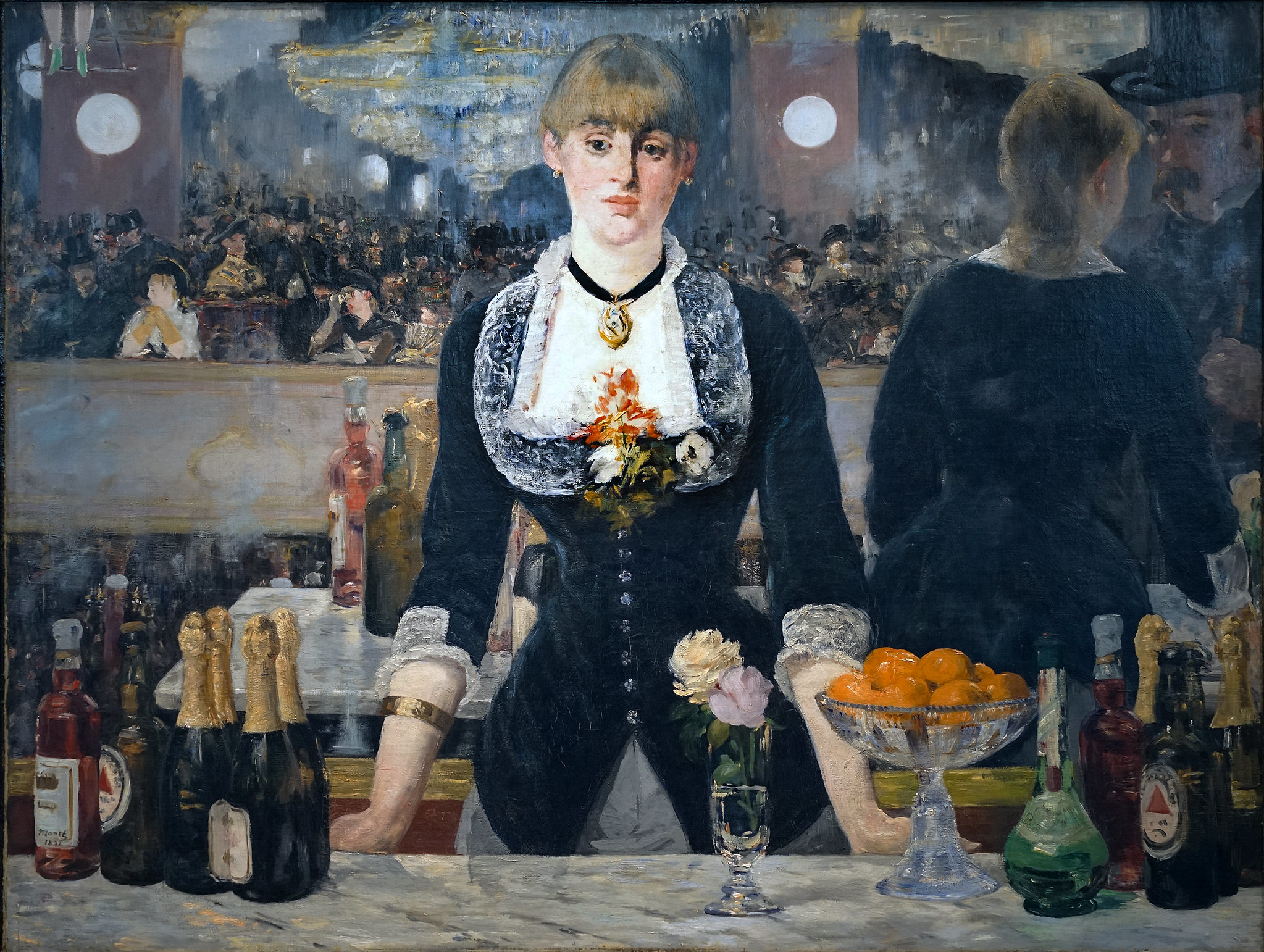
Chronologically, the modern era is often defined as the period from roughly 1848 to 1960. In Europe and North America, it can be said to begin with the Realist movement and end with Abstract Expressionism (though some scholars date the modern era back to the late 18th century). That’s just a little over 100 years. During that period, Europe experienced significant changes that transformed it from an agriculturally-based society into a modern one with cities and factories and mass transportation.
Here are some important features that characterize 19th-century Europe.
Capitalism
In the 19th century, wealth produced by mass-manufacturing and the exchange of goods (capitalism) competed with aristocratic wealth based on large land holdings. Capitalism became the economic system of the modern era in which people exchanged their labor for a fixed wage. This economic change dramatically affected class relations because it offered opportunities for the accumulation of great wealth through individual initiative, industrialization, and technology (somewhat like the technological and dot.com explosion of the late 20th and early 21st centuries). The Industrial Revolution, which began in England in the late 18th century and rapidly swept across Europe, radically transformed economic and social relationships, putting many artisans out of work, and offered an ever-increasing number of cheap consumer goods. These consumer goods were largely produced by factory workers (including children) at a time when there were few protections for workers. The Industrial Revolution also fostered a sense of competition and a sense of progress (some real, some illusory) that continues to influence us today.
Urban culture
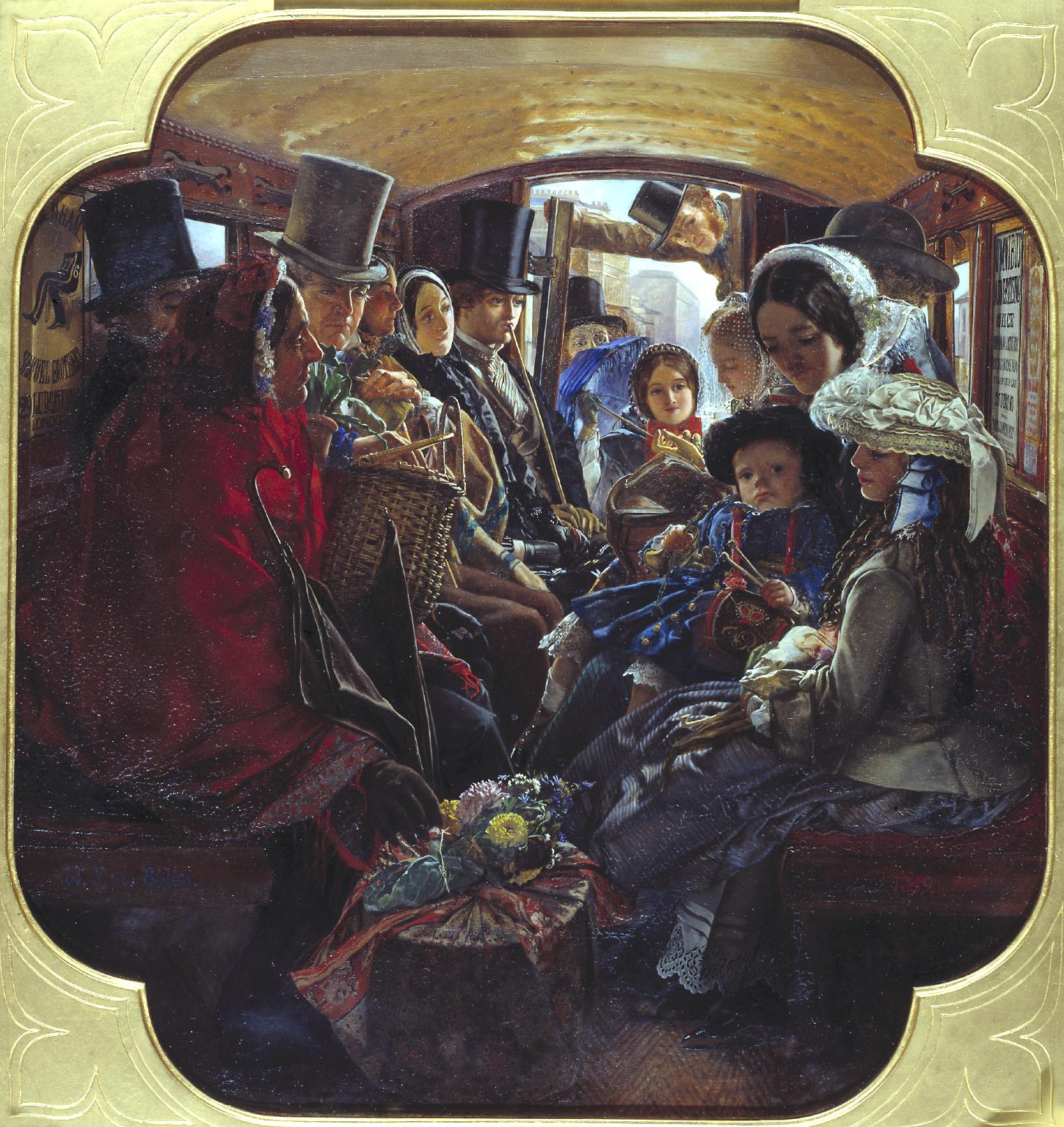
Urban culture replaced agrarian culture as industrialization and cities grew. Cities were the sites of new wealth and opportunity with their factories and manufacturing potential. People moving from small farm towns to large cities helped to breakdown traditional culture and values. There were also new complications such as growing urban crime, sex work, alienation, and depersonalization.
In a small town you probably knew the cobbler who made your shoes, and such a personal relationship often expanded into everyday economics—you might be able to barter food or labor for a new pair of shoes or delay payments. These kinds of accommodations that formed a substructure to agrarian life were swept away with urbanization. City dwellers bought shoes that were manufactured to standardized sizes, transported by railroads, displayed in shop windows, and purchased for cash. Assembly lines, anonymous labor, and advertising created more consumer items but also a growing sense of depersonalization. The gap between the “haves” and the “have nots” was more visible in the city, in England, an often used phrase referred to these groups as “the two nations.”
Technology
Technological advances such as steam-powered factories, railroads, gas lighting, streetcars as well as the availability of indoor plumbing, kitchen appliances, and scientific advances dramatically affected the way people lived and thought about themselves. One consequence was that some people in industrialized areas thought of themselves as advanced and modern and considered others as comparatively primitive and backward.
Secularism and politics
Modernity is characterized by increasing secularism and diminished religious authority. People did not abandon religion but they paid less attention to it. Organized religions were increasingly less able to dictate standards, values, and subject matter. Art moved from representing human experience and its relationship to God’s creation, to a focus on personal emotions and individual spiritual experiences that were not based in any organized and institutionalized religion. In the same way, political power once held by a hereditary aristocratic elite, slowly broadened to enfranchise the wider populace. In both these ways, the concentration of authority was lessened as the Church and royal families ceded power to the people.
Optimism
Many people saw these changes as positive, and many did not. Some welcomed innovation and championed progress. Change became a signifier of modernity. Anything that was traditional and static signaled outmoded, old-fashioned, conservative and was to be avoided by the new modern public. Much of Europe internalized these positions and used modernity as a way of determining and validating feelings of superiority. The 19th century was also a period of tremendous, often violent, colonial growth and expansion. Many people recognized and sought to ameliorate the impact on the working class by supporting legislation that limited the hours of the working day, the age of workers, and extension of the franchise, among other things. It’s important to remember that universal suffrage in most countries in Europe was not achieved until the early 20th century.
Many artists closely identified with modernity and embraced the new techniques and innovations, the spirit of progress, invention, discovery, creativity, and change. They wanted to participate in creating the modern world and they were anxious to try out new ideas rather than following the more conservative guidelines of Academic art. This is not to say that these mid-19th-century artists were the first to challenge an older generation or set of ideas. Many academic artists had argued over formal issues, styles, and subject matter, but this was much like a good-natured agreement within a club; everyone in the group agreed to disagree.
Many artists were also sympathetic to the plight of the working classes, who seemed to those in power to be increasingly dangerous. Revolutions in 1789, 1830, and 1848 in France, and the Chartist movement in England are just two examples of the form that resistance to the changes of modernity took. It was in 1848 that Karl Marx wrote in The Communist Manifesto, “Our epoch, the epoch of the bourgeoisie, possesses, however, this distinct feature: it has simplified class antagonisms. Society as a whole is more and more splitting up into two great hostile camps, into two great classes directly facing each other — Bourgeoisie and Proletariat.” [2]
A middle-class audience
By the mid-1850s, polite academic disagreements moved from the Academy and onto the street. Artists were looking increasingly to the private sector for patronage, tapping into that growing group of bourgeois or middle-class collectors with money to spend and houses to fill with paintings. This new middle-class audience that made its money through industrialization and manufacturing had significant disposable income, and they wanted pictures that they could understand, that were easy to look at, fit into their homes, and addressed subjects they liked. The historical cycles of gods, saints, and heroes—with their complex intellectual associations and references—was not for them; instead, they wanted landscapes, genre scenes, and still lifes. They were not less educated than earlier buyers, but educated with a different focus and set of priorities. Reality was here and now, progress was inevitable, and the new hero of modern life was the modern man.
Modernity is then a composite of contexts: a time, a space, and an attitude. What makes a place or an object “modern” depends on these conditions.
The avant-garde
Throughout the 19th century there were artists who produced pictures that we do not label “modern art” generally because the techniques or subjects were associated with the conservative academic styles, techniques, and approaches (that often look back to ancient Greece and Rome). On the other hand, modern artists were often called the “avant-garde.” This was originally a military term that described the point man (the first soldier out)—the one to take the most risk. The French socialist Henri de Saint-Simon first used the term in the early 1820s to describe an artist whose work would serve the needs of the people, of a socialist society rather than the ruling classes.
The avant-garde is also used to identify artists whose painting subjects and techniques were radical, marking them off from the more traditional or academic styles, but not with any particular political ideology in mind. Avant-garde became a kind of generic term for a number of art movements centered on the idea of artistic autonomy and independence. In some cases the avant-garde was closely associated with political activism, especially socialist or communist movements; in other cases, the avant-garde was pointedly removed from politics and focused primarily on aesthetics. The avant-garde was never a cohesive group of artists and what was avant-garde in one nation was not necessarily the same in others.
Gustave Courbet, The Stonebreakers
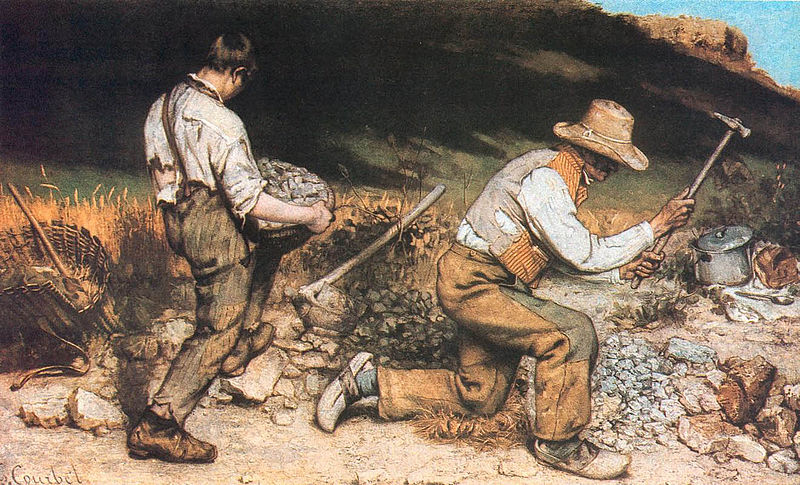
Gustave Courbet, a young fellow from the Franche-Comté, a province outside of Paris, came to the “big city” with a large ego and a sense of mission. He met Charles Baudelaire and other progressive thinkers within the first years of making Paris his home. Then, he set himself up as the leader for a new art: Realism—“history painting” about real life. He believed that if he could not see something, he should not paint it. He also decided that his art should have a social consciousness that would awaken the self-involved Parisian to contemporary concerns: the good, the bad, and the ugly.
Realism and reality
If we look closely at Courbet’s painting The Stonebreakers of 1849 (painted only one year after Karl Marx and Friedrich Engels wrote their influential pamphlet, The Communist Manifesto) the artist’s concern for the plight of the poor is evident. Here, two figures labor to break and remove stone from a road that is being built. In our age of powerful jackhammers and bulldozers, such work is reserved as punishment for chain-gangs.
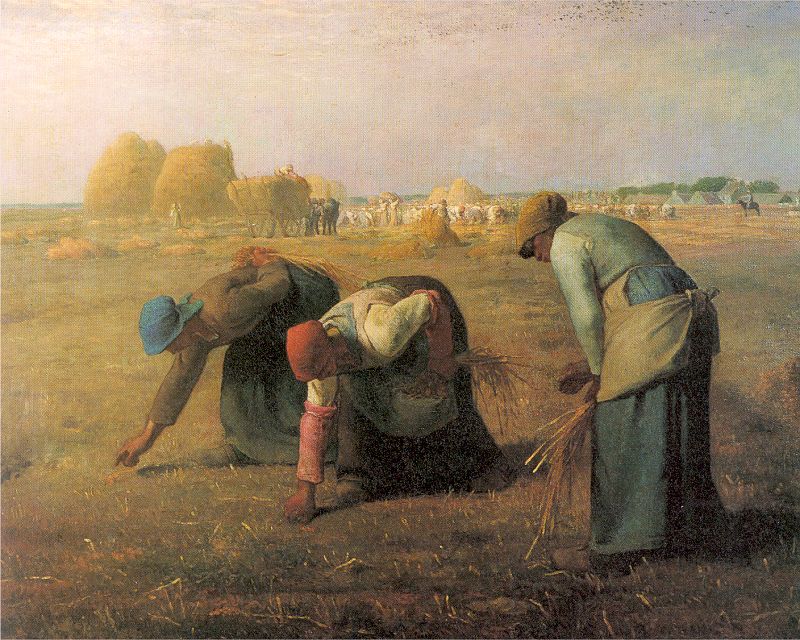
Unlike Millet, who, in paintings like The Gleaners, was known for depicting hard-working, but idealized peasants, Courbet depicts figures who wear ripped and tattered clothing. And unlike the aerial perspective Millet used in The Gleaners to bring our eye deep into the French countryside during the harvest, the two stone breakers in Courbet’s painting are set against a low hill of the sort common in the rural French town of Ornans, where the artist had been raised and continued to spend a much of his time. The hill reaches to the top of the canvas everywhere but the upper right corner, where a tiny patch of bright blue sky appears. The effect is to isolate these laborers, and to suggest that they are physically and economically trapped. In Millet’s painting, the gleaners’ rounded backs echo one another, creating a composition that feels unified, where Courbet’s figures seem disjointed. Millet’s painting, for all its sympathy for these poor figures, could still be read as “art” by viewers at an exhibition in Paris.
Courbet wants to show what is “real,” and so he has depicted a man that seems too old and a boy that seems still too young for such back-breaking labor. This is not meant to be heroic: it is meant to be an accurate account of the abuse and deprivation that was a common feature of mid-century French rural life. And as with so many great works of art, there is a close affiliation between the narrative and the formal choices made by the painter, meaning elements such as brushwork, composition, line, and color.
Like the stones themselves, Courbet’s brushwork is rough—more so than might be expected during the mid-19th century. This suggests that the way the artist painted his canvas was in part a conscious rejection of the highly polished, refined Neoclassicist style that still dominated French art in 1848.
Perhaps most characteristic of Courbet’s style is his refusal to focus on the parts of the image that would usually receive the most attention. Traditionally, an artist would spend the most time on the hands, faces, and foregrounds. Not Courbet. If you look carefully, you will notice that he attempts to be even-handed, attending to faces and rock equally. In these ways, The Stonebreakers seems to lack the basics of art (things like a composition that selects and organizes, aerial perspective and finish) and as a result, it feels more “real.”
Practicing Visual Analysis
The composition of Courbet’s The Stonebreakers is unusual. Two figurative forms turn away from us with only hints at their age: a younger man on the left and an older man on the right. Courbet used a relatively limited color palette relying mostly on earth tones. Although there is the suggestion of depth with some atmospheric perspective and chiaroscuro modeling, the piece appears relatively flat. The figures are set close in the foreground. The dullness of the color and light enhance the monotony of the backbreaking labor. We think about all the intentional choices the artist made to construct the piece. Imagine if Michelangelo painted this scene! The figures would be heroically nude and muscular in their form. Their faces would be turned toward the viewer allowing us to see their perfectly youthful, symmetrical structure. Michelangelo would use bright colors and a strong design to create pictorial space through techniques like linear perspective. Courbet? No. The intentional choices Courbet made regarding composition, space, light, and color reveal to us a piece that acknowledges the invisible labor of the many. It also asks a poignant question emerging in the 19th century: can one ever escape their class?
Édouard Manet, Olympia
Most strongly associated with Realism, Édouard Manet experimented with multiple styles in his pursuit of subject matter that reflected modern urban life. In this portrait of Olympia and Laure, Manet invented what beauty could be for the modern world.
Early Photography: A Modern Invention with Niépce, Talbot, and Muybridge
By modern standards, nineteenth-century photography can appear rather primitive. While the stark black and white landscapes and unsmiling people have their own austere beauty, these images also challenge our notions of what defines a work of art.
Photography is a controversial fine art medium, simply because it is difficult to classify—is it an art or a science? Nineteenth century photographers struggled with this distinction, trying to reconcile aesthetics with improvements in technology.
The birth of photography
Although the principle of the camera was known in antiquity, the actual chemistry needed to register an image was not available until the nineteenth century.
Artists from the Renaissance onwards used a camera obscura (Latin for dark chamber), or a small hole in the wall of a darkened box that would pass light through the hole and project an upside down image of whatever was outside the box. However, it was not until the invention of a light sensitive surface by Frenchman Joseph Nicéphore Niépce that the basic principle of photography was born.
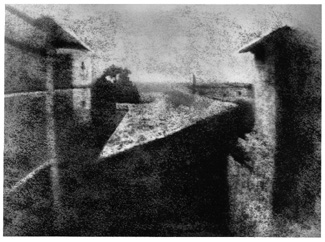
From this point the development of photography largely related to technological improvements in three areas, speed, resolution and permanence. The first photographs, such as Niépce’s famous View from the Window at Gras (1826) required a very slow speed (a long exposure period), in this case about 8 hours, obviously making many subjects difficult, if not impossible, to photograph. Taken using a camera obscura to expose a copper plate coated in silver and pewter, Niépce’s image looks out of an upstairs window, and part of the blurry quality is due to changing conditions during the long exposure time, causing the resolution, or clarity of the image, to be grainy and hard to read. An additional challenge was the issue of permanence, or how to successfully stop any further reaction of the light sensitive surface once the desired exposure had been achieved. Many of Niépce’s early images simply turned black over time due to continued exposure to light. This problem was largely solved in 1839 by the invention of hypo, a chemical that reversed the light sensitivity of paper.
Technological improvements
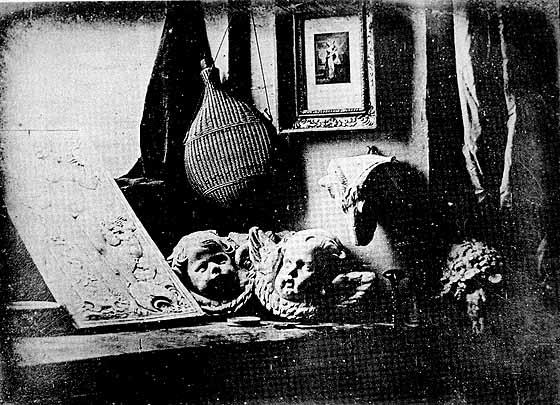
Photographers after Niépce experimented with a variety of techniques. Louis Daguerre invented a new process he dubbed a daguerreotype in 1839, which significantly reduced exposure time and created a lasting result, but only produced a single image.
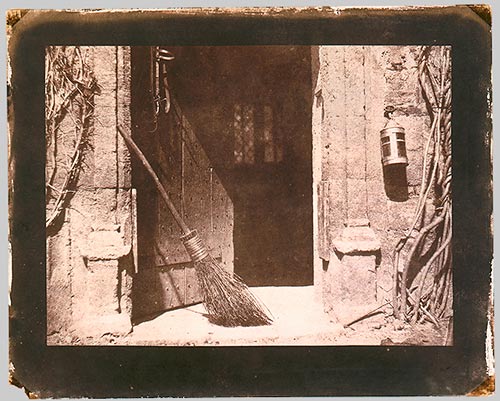
At the same time, Englishman William Henry Fox Talbot was experimenting with his what would eventually become his calotype method, patented in February 1841. Talbot’s innovations included the creation of a paper negative, and new technology that involved the transformation of the negative to a positive image, allowing for more that one copy of the picture. The remarkable detail of Talbot’s method can be seen in his famous photograph, The Open Door (1844) which captures the view through a medieval-looking entrance. The texture of the rough stones surrounding the door, the vines growing up the walls and the rustic broom that leans in the doorway demonstrate the minute details captured by Talbot’s photographic improvements.
The collodion method was introduced in 1851. This process involved fixing a substance known as gun cotton onto a glass plate, allowing for an even shorter exposure time (3-5 minutes), as well as a clearer image.
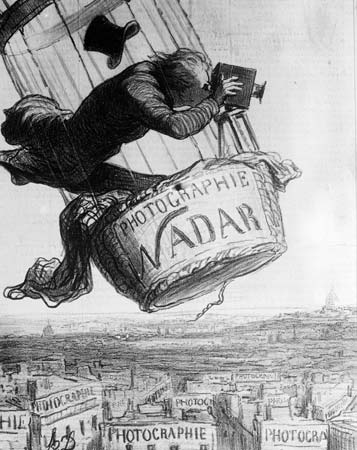
The big disadvantage of the collodion process was that it needed to be exposed and developed while the chemical coating was still wet, meaning that photographers had to carry portable darkrooms to develop images immediately after exposure. Both the difficulties of the method and uncertain but growing status of photography were lampooned by Honoré Daumier in his Nadar Elevating Photography to the Height of Art (1862). Nadar, one of the most prominent photographers in Paris at the time, was known for capturing the first aerial photographs from the basket of a hot air balloon. Obviously, the difficulties in developing a glass negative under these circumstances must have been considerable.
Further advances in technology continued to make photography less labor intensive. By 1867 a dry glass plate was invented, reducing the inconvenience of the wet collodion method.
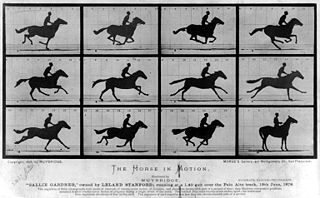
Prepared glass plates could be purchased, eliminating the need to fool with chemicals. In 1878, new advances decreased the exposure time to 1/25th of a second, allowing moving objects to be photographed and lessening the need for a tripod. This new development is celebrated in Eadweard Muybridge’s sequence of photographs called Galloping Horse (1878). Designed to settle the question of whether or not a horse ever takes all four legs completely off the ground during a gallop, the series of photographs also demonstrated the new photographic methods that were capable of nearly instantaneous exposure.
Finally in 1888 George Eastman developed the dry gelatin roll film, making it easier for film to be carried. Eastman also produced the first small inexpensive cameras, allowing more people access to the technology.
Photographers in the 19th century were pioneers in a new artistic endeavor, blurring the lines between art and technology. Frequently using traditional methods of composition and marrying these with innovative techniques, photographers created a new vision of the material world. Despite the struggles early photographers must have had with the limitations of their technology, their artistry is also obvious.
American Realism: Thomas Eakins, The Gross Clinic and The Agnew Clinic
An American painter, sculptor, and photographer, Thomas Eakins’ realist style was influenced by Diego Velázquez as well as photographic aesthetics. Eakins’s deep connection to his birthplace remained a theme throughout his career. Perhaps his most well-known and ambitious work for the city of Philadelphia is The Gross Clinic, a painting completed in 1875 that spotlights the local physician Samuel David Gross.
American Realism: Henry Ossawa Tanner, The Banjo Lesson
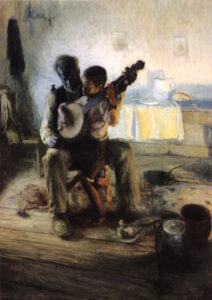
Henry Ossawa Tanner was the United States’ first African American celebrity artist. His training at the Pennsylvania Academy of Fine Arts (under the guidance of Thomas Eakins) and at the Académie Julian in Paris (with Jean-Léon Gérôme) put him in the unique position of having experienced two vastly different approaches to painting— American Realism and French academic painting. He was also one of the few artists to have had such training at a time when there were many barriers to education for African Americans. Though Tanner lived most of his life in France and became well known for his lush biblical paintings, The Banjo Lesson is his most famous work and the painting that has become emblematic with his oeuvre.
Henry Tanner painted The Banjo Lesson in 1893 after a series of sketches he made while visiting the Blue Ridge Mountains of North Carolina four years before. Tanner had been studying and working in Paris until he developed a bout of typhoid fever and was advised to return to the United States to recover his health and dwindling finances. While taking up a teaching post at Clark University in Atlanta, Tanner’s doctor told him to take in some mountain air. His trip to North Carolina opened his eyes to the poverty of African Americans living in Appalachia.
The legacy of slavery
The United States had abolished slavery only twenty-four years before, in 1865, and the physical and psychological wounds of that brutal institution would continue to be a palpable presence in African American communities—especially so in the South. Though Tanner was born in Pittsburgh within the tight-knit world of highly-educated members of America’s burgeoning African American intelligentsia, Tanner’s mother Sarah had been born a slave and had escaped north to Pennsylvania through the Underground Railroad. His middle name, Ossawa, was chosen by his father, Benjamin Tucker Tanner, a Methodist minister and abolitionist, after Osawatomie, Kansas—the site of the abolitionist John Brown’s bloody confrontation with pro-slavery partisans on August 30, 1856.
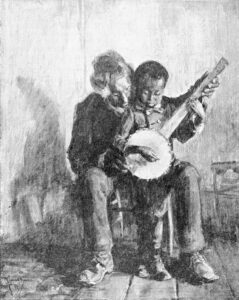
Throughout his education and advancement in the art world in both the United States and Europe, the legacy of slavery haunted Tanner as he tried to establish a niche for himself as painter to be regarded on his own terms. The Banjo Lesson grew out of a set of photographs and illustrations (above) that Tanner made for the periodical Harper’s Young People in 1893. The illustration is of an elderly man teaching a young boy how to play the banjo, accompanied a short story by Ruth McEnery Stuart called “Uncle Tim’s Compromise on Christmas,” in which the titular character imparts his most prized possession, a banjo, to his grandson on Christmas morning.
American realism + the European tradition
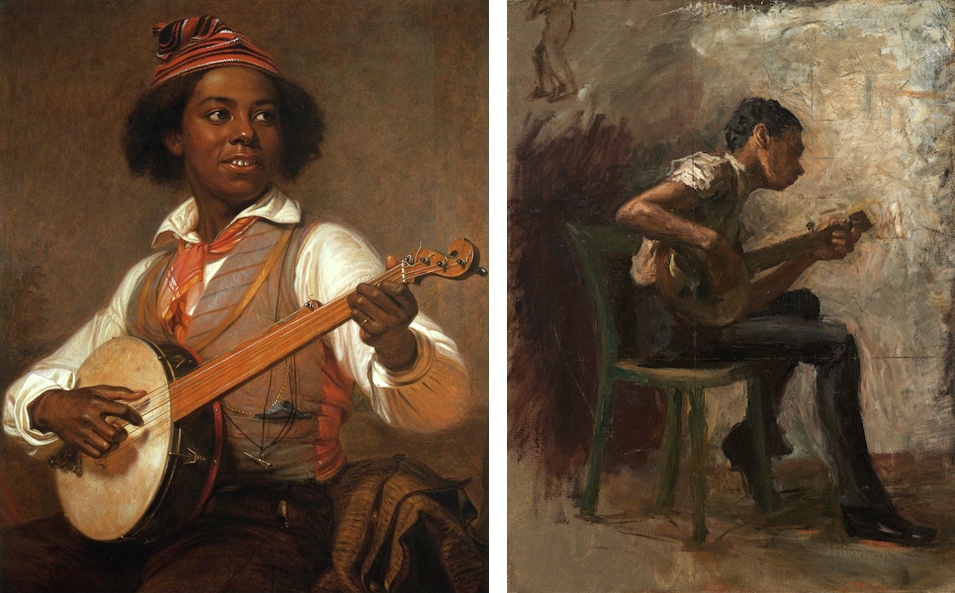
Tanner had spent years refining a style of his own that combined elements of American Realism and the European Old Master tradition. The Banjo Lesson has its roots in the genre paintings of African Americans by William Sidney Mount and Thomas Eakins (above) and in Renaissance and Flemish paintings, notably Domenico Ghirlandaio’s An Old Man and His Grandson and Johannes Vermeer’s Woman with a Lute.
While studying in Paris, Tanner was also inspired by the works of the French Realists, namely Gustave Courbet and Jean-François Millet, in their depictions of the rural poor. Millet’s The Angelus, with its quiet, intensely spiritual portrayal of a farmer and his wife praying amid the fields at dusk, is a palpable influence on Tanner’s The Banjo Lesson.
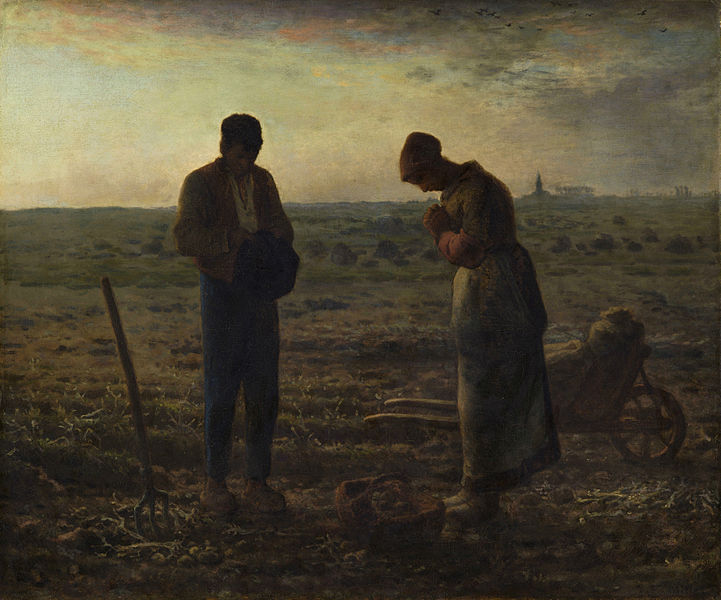
A radically different image
This theme of spiritual solace that Tanner encountered in the paintings of French Realists like Millet resonated with his own upbringing as the son of a Methodist minister. He hoped to find a way of highlighting the dignity and grace of poor African Americans in the manner that he had seen in France—an approach that would be radically different from stereotypical images of the overly servile “Uncle Tom” figure (named after the main character in Harriet Beecher Stowe’s iconic 1852 novel) that was familiar to Americans in countless advertisements (like this one, for Ayer’s Cathartic Pills [The Country Doctor], c. 1883) and popular magazines.
In The Banjo Lesson, Tanner’s desire to show us his vision of the resilience, spiritual grace, and creative and intellectual promise of post-Civil War African Americans is fully realized. The scene is staged within the small confines of a log cabin with the cool glow of a hearth fire casting the scene’s only light source from right corner, enveloping the man and the boy in a rectangular pool of light across the floor. The boy holds the banjo in both hands, his downward gaze a reflection of his focused concentration on his grandfather’s instructions. The older man holds the banjo up gently with his left hand so that the boy is not encumbered by its weight, yet the staging shows us that the man wants the boy to come into the realization of the music and its rewards through his own intuition and hard work.
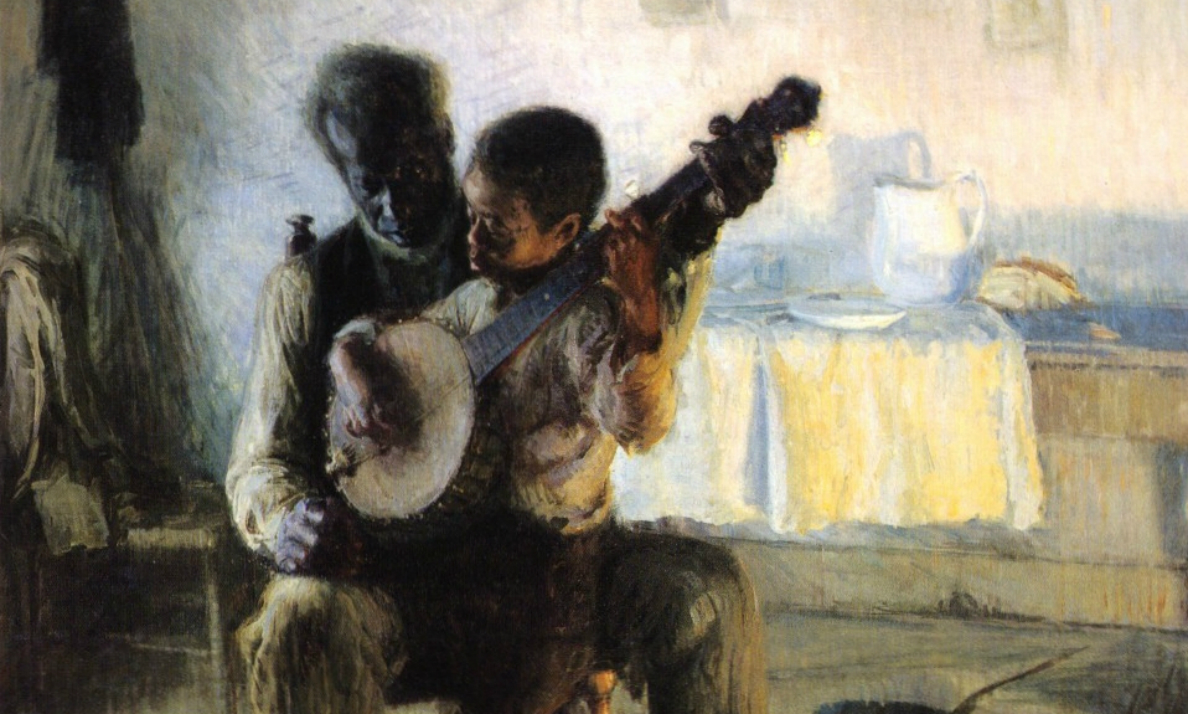
The contrast between the man’s age and the boy’s adds to the narrative tension within in the painting as in the Ghirlandaio, a counterpoint between age and experience, and youth and the promise of achievement. The boy is bathed in the glow of the fire’s warmth with a glimmer of white light shining across his forehead, the center of knowledge and understanding. The older man is submerged in the cool shadows of the room. This carefully orchestrated play of warm and cool, of shadow and light, conveys that the success of future generations is built upon the legacy of previous ones. Bathed in muted cool tones of grays and blues, the grandfather is the past, the old America of slavery and The Civil War, of oppression, racism, and poverty, while the boy, caught in the warm glow of the fire’s light, is the new America, of renewed opportunities, advancement, education, and new beginnings.
Banjos, minstrel shows, and stereotypes of African Americans
Certainly Tanner would have seen a great deal of his own life played out in this tender scene. As the educated son of a former slave and a minister and abolitionist, Tanner was always striving to live up to his potential as an artist in the post-Civil War, post-Reconstruction era America. It is also important that the instrument that leads the boy towards enlightenment is the banjo, an instrument highly significant to African American slave culture and the music of the American South. The banjo evolved from the gourd instruments of Africa and the West Indies and became integral to the music of enslaved people throughout the eighteenth and nineteenth centuries.
By Tanner’s time, it was a mainstay of minstrel shows, popular variety entertainment that featured white actors in blackface performing songs and skits. In minstrel shows, it was the custom to portray African Americans as boisterous, jaunty, buffoonish, and dim-witted. This portrayal fed into the preconceived notions of white racial superiority—that African Americans, even if they were no longer slaves, would still be infantile and incapable of self-determined action or remarkable achievements. The entire visual and popular culture of Uncle Tom imagery and minstrel shows were part of the pernicious psychological chains of slavery that persisted in America throughout much of the nineteenth and twentieth centuries. The shows also depicted African Americans as having an innate musicality, which acknowledged their talent but undermined their intelligence.
For Tanner, painting this image of generational torch-passing, was a way of debunking the entrenched derogatory stereotypes of African Americans propagated by minstrel shows. In Tanner’s painting we see the grandfather and the boy as intelligent, noble, graceful people engaged in an intimate act of sharing creative knowledge. Their lesson becomes emblematic of the larger African American journey of the late nineteenth and early twentieth century, from Emancipation, Reconstruction, the terrors and injustices of the Jim Crow laws, the exodus of the Great Migration, and the foment and dynamism of the Harlem Renaissance.

An American artist
After painting The Banjo Lesson and The Thankful Poor (above), Tanner moved back to Paris where he would remain for most of his life. Tanner felt that France was less encumbered with the baggage of racial prejudice towards people of color than the United States. “In America, I’m Henry Tanner, Negro artist, but in France, I’m ‘Monsieur Tanner, l’artiste américaine.‘”[3]
His desire to be recognized by the quality of his talent would inspire him to paint prolifically throughout his life, traveling through the Middle East and North Africa in search of authentic imagery for biblical paintings that would become the hallmark of his later career. When World War I was declared in Europe, Tanner enlisted in the Red Cross, serving as a medical volunteer as well as making numerous sketches and various paintings of the soldiers in France and Belgium. In 1923, he was awarded the Legion of Honour by the French government for his service during the war.
But it is The Banjo Lesson that has become the iconic painting of his entire career. Its economy of scale, its emotional delicacy, its nuanced orchestration of light and shadow and symbolism situates it in a resonant space in American art history. Both The Banjo Lesson and The Thankful Poor were remarkable achievements for Tanner—works that according to the art historian Judith Wilson, “invest their ordinary, underprivileged, Black subjects with a degree of dignity and self-possession that seems extraordinary for the times in which they were painted.”[4] It is a testament to Tanner’s vision as an artist, and his personal convictions as an African American, amid the possibilities offered by twentieth century, that these two paintings continue to speak so profoundly to us now.
19th century Victorian England: Charles Barry and A.W.N. Pugin, Palace of Westminster (Houses of Parliament)
Unsettled by industrialization and the ugliness of the modern world, Victorians looked back to the Gothic style. Barry and Pugin’s design for the Houses of Parliament, while Gothic in style, was classically organized. Barry was also known for his renovations of elite homes. A master of the Gothic Revival, Catholic convert Pugin designed decorative crafts as well as buildings, publishing books advocating for Gothic style.
19th century Victorian England: An Introduction to The Pre-Raphaelites
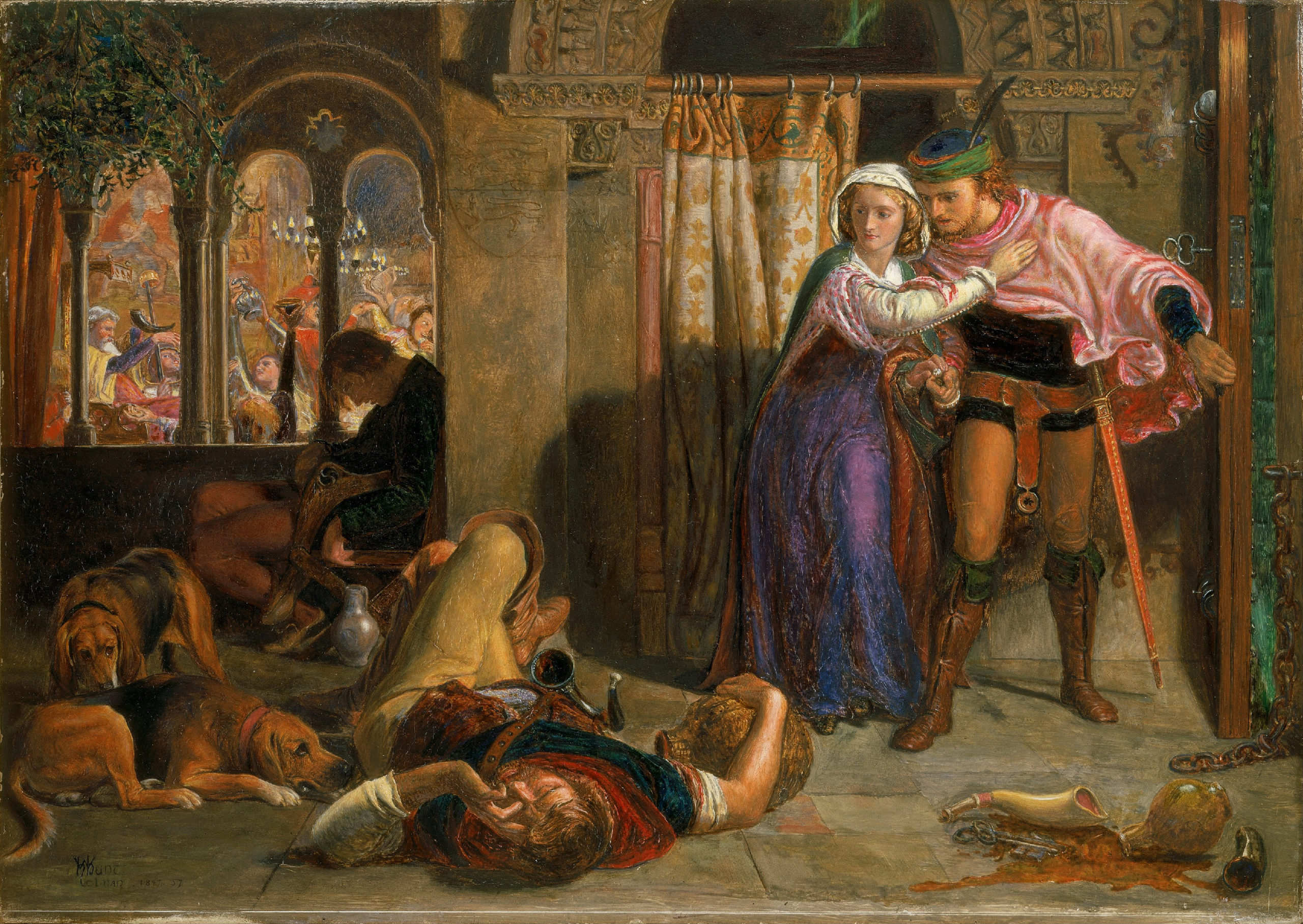
At first they were three
During a visit to the Royal Academy exhibition of 1848, the young artist and poet Dante Gabriel Rossetti was drawn to a painting entitled The Eve of Saint Agnes by William Holman Hunt. As a subject taken from the poetry of John Keats was a rarity at the time, Rossetti sought out Hunt, and the two quickly became friends. Hunt then introduced Rossetti to his friend John Everett Millais, and the rest, as they say, is history. The trio went on to form the Pre-Raphaelite Brotherhood, a group determined to reform the artistic establishment of Victorian England (1837–1901).
Looking back to look forward
The name “Pre-Raphaelite Brotherhood” (PRB) hints at the vaguely medieval subject matter for which the group is known. The young artists appreciated the simplicity of line and large flat areas of brilliant color found in the early Italian painters before Raphael, as well as in 15th century Flemish art. These were not qualities favored by the more academic approach taught at the Royal Academy during the mid-19th century, which stressed the strong light and dark shading of the Old Masters. Another source of inspiration for the young artists was the writing of art critic John Ruskin, particularly the famous passage from Modern Painters telling artists
“to go to nature in all singleness of heart . . . rejecting nothing, selecting nothing and scorning nothing.[5]”
This combination of influences contributed to the group’s extreme attention to detail, and the development of the wet white ground technique that produced the brilliant color for which they are known. The artists even became some of the first to complete sections of their canvases outdoors in an effort to capture the minute detail of every leaf and blade of grass.
And then they were seven
It was decided that seven was the appropriate number for a rebellious group and four others were added to form the initial Brotherhood. The selection of additional members has long mystified art historians. James Collinson, a painter, seems to have been added due to his short-lived engagement to Rossetti’s sister Christina rather than his sympathy with the cause. Another member, Thomas Woolner, was a sculptor rather than a painter. The final two members, William Michael Rossetti and Frederic George Stephens, both of whom went on to become art critics, were not practicing artists. However, other young artists such as Walter Howell Deverell and Charles Collins embraced the ideals of the PRB even though they were never formally elected as members.
The PRB goes public

The Pre-Raphaelites decided to make their debut by sending a group of paintings, all bearing the initials “PRB”, to the Royal Academy in 1849. However, Rossetti, who was nervous about the reception of his painting The Girlhood of Mary Virgin, changed his mind and instead sent his painting to the earlier Free Exhibition (meaning there was no jury as there was at the Royal Academy). At the Royal Academy, Hunt exhibited Rienzi, the Last of the Tribunes, a scene from a historical novel of the same name by Edward Bulwer-Lytton. Millais exhibited Isabella, another subject from Keats, created with such attention to detail that one can actually see the beheading scene on the plate nearest the edge of the table, which echoes the ultimate fate of the young lover Lorenzo in the story. In both paintings, the accurately designed medieval costumes, bright colors and attention to detail produced criticism that the paintings mimicked a “mediaeval illumination of the chronicle or the romance.” [6] Interestingly, no mention was made of the mysterious “PRB” inscription.
Critical reaction
In 1850, however, the reaction to the PRB was very different. By this time, many people knew about the existence of the supposedly secret society, in part because the group had published many of their ideas in a short-lived literary magazine entitled The Germ. Rossetti’s Ecce Ancilla Domini appeared at the Free Exhibition along with a painting by his friend Deverell entitled Twelfth Night. At the Royal Academy, Hunt’s A Converted British Family Sheltering a Christian Priest from the Persecution of the Druids and Millais’s Christ in the House of his Parents, famously abused by Charles Dickens, received the brunt of the criticism. [7] In the aftermath of the humiliating reception of their work, Collinson resigned from the group and Rossetti decided never again to exhibit publicly.
Ruskin to the rescue
Undeterred, Millais and Hunt again continued to exhibit paintings demonstrating the beautiful colors and detail orientation of the mature style of the PRB. The Royal Academy of 1851 included Hunt’s Valentine Rescuing Sylvia, and three pictures by Millais, Mariana, The Woodman’s Daughter, and The Return of the Dove to the Ark as well as Convent Thoughts by Millais’s friend Charles Collins. Although many were still dubious about the new style, the critic John Ruskin came to the rescue of the group, publishing two letters in The Times newspaper in which he praised the relationship of the PRB to early Italian art. Although Ruskin was suspicious of what he termed the group’s “Catholic tendencies,” he liked the attention to detail and the color of the PRB paintings. Ruskin’s praise helped catapult the young artists to a new level.
The dissolution of the PRB
The Brotherhood, however, was slowly dissolving. Woolner emigrated to Australia in 1852. Hunt decided in January 1854 to visit the Holy Land in order to better paint religious pictures. And, in an event Rossetti described as the formal end of the PRB, Millais was elected as an Associate of the Royal Academy in 1853, joining the art establishment he had fought hard to change.
Lasting impact
Despite the fact that the Brotherhood lasted only a few short years, its impact was immense. Millais and Hunt both went on to establish important places for themselves in the Victorian art world. Millais was to go on to become an extremely popular artist, selling his artworks for vast sums of money, and ultimately being elected as the President of the Royal Academy. Hunt, who perhaps stayed most true to the Pre-Raphaelite aesthetic, became a well-known artist and wrote many articles and books on the formation of the Brotherhood.
Rossetti became a mentor to a group of younger artists including Edward Burne-Jones and William Morris, founder of the Arts and Crafts Movement. Rossetti’s paintings of beautiful women also helped inaugurate the new Aesthetic Movement, or the taste for Art for Art’s Sake, in the later Victorian era.
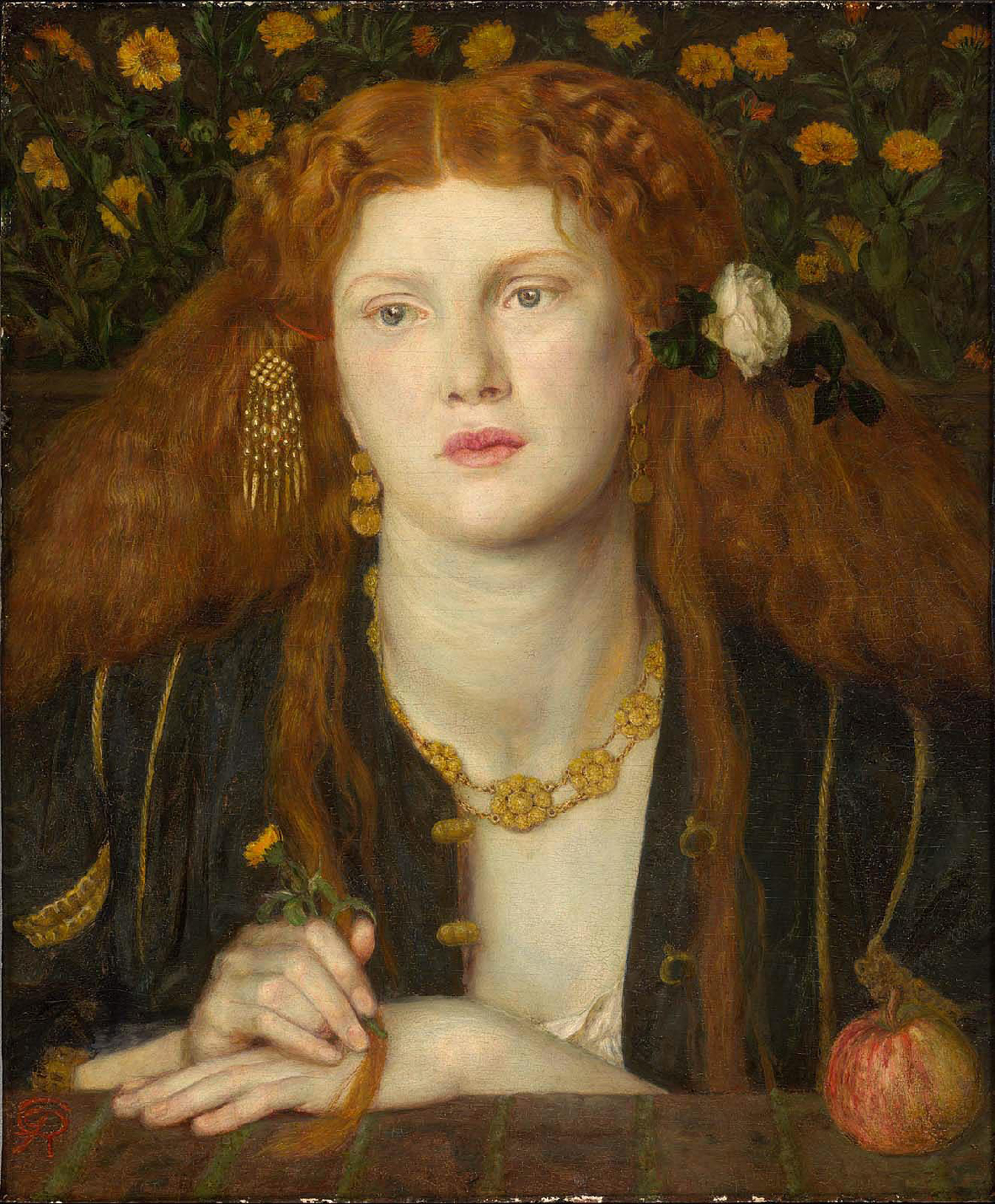
To a contemporary audience, the Pre-Raphaelites may appear less than modern. However, in their own time the Pre-Raphaelite Brotherhood accomplished something revolutionary. They were one of the first groups to value painting out-of-doors for its “truth to nature,” and their concept of banding together to take on the art establishment helped to pave the way for later groups. The distinctive elements of their paintings, such as the extreme attention to detail, the brilliant colors and the beautiful rendition of literary subjects set them apart from other Victorian painters.
Conclusion
In the early to mid-19th century, some artistic movements returned to the past. The Gothic Revival style of architecture and the Pre-Raphaelites, both from Victorian England, took inspiration from previous movements apart from the modern world. However, there was no denying the modern world had to come into existence. The styles of Romanticism and Realism began to create for a new “modern” audience. In a world shaped by industrialization, capitalism, secularism, and technology, artists of the avant-garde began to challenge established conventions of art. Even new artistic technologies, such as the medium of photography, encouraged artists to experiment and explore new mediums and ways of representing a rapidly changing world.
Citation and Licensing
The following sections were written by Chelsea Wright and licensed CC BY-NC-SA 4.0:
- Chapter Overview and Introduction
- Focus artwork and term list compiled by Chelsea Wright
- Practicing Visual Analysis
- Conclusion
The following articles from Smarthistory licensed CC BY-NC-SA 4.0 were remixed and adapted for the chapter:
- Dr. Bryan Zygmont, “Jean-Auguste-Dominique Ingres, Napoleon on His Imperial Throne,” in Smarthistory, November 29, 2015.
- Dr. Beth Harris and Dr. Steven Zucker, “The Early Modern era: the 18th century (4 of 4),” in Smarthistory, January 15, 2025.
- Dr. Bryan Zygmont, “Painting colonial culture: Ingres’s La Grande Odalisque,” in Smarthistory, August 9, 2015.
- Dr. Nancy Demerdash, “Orientalism,” in Smarthistory, June 2, 2015.
- Dr. Beth Harris and Dr. Steven Zucker, “Romanticism, an introduction,” in Smarthistory, August 8, 2015.
- Dr. Bryan Zygmont, “Eugène Delacroix, Liberty Leading the People,” in Smarthistory, November 22, 2015.
- Dr. Claire Black McCoy, “Théodore Géricault, Raft of the Medusa,” in Smarthistory, May 27, 2021.
- Dr. Sarah C. Schaefer, “Francisco Goya, The Sleep of Reason Produces Monsters,” in Smarthistory, August 9, 2015.
- Christine Zappella, “Francisco Goya, The Third of May, 1808,” in Smarthistory, August 9, 2015.
- Smarthistory, “JMW Turner,” in Smarthistory.
- Lori Landay and Dr. Beth Harris, “J. M. W. Turner, Slave Ship,” in Smarthistory, December 9, 2015.
- Dr. Alissa Adams, “J.M.W. Turner, Snowstorm: Hannibal and his Army Crossing the Alps,” in Smarthistory, April 18, 2024.
- Dr. Beth Gersh-Nesic, “Realism, an introduction,” in Smarthistory, August 9, 2015.
- Dr. Parme Giuntini, “Becoming modern in 19th-century Europe, an introduction,” in Smarthistory, August 8, 2015.
- Dr. Beth Harris and Dr. Steven Zucker, “Gustave Courbet, The Stonebreakers,” in Smarthistory, August 9, 2015.
- Smarthistory, “Édouard Manet,” in Smarthistory.
- Dr. Thomas Folland, “Édouard Manet, Olympia,” in Smarthistory, December 9, 2015.
- Dr. Rebecca Jeffrey Easby, “Early photography: Niépce, Talbot, and Muybridge,” in Smarthistory, August 9, 2015.
- Smarthistory, “Thomas Eakins,” in Smarthistory.
- Meg Floryan, “Thomas Eakins, The Gross Clinic and The Agnew Clinic,” in Smarthistory, August 9, 2015.
- Farisa Khalid, “Henry Ossawa Tanner, The Banjo Lesson,” in Smarthistory, September 9, 2016.
- Smarthistory, “Charles Barry,” in Smarthistory.
- Smarthistory, “A.W.N. Pugin,” in Smarthistory.
- Dr. Beth Harris and Dr. Steven Zucker, “Charles Barry and A.W.N. Pugin, Palace of Westminster (Houses of Parliament),” in Smarthistory, December 11, 2015.
- Dr. Rebecca Jeffrey Easby, “The Pre-Raphaelites, an introduction,” in Smarthistory, August 9, 2015.
- Linda Nochlin, “The Imaginary Orient,” Art in America, volume IXXI, number 5 (1983), pp. 118–31. ↵
- Karl Marx, Manifesto of the Communist Party, 1848. ↵
- Marcia M. Matthews, Henry Ossawa Tanner: American Artist (University of Chicago Press, 1995) p. 90. ↵
- Judith Wilson, “Lifting “The Veil”: Henry O. Tanner’s The Banjo Lesson and The Thankful Poor,” Contributions in Black Studies, vol. 9, article 4 (1992) ↵
- John Ruskin, Modern Painters, 1843. ↵
- Athenaeum, 2 June 1849, p. 575. ↵
- Charles Dickens, in his magazine Household Words in June 1850 described Christ as a “hideous, wry-necked, blubbering, red-haired boy in a nightgown, who appears to have received a poke playing in an adjacent gutter, and to be holding it up for the contemplation of a kneeling woman, so horrible in her ugliness that (supposing it were possible for any human creature to exist for a moment with that dislocated throat) she would stand out from the rest of the company as a monster in the vilest cabaret in France or in the lowest gin-shop in England.” ↵

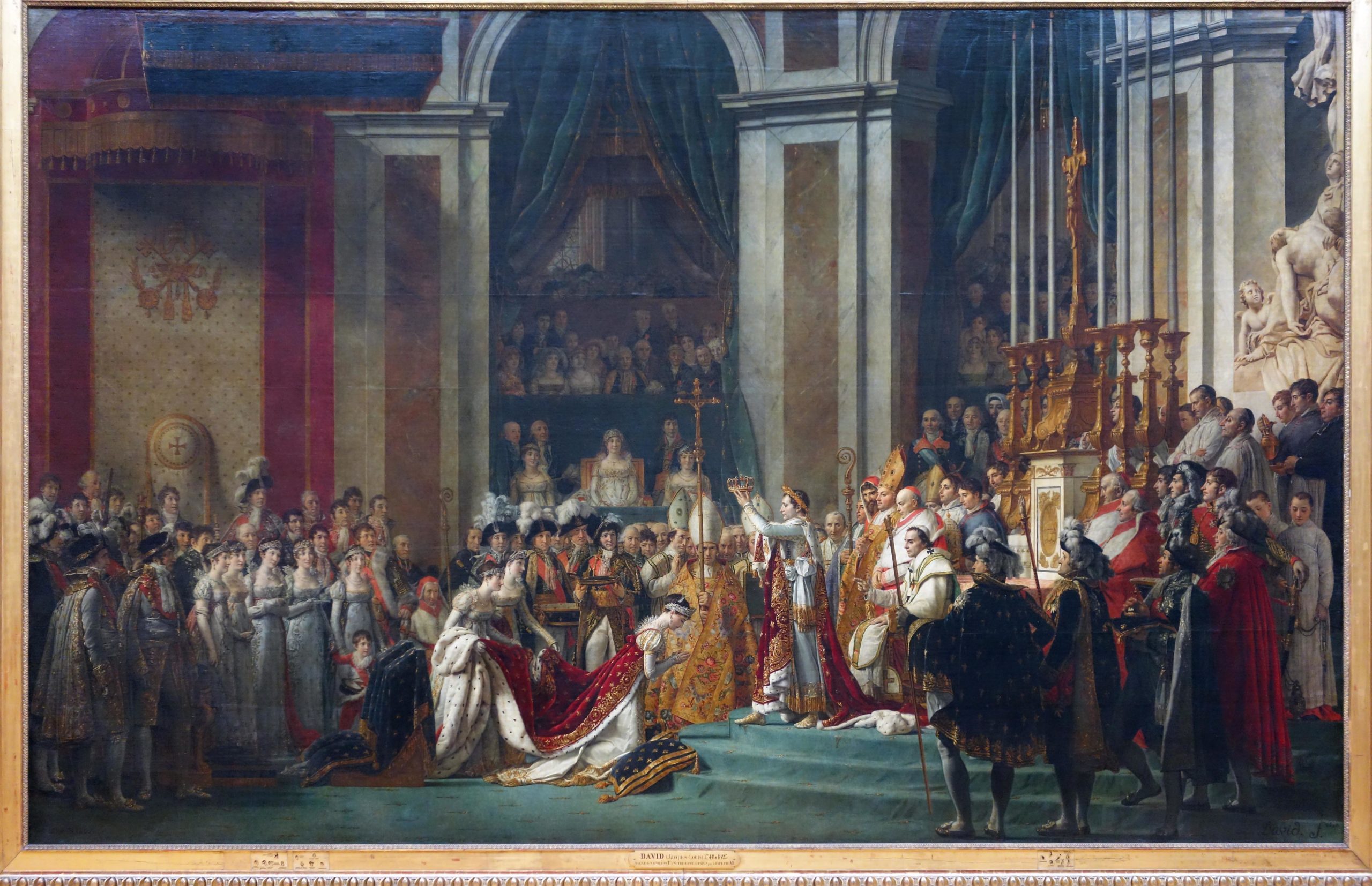

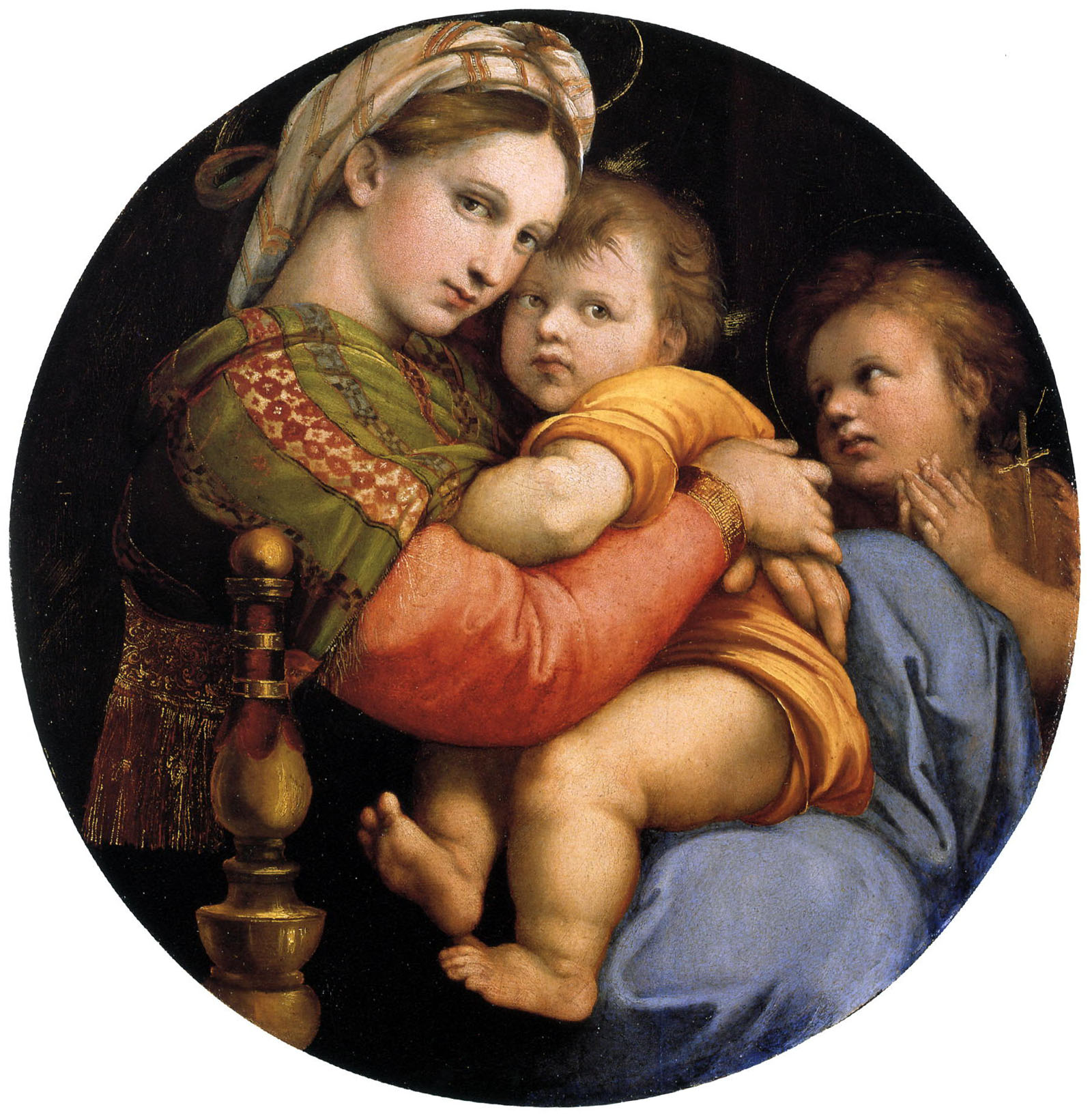


_001.jpg)
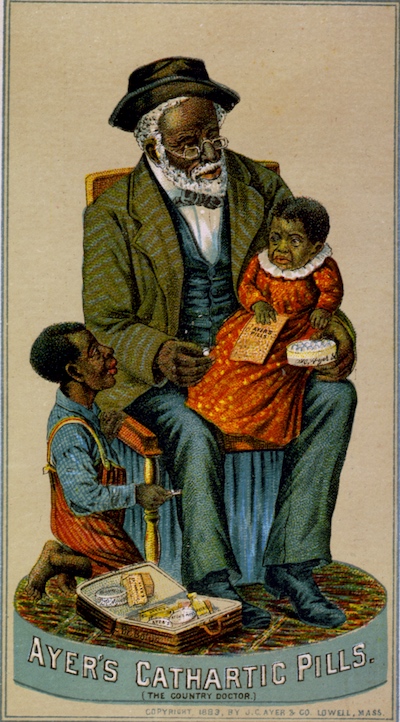

_-_Google_Art_Project.jpg)
