
The Planning Process
How to Begin Lesson Planning and Backwards Design
Do I start planning with content area standards or classroom activities? The reality is when planning lessons, educators often choose between beginning with content standards or classroom activities. Each approach offers distinct advantages and challenges, and understanding these can help in selecting the most effective strategy for a given context.
Starting with content standards provides clear, measurable objectives that ensure lessons align with educational expectations. This approach promotes consistency across classrooms and holds both teachers and students accountable for specific learning outcomes. It also facilitates data-driven instruction, as assessments can be directly tied to these standards, allowing for targeted interventions when necessary. However, a potential drawback is that strict adherence to standards may limit creativity in lesson design, potentially leading to a more rigid and less engaging learning experience for students.
On the other hand, beginning with classroom activities can foster a more dynamic and student-centered learning environment. This approach allows teachers to design lessons that are engaging and relevant to students’ interests, which can enhance motivation and participation. It also provides flexibility, enabling educators to adapt lessons to the immediate needs and responses of their students. The challenge with this method lies in ensuring that the activities align with the required standards, which may require additional effort to map and assess.
An integrated approach, known as backward design, combines the strengths of both methods. In backward design, educators start by identifying the desired learning outcomes (standards), then determine acceptable evidence of learning (assessments), and finally plan the instructional activities that will lead to those outcomes. This method ensures that lessons are both standards-driven and engaging, aligning instructional strategies with clear objectives and assessments. It promotes a cohesive and intentional learning experience, where activities are purposefully selected to achieve the desired outcomes.
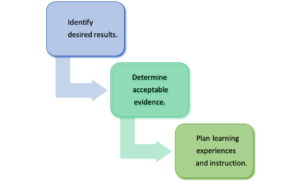
In conclusion, while both starting with content standards and classroom activities have their merits, integrating both approaches through backward design can provide a balanced framework that ensures lessons are both aligned with educational standards and engaging for students. This method supports effective teaching by focusing on desired outcomes, appropriate assessments, and engaging instructional activities.
Observations and Student Interests
By attentively watching students’ interactions, behaviors, and preferences during various activities, educators can identify patterns that reveal what captivates their students. This approach not only enhances student motivation but also fosters a deeper connection to the material, as students are more likely to invest in lessons that reflect their personal interests.
Taking notes on student work is a powerful way for teachers to make informed lesson-planning decisions. By closely examining students’ responses, strategies, and errors, teachers can identify patterns that reveal what students understand, what misconceptions they may have, and which skills need additional support. These notes help teachers move beyond assumptions and plan instruction that is responsive to actual student needs, such as reteaching a concept, providing targeted small-group instruction, or extending learning for students who are ready for more challenges. Over time, consistent note-taking creates a clear record of student progress and growth, allowing teachers to adjust pacing, select appropriate materials, and design lessons that are more effective and equitable for all learners.
Traditional approaches include anecdotal notes, where brief narratives describe specific student behaviors or interactions, and checklists that track the occurrence of particular actions or skills. While this method requires flexibility for teachers, since each year will look different, student engagement and enthusiasm increases and thus negative behaviors decrease.
Reference
- University of San Diego. (2026). 3 Basic Steps of Backward Design Lesson Plans [+FAQs]. https://pce.sandiego.edu/backward-design-in-education/
Media Attributions
- Backwards Design © Vanderbilt Center for Teaching is licensed under a CC BY-NC (Attribution NonCommercial) license