
Assessing the Arts
Qualitative vs. Quantitative Assessment Methods
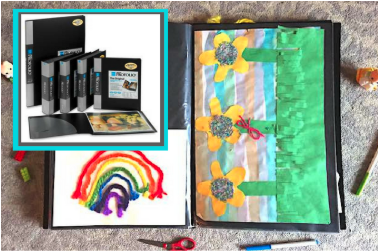
Qualitative assessments, such as portfolios, performance-based assessments, and peer evaluations, are particularly suited to arts-integrated lessons. These methods focus on the process and creativity involved in students’ work, rather than just the final product. Quantitative assessments, such as quizzes or tests, can still be used to measure academic content knowledge, but they should be supplemented with qualitative tools to give a fuller picture of student learning. Teachers can assess the depth of student understanding by evaluating their creative process and their ability to express academic concepts through the arts (Zhou & Brown, 2021).
Portfolio-Based and Performance-Based Assessment
Portfolios are an excellent way to track student progress over time, especially in the context of arts integration. Students can compile their artwork, writing, and performance projects in a portfolio to demonstrate their growth and learning. Performance-based assessments, such as acting out a scene from a play or presenting a visual art project, allow students to demonstrate their knowledge and skills in action. These assessments are particularly beneficial in arts-integrated classrooms, where creativity and self-expression are emphasized (NAEYC, 2020).
Documenting student progress is essential for ensuring that students are meeting learning objectives and for communicating their achievements to parents and other educators. Teachers can use a variety of tools, such as anecdotal records, photos of student work, and video recordings of performances, to document student progress. This documentation can serve as a valuable resource during parent-teacher conferences or when adjusting instruction to better meet student needs (Zhou & Brown, 2021).
How to Talk to a Child About Their Art
Talking to students about their art helps deepen their thinking, build confidence, and support meaningful self-expression. When teachers ask open-ended questions about a student’s artwork—such as what they were trying to show, how they chose their materials, or what the piece means to them—students feel valued and respected as creators. These conversations encourage language development, reflection, and critical thinking while reinforcing that there is no single “right” way to make art. Discussing art also provides insight into a student’s ideas, emotions, and learning process, allowing teachers to respond with supportive feedback. Overall, talking with students about their art strengthens relationships and helps children see themselves as capable and creative thinkers.
Examples
Here are 5 sentence starters teachers can use when talking with students about their art:
- “Can you tell me about what you made?”
- “What part of your artwork are you most proud of?”
- “How did you decide to use these colors or materials?”
- “What were you thinking about while you were creating this?”
- “Is there a story or feeling behind your artwork?”
When talking to children about their art, it’s important to avoid comments or approaches that can limit creativity or confidence. Here are key things to avoid:
- Avoid judging or ranking artwork (e.g., “This is the best one” or “That doesn’t look right”), as this can discourage risk-taking and originality.
- Avoid focusing on realism or correctness, such as pointing out that colors, shapes, or proportions are “wrong.”
- Avoid taking control of the artwork by telling children what they should add, fix, or change unless they ask for help.
- Avoid comparing students’ work to others, which can create competition and lower self-esteem.
- Avoid vague praise like “Good job” without explanation; instead, acknowledge effort or specific choices.
- Avoid assuming meaning, such as labeling
These practices help ensure conversations about art remain supportive, respectful, and centered on the child’s creative process.
what the art represents or how the child feels without asking them first.
Adapting Arts Integration for Diverse Learners
Arts integration is an effective way to create inclusive learning environments, where all students, regardless of their backgrounds or abilities, can engage with the curriculum. This section highlights strategies for adapting arts integration for diverse learners and fostering a culturally responsive arts education.
Strategies for Special Education and IEP Adaptations
Arts integration is particularly beneficial for students with special needs, as it provides alternative means of engagement and expression. For example, students with learning disabilities may benefit from visual arts as a way to express concepts they may find difficult to understand through traditional text-based approaches. Teachers can use modifications such as providing visual cues, using tactile materials for sculpture, or employing music to reinforce vocabulary. Additionally, arts activities can be adapted for students with physical disabilities by offering seated dance or using assistive technologies for music-making (NAEYC, 2020).
Multicultural and Inclusive Arts Education
Arts education provides a platform for students to explore different cultures, histories, and perspectives. Incorporating a variety of artistic traditions, such as African drumming, Native American storytelling, or European classical music, promotes cultural awareness and inclusivity. Educators should strive to recognize the diverse cultural backgrounds of their students and use the arts to celebrate that diversity. For example, students might explore the art of various world cultures while discussing the historical events or geographical contexts that influenced those traditions (Zhou & Brown, 2021).
Recognizing and Celebrating Diversity through the Arts
Culturally responsive arts integration acknowledges the diverse cultural experiences of students and uses the arts to validate and celebrate these identities. Students can explore the music, dance, and visual arts of their own cultural heritage, helping them develop a sense of pride and identity. Furthermore, by integrating diverse cultural perspectives into arts lessons, teachers foster a more inclusive classroom environment where every student feels valued and heard (CDE, 2023).
Equity in Arts Education
Arts education should be equitable, providing all students, regardless of socioeconomic status, the opportunity to participate in and benefit from artistic learning experiences. This includes access to resources such as art supplies, music instruments, and performance spaces. Equity in arts education also means ensuring that students from historically underrepresented groups have opportunities to engage in and benefit from arts learning in a way that reflects their cultural identity (NAEYC, 2020).
References
- California Department of Education. (2023). Visual and Performing Arts Standards. https://www.cde.ca.gov/ci/cr/vapa/
- Edwards, B. (1979). Drawing on the Right Side of the Brain. TarcherPerigee.
- Lowenfeld, V., & Brittain, W. L. (1987). Creative and Mental Growth (8th ed.). Prentice Hall.
- National Association for the Education of Young Children (NAEYC). (2020). Creative expression and arts integration. https://www.naeyc.org/
- Zhou, W., & Brown, S. (2021). Arts integration in elementary curriculum (2nd ed.). Pearson.
Media Attributions
- Art Assessment © Kerry Diaz is licensed under a CC BY-NC-SA (Attribution NonCommercial ShareAlike) license