Chapter Overview and Introduction
Also known as the Byzantine Empire, the Eastern Roman Empire continued around 1,000 years after the collapse of the Western Roman Empire. The Byzantine Empire had its capital city in Constantinople (present-day Istanbul). Byzantine forms of architecture and art include the religious icon, the transformed basilica, and the mosaic. Although the Eastern Roman Empire encompasses a vast chronology, two artistic periods clearly demonstrate Byzantine aesthetics: the Early Byzantine period and the Late Byzantine era. The Hagia Sophia, first built by the Emperor Justinian during the Early Byzantine period, stands as a monument that spans the entire Byzantine Empire. Originally built as a church and later transformed into a mosque during the Ottoman Empire, today the Hagia Sophia is at the center of debate in how to handle religious sites that are also archaeological monuments.
Focus Artworks
- Virgin (Theotokos) and Child between Saints Theodore and George, sixth or early seventh century, encaustic on wood, from St. Catherine’s Monastery, Sinai, Egypt
- Justinian mosaic, San Vitale, consecrated 547, Ravenna, Italy
- Isidore of Miletus & Anthemius of Tralles, Hagia Sophia, 532-537, Constantinople (today: Istanbul)
- Deësis (Christ with the Virgin Mary and John the Baptist), c. 1261, mosaic, imperial enclosure, south gallery, Hagia Sophia, Istanbul
Term List
- Byzantium/Byzantine
- Constantinople/Istanbul
- Icon
- Iconoclastic controversy
- Triumph of Orthodoxy
- Orthodox Christianity
- Centralized cross-in-square plan
- Encaustic icon
- Hierarchy of bodies
- Justinian I
- Chi-Rho
- Orthodox patriarch
- Mosaic
- Tesserae
- Hagia Sophia
- Longitudinal Plan (Latin Plan)
- Central Plan (Greek plan)
- Pendentive
- Deësis
The chronological periods of the Byzantine Empire
From Rome to Constantinople
In 313, the Roman Empire legalized Christianity, beginning a process that would eventually dismantle its centuries-old pagan tradition. Not long after, emperor Constantine transferred the empire’s capital from Rome to the ancient Greek city of Byzantion (modern Istanbul). Constantine renamed the new capital city “Constantinople” (“the city of Constantine”) after himself and dedicated it in the year 330. With these events, the Byzantine Empire was born—or was it?
The term “Byzantine Empire” is a bit of a misnomer. The Byzantines understood their empire to be a continuation of the ancient Roman Empire and referred to themselves as “Romans.” The use of the term “Byzantine” only became widespread in Europe after Constantinople finally fell to the Ottoman Turks in 1453. For this reason, some scholars refer to Byzantium as the “Eastern Roman Empire.”
Byzantine History and Art
The history of Byzantium is remarkably long. If we reckon the history of the Eastern Roman Empire from the dedication of Constantinople in 330 until its fall to the Ottomans in 1453, the empire endured for some 1,123 years.
Scholars typically divide Byzantine history into three major periods: Early Byzantium, Middle Byzantium, and Late Byzantium. But it is important to note that these historical designations are the invention of modern scholars rather than the Byzantines themselves. Nevertheless, these periods can be helpful for marking significant events, contextualizing art and architecture, and understanding larger cultural trends in Byzantium’s history.
It’s helpful to know that Byzantine art is generally divided into three distinct periods:
| Early Byzantine | c. 330–843 |
|---|---|
| Middle Byzantine | c. 843–1204 |
| Late Byzantine | c. 1261–1453 |
Early Byzantium: c. 330–843
Scholars often disagree about the parameters of the Early Byzantine period. On the one hand, this period saw a continuation of Roman society and culture—so, is it really correct to say it began in 330? On the other, the empire’s acceptance of Christianity and geographical shift to the east inaugurated a new era.
The Emperor Constantine adopted Christianity and in 330 moved his capital from Rome to Constantinople (modern-day Istanbul), at the eastern frontier of the Roman Empire. Christianity flourished and gradually supplanted the Greco-Roman gods that had once defined Roman religion and culture. This religious shift dramatically affected the art that was created across the empire.
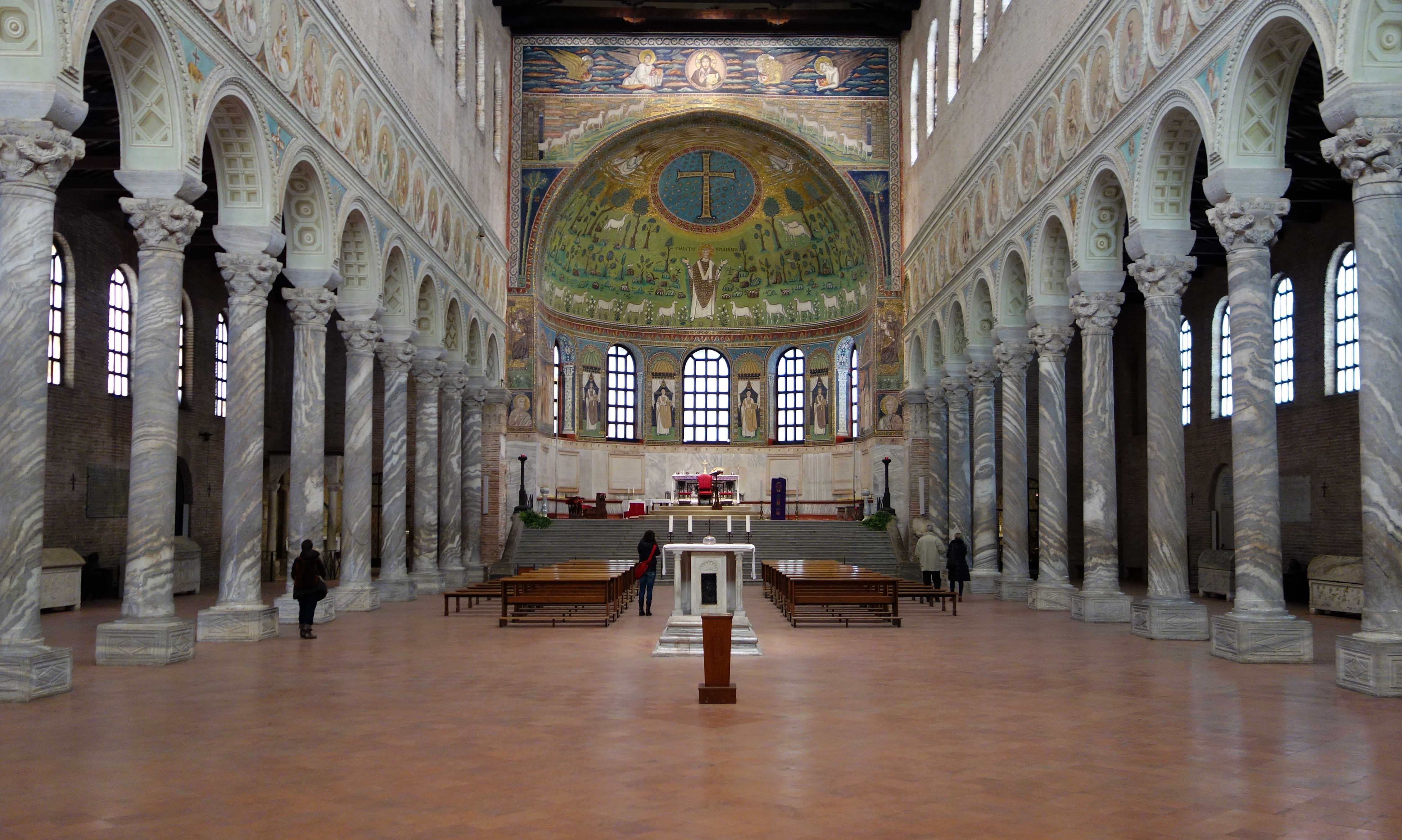
Following Constantine’s embrace of Christianity, the church enjoyed imperial patronage, constructing monumental churches in centers such as Rome, Constantinople, and Jerusalem. In the west, the empire faced numerous attacks by Germanic nomads from the north, and Rome was sacked by the Goths in 410 and by the Vandals in 455. The city of Ravenna in northeastern Italy rose to prominence in the 5th and 6th centuries when it functioned as an imperial capital for the western half of the empire. Several churches adorned with opulent mosaics, such as San Vitale and the nearby Sant’Apollinare in Classe, testify to the importance of Ravenna during this time.
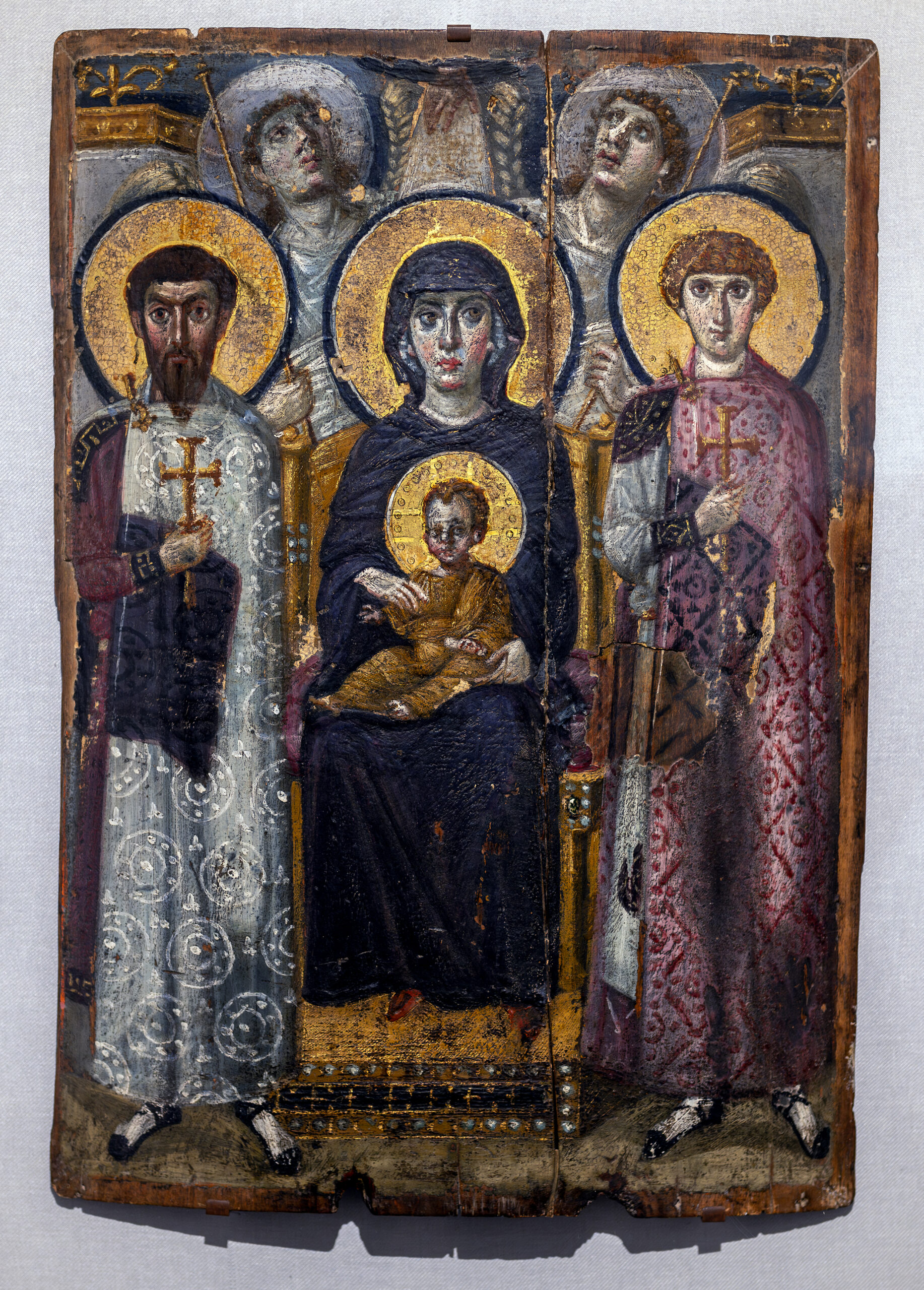
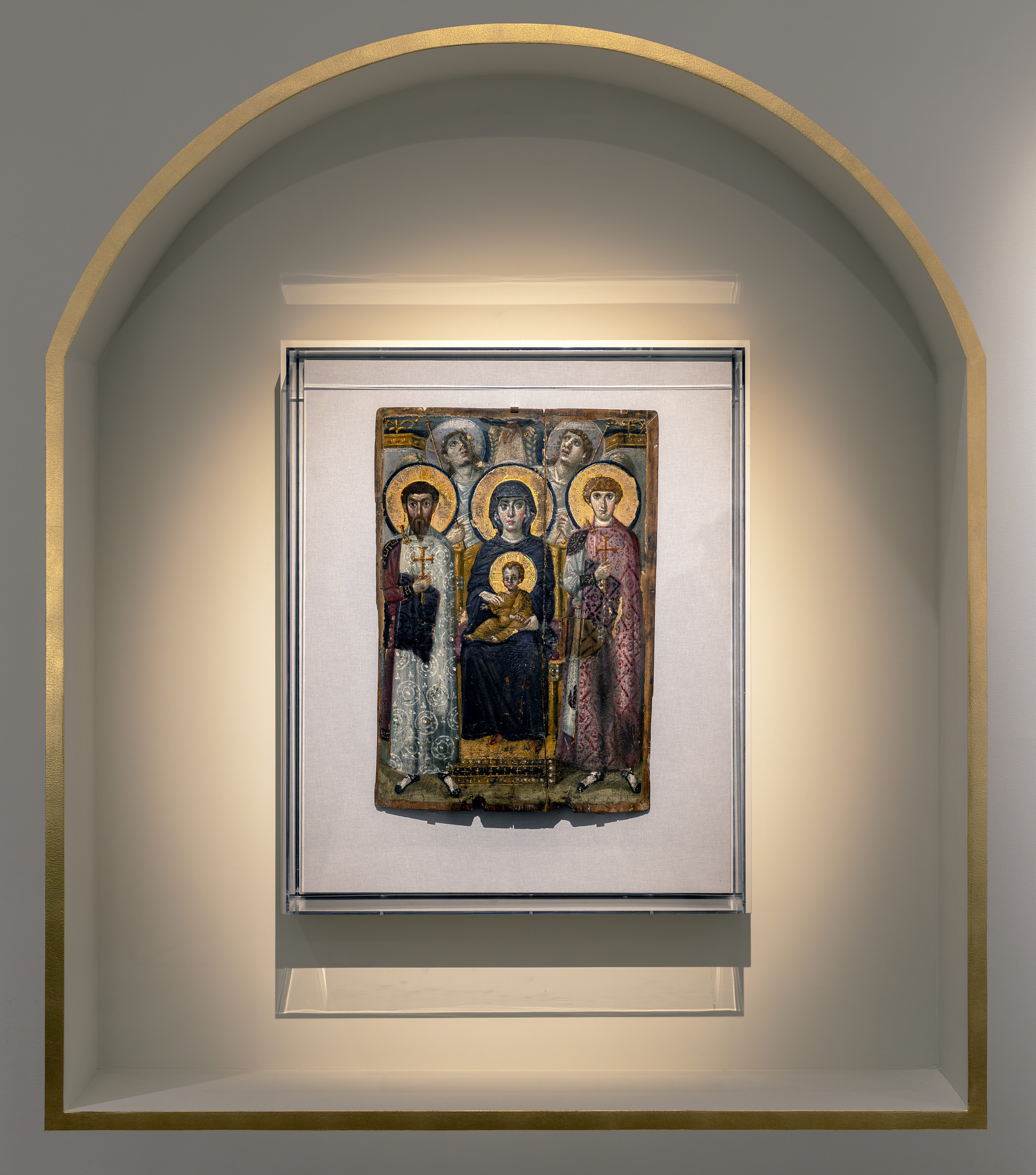
The earliest Christian churches were built during this period, including the famed Hagia Sophia (above), which was built in the sixth century under Emperor Justinian. Decorations for the interior of churches, including icons and mosaics, were also made during this period. Icons, such as the Virgin (Theotokos) and Child between Saints Theodore and George (left), served as tools for the faithful to access the spiritual world—they served as spiritual gateways.
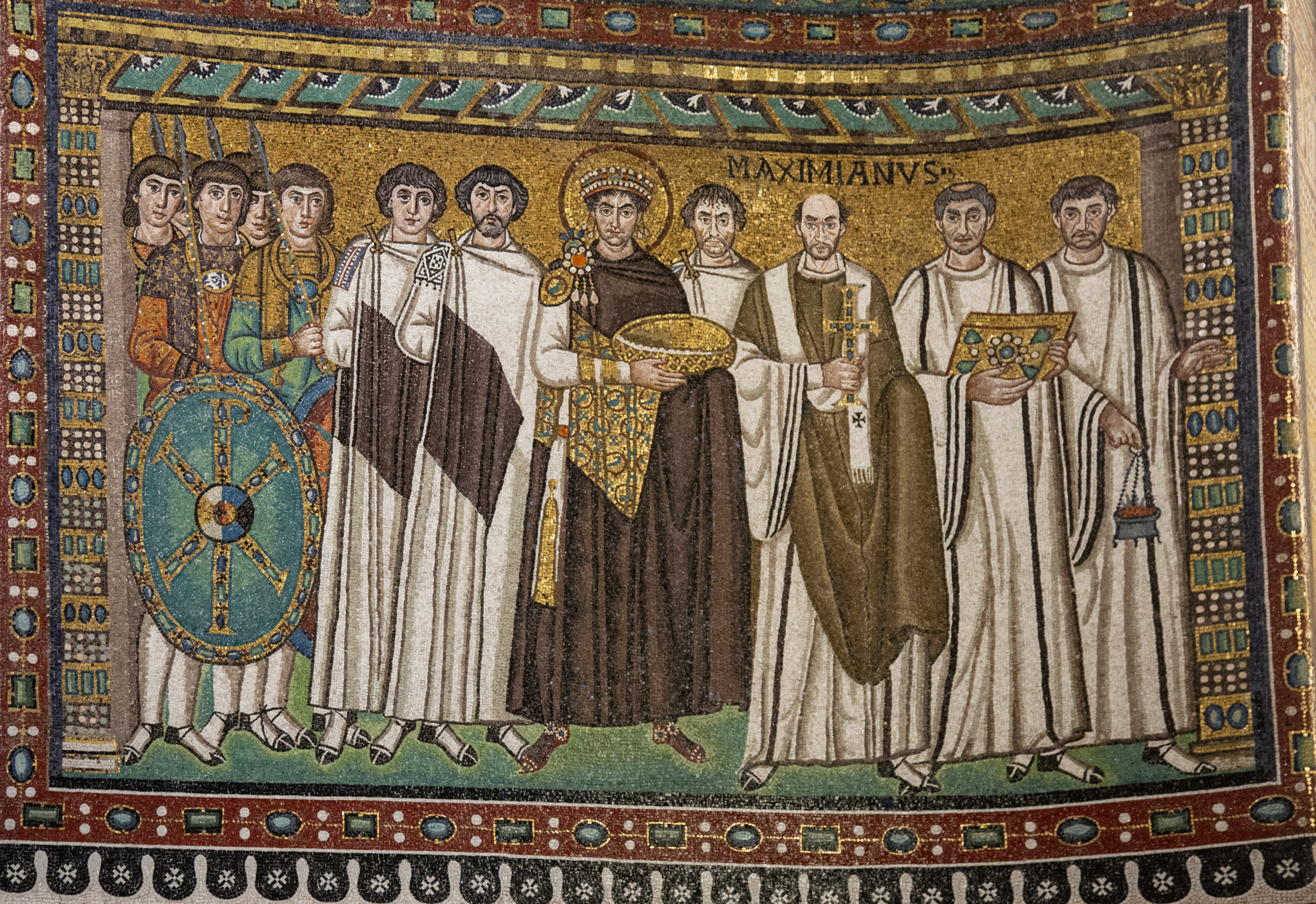
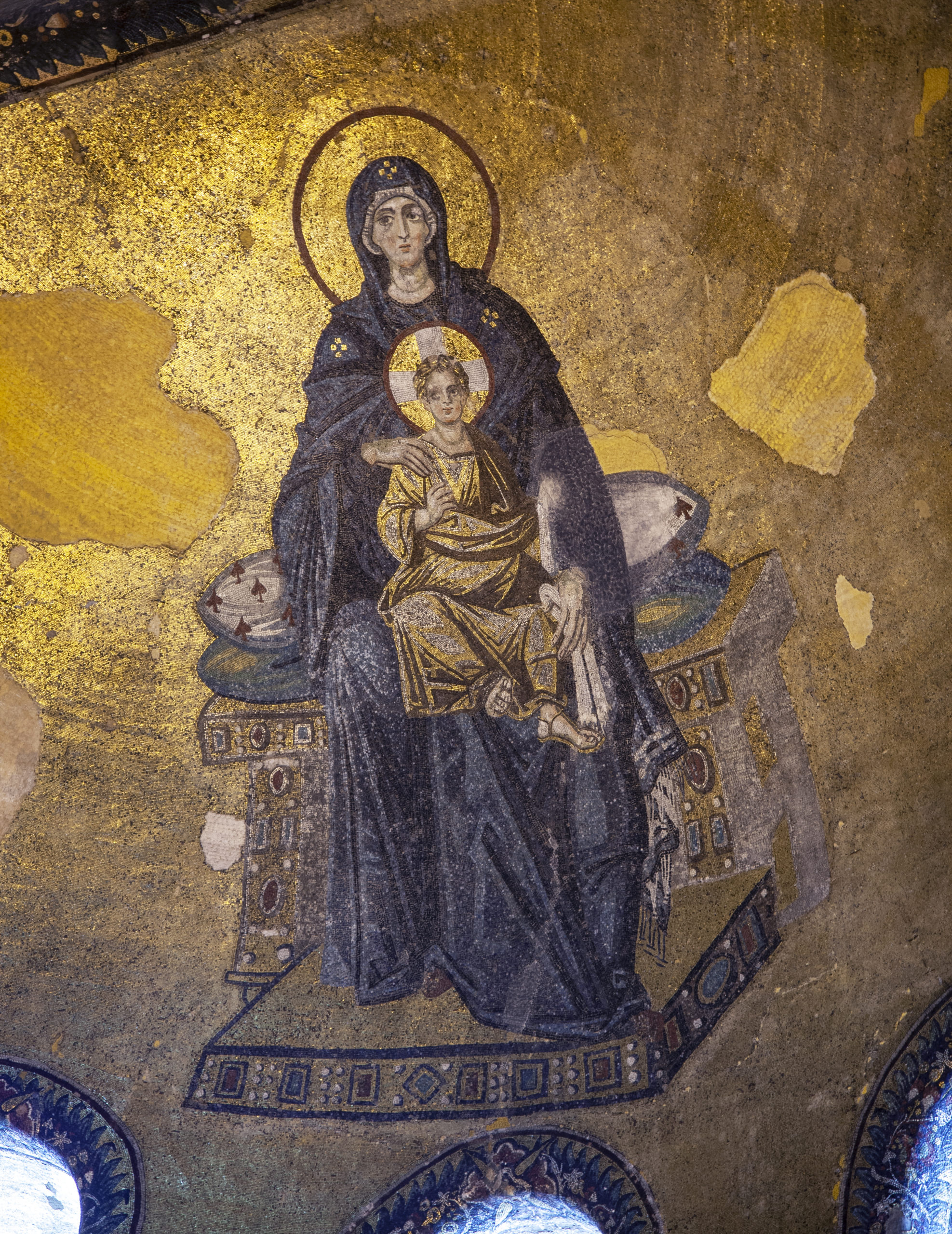
Similarly, mosaics, such as those within the Church of San Vitale in Ravenna, sought to evoke the heavenly realm. In this work, ethereal figures seem to float against a gold background that is representative of no identifiable earthly space. By placing these figures in a spiritual world, the mosaics gave worshipers some access to that world as well. At the same time, there are real-world political messages affirming the power of the rulers in these mosaics. In this sense, art of the Byzantine Empire continued some of the traditions of Roman art.
Generally speaking, Byzantine art differs from the art of the Romans in that it is interested in depicting that which we cannot see—the intangible world of Heaven and the spiritual. Thus, the Greco-Roman interest in depth and naturalism is replaced by an interest in flatness and mystery.
Under the sixth-century emperor Justinian I, who reigned 527–565, the Byzantine Empire expanded to its largest geographical area: encompassing the Balkans to the north, Egypt and other parts of north Africa to the south, Anatolia (what is now Turkey) and the Levant (including including modern Syria, Lebanon, Israel, and Jordan) to the east, and Italy and the southern Iberian Peninsula (now Spain and Portugal) to the west. Many of Byzantium’s greatest architectural monuments, such as the innovative domed basilica of Hagia Sophia in Constantinople, were also built during Justinian’s reign.
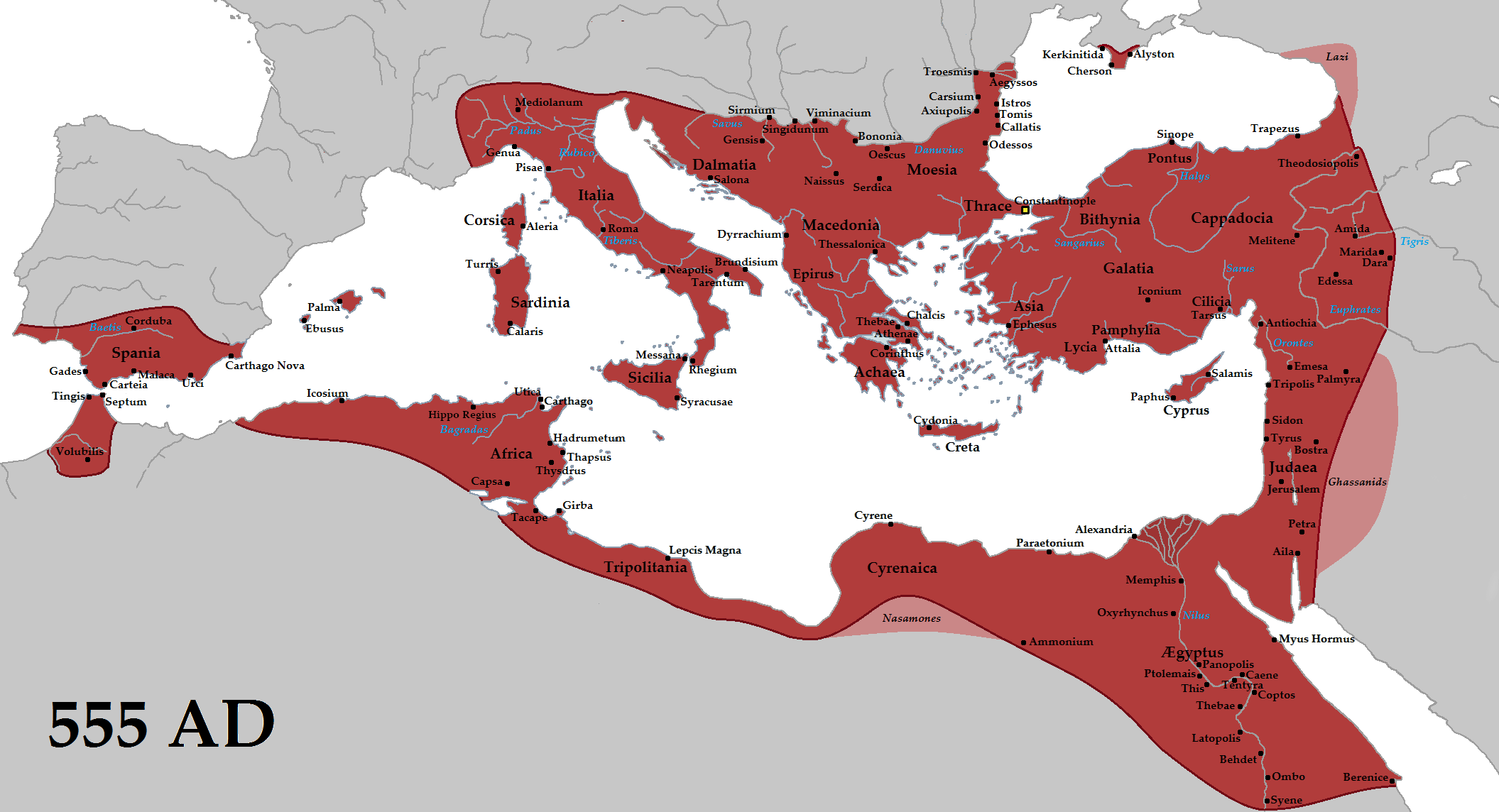
Following the example of Rome, Constantinople featured a number of outdoor public spaces—including major streets, fora, as well as a hippodrome (a course for horse or chariot racing with public seating)—in which emperors and church officials often participated in showy public ceremonies such as processions.
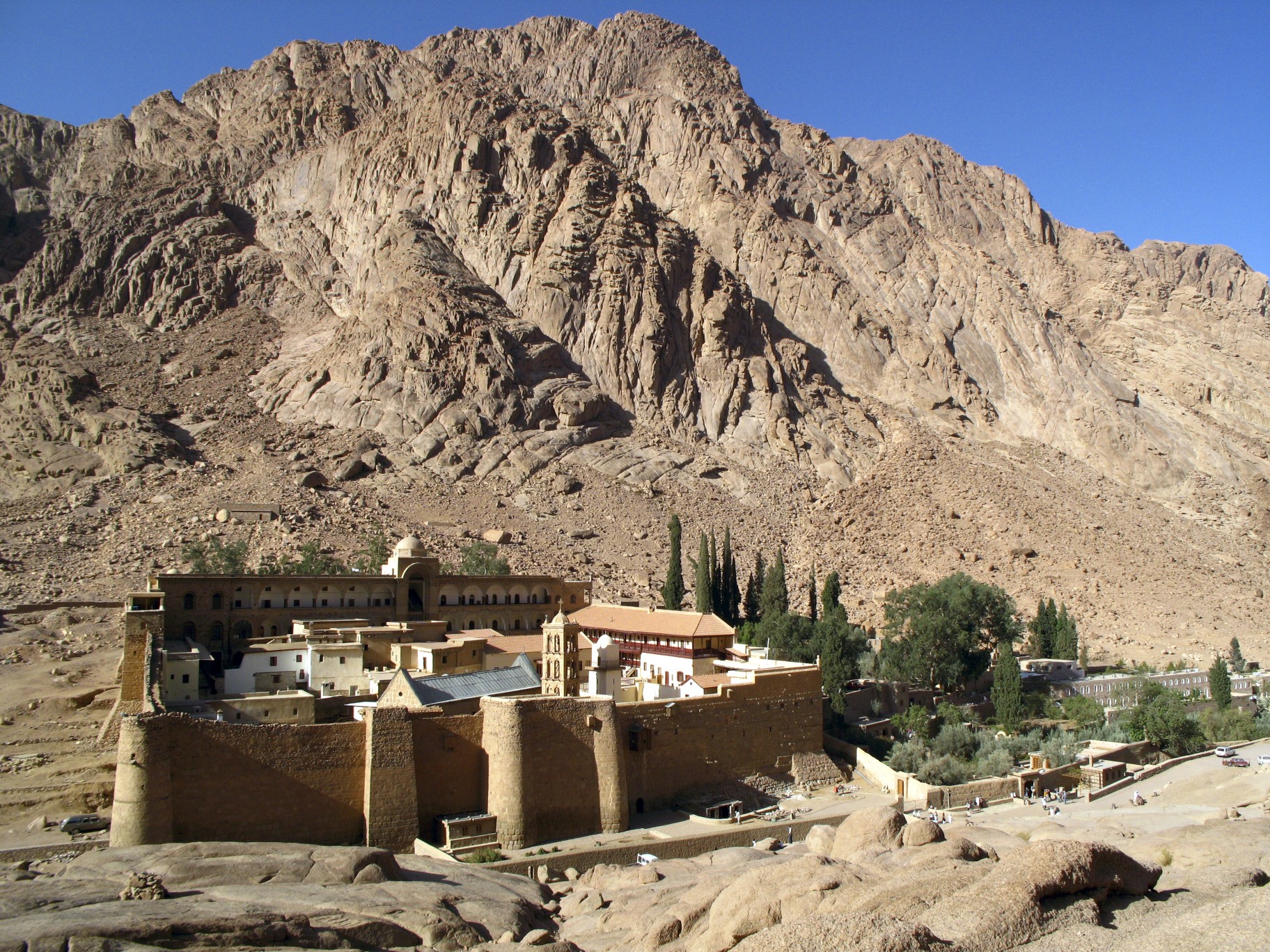
Christian monasticism, which began to thrive in the 4th century, received imperial patronage at sites like Mount Sinai in Egypt.
Yet the mid-7th century began what some scholars call the “dark ages” or the “transitional period” in Byzantine history. Following the rise of Islam in Arabia and subsequent attacks by Arab invaders, Byzantium lost substantial territories, including Syria and Egypt, as well as the symbolically important city of Jerusalem with its sacred pilgrimage sites. The empire experienced a decline in trade and an economic downturn.
Against this backdrop, and perhaps fueled by anxieties about the fate of the empire, the so-called “Iconoclastic Controversy” erupted in Constantinople in the 8th and 9th centuries. Church leaders and emperors debated the use of religious images that depicted Christ and the saints, some honoring them as holy images, or “icons,” and others condemning them as idols (like the images of deities in ancient Rome) and apparently destroying some. Finally, in 843, Church and imperial authorities definitively affirmed the use of religious images and ended the Iconoclastic Controversy, an event subsequently celebrated by the Byzantines as the “Triumph of Orthodoxy.”
Middle Byzantium: c. 843–1204
In the period following Iconoclasm, the Byzantine empire enjoyed a growing economy and reclaimed some of the territories it lost earlier. With the affirmation of images in 843, art and architecture once again flourished. But Byzantine culture also underwent several changes.
Middle Byzantine churches elaborated on the innovations of Justinian’s reign, but were often constructed by private patrons and tended to be smaller than the large imperial monuments of Early Byzantium. The smaller scale of Middle Byzantine churches also coincided with a reduction of large, public ceremonies.
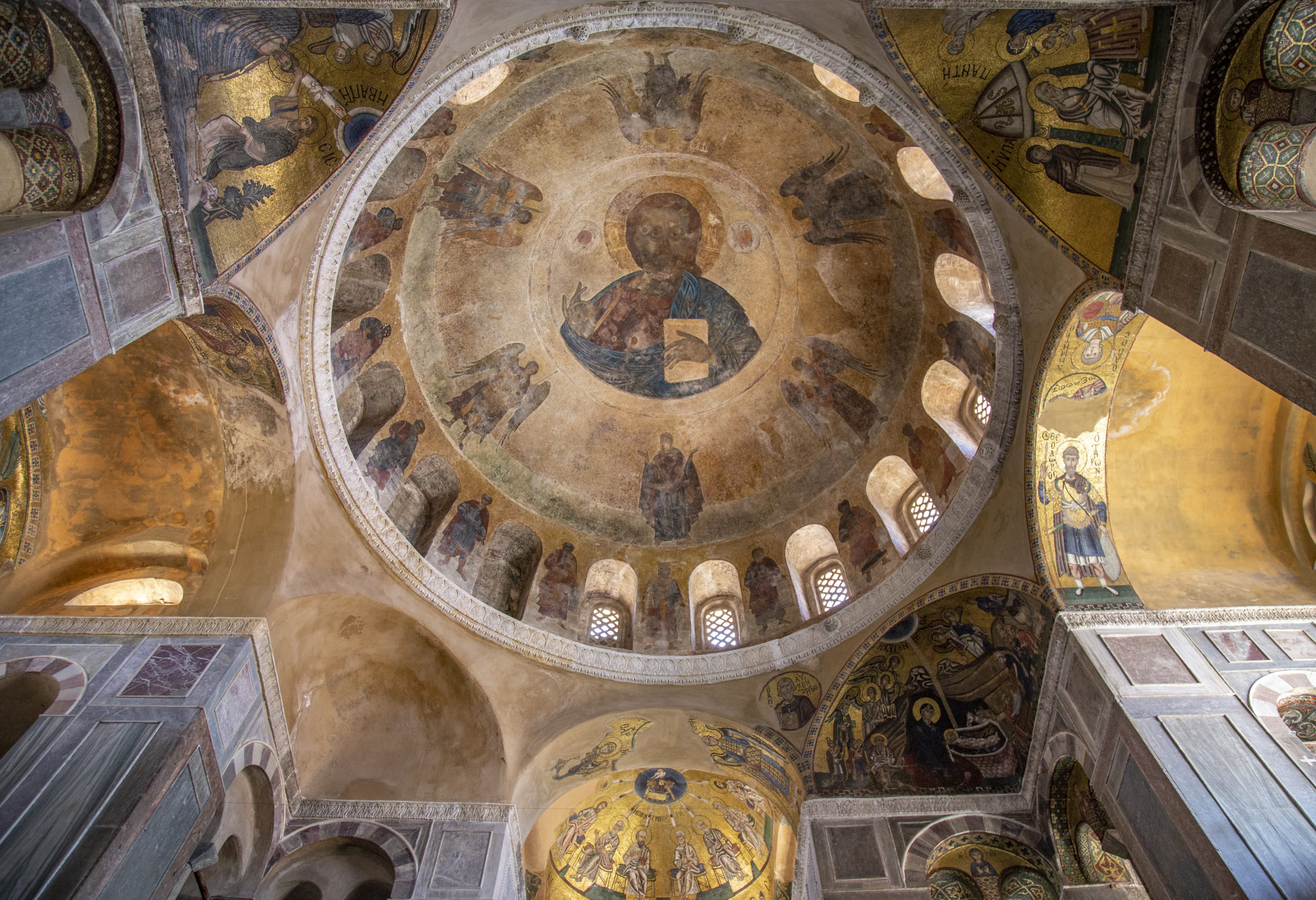
Monumental depictions of Christ and the Virgin, biblical events, and an array of various saints adorned church interiors in both mosaics and frescoes. But Middle Byzantine churches largely exclude depictions of the flora and fauna of the natural world that often appeared in Early Byzantine mosaics, perhaps in response to accusations of idolatry during the Iconoclastic Controversy. In addition to these developments in architecture and monumental art, exquisite examples of manuscripts, cloisonné enamels, stonework, and ivory carving survive from this period as well.
The stylistic and thematic interests of the Early Byzantine period continued during the Middle Byzantine period, with a focus on building churches and decorating their interiors. There were some significant changes in the empire, however, that brought about some change in the arts. First, the influence of the empire spread into the Slavic world with the Russian adoption of Orthodox Christianity in the tenth century. Byzantine art was therefore given new life in the Slavic lands.
The Middle Byzantine period also saw increased tensions between the Byzantines and western Europeans (whom the Byzantines often referred to as “Latins” or “Franks”). The so-called “Great Schism” of 1054 signaled growing divisions between Orthodox Christians in Byzantium and Roman Catholics in western Europe.
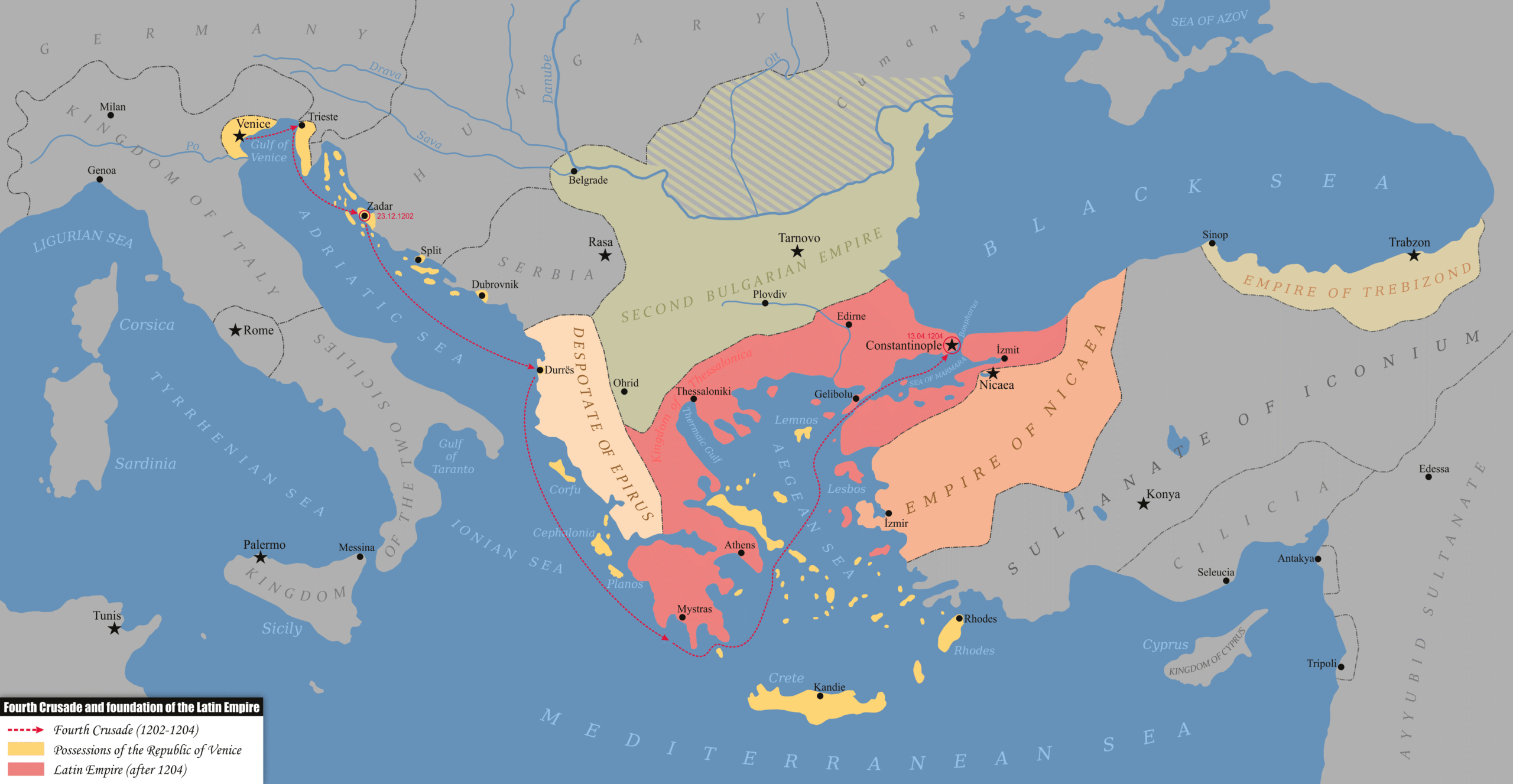
The Fourth Crusade and the Latin Empire: 1204–1261
In 1204, the Fourth Crusade—undertaken by western Europeans loyal to the pope in Rome—veered from its path to Jerusalem and sacked the Christian city of Constantinople. Many of Constantinople’s artistic treasures were destroyed or carried back to western Europe as booty. The crusaders occupied Constantinople and established a “Latin Empire” in Byzantine territory. Exiled Byzantine leaders established three successor states: the Empire of Nicaea in northwestern Anatolia, the Empire of Trebizond in northeastern Anatolia, and the Despotate of Epirus in northwestern Greece and Albania. In 1261, the Empire of Nicaea retook Constantinople and crowned Michael VIII Palaiologos as emperor, establishing the Palaiologan dynasty that would reign until the end of the Byzantine Empire.
While the Fourth Crusade fueled animosity between eastern and western Christians, the crusades nevertheless encouraged cross-cultural exchange that is apparent in the arts of Byzantium and western Europe, and particularly in Italian paintings of the late medieval and early Renaissance periods, exemplified by new depictions of St. Francis painted in the so-called Italo-Byzantine style.
Late Byzantium: 1261–1453
Artistic patronage again flourished after the Byzantines re-established their capital in 1261. Some scholars refer to this cultural flowering as the “Palaiologan Renaissance” (after the ruling Palaiologan dynasty). Several existing churches—such as the Chora Monastery in Constantinople—were renovated, expanded, and lavishly decorated with mosaics and frescoes. Byzantine artists were also active outside Constantinople, both in Byzantine centers such as Thessaloniki, as well as in neighboring lands, such as the Kingdom of Serbia, where the signatures of the painters named Michael Astrapas and Eutychios have been preserved in frescos from the late 13th and early 14th centuries.
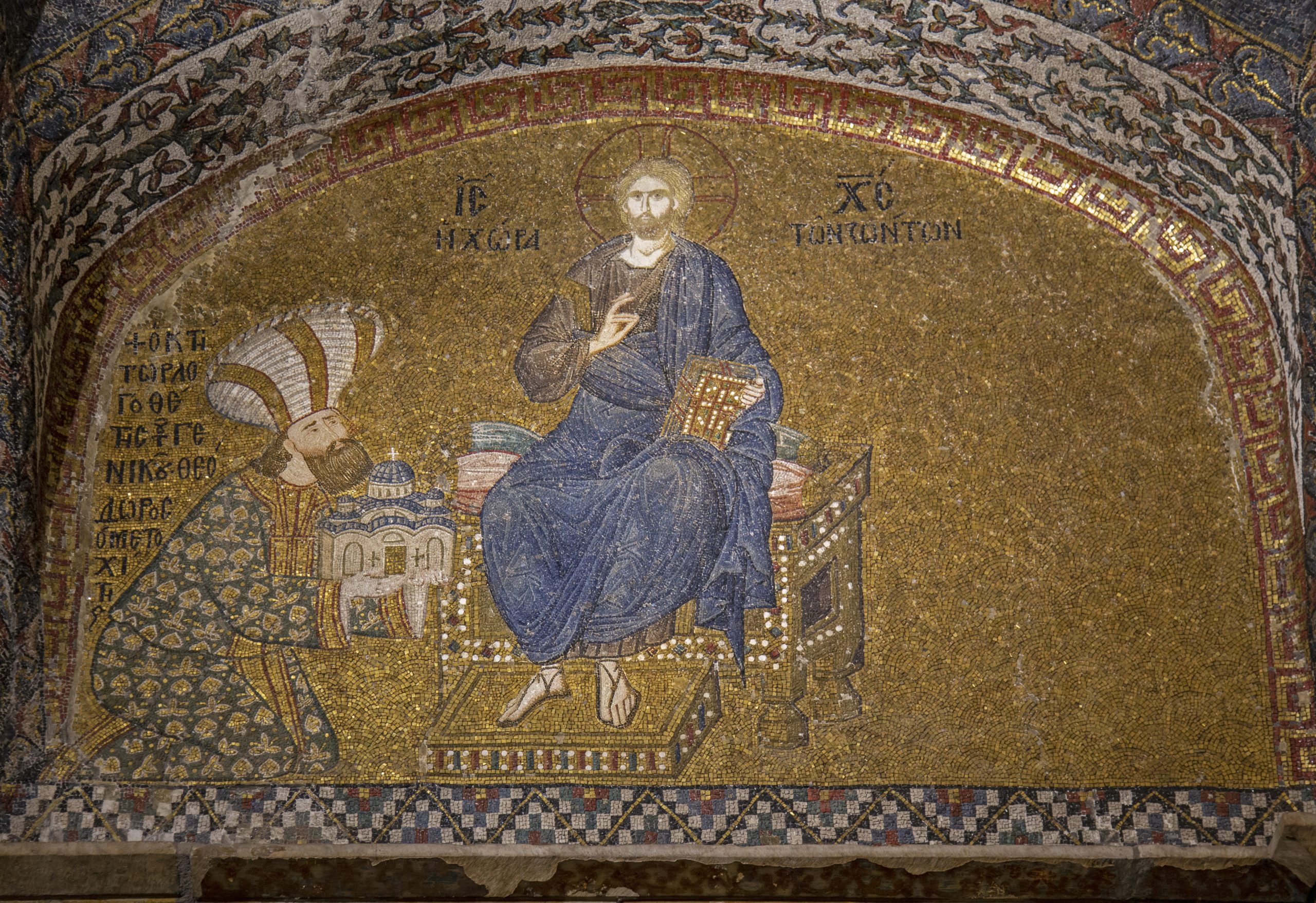
Yet the Byzantine Empire never fully recovered from the blow of the Fourth Crusade, and its territory continued to shrink. Byzantium’s calls for military aid from western Europeans in the face of the growing threat of the Ottoman Turks in the east remained unanswered. In 1453, the Ottomans finally conquered Constantinople, converting many of Byzantium’s great churches into mosques, and ending the long history of the Eastern Roman (Byzantine) Empire.
Early Byzantine: Icon with Virgin (Theotokos) and Child between Saints Theodore and George
Preserved in a desert monastery, this wax-on-wood icon leads the viewer upward and inward to the spiritual realm.
At Mount Sinai Monastery
One of thousands of important Byzantine images, books, and documents preserved at Saint Catherine’s Monastery, Mount Sinai (Egypt) is the remarkable encaustic icon painting of the Virgin (Theotokos) and Child between Saints Theodore and George.
The icon shows the Virgin and Child flanked by two soldier saints, Saint Theodore to the left and Saint George at the right. Above these are two angels who gaze upward to the hand of God, from which light emanates, falling on the Virgin.
Selectively classicizing
The painter selectively used the classicizing style inherited from Rome. The faces are modeled; we see the same convincing modeling in the heads of the angels (note the muscles of the necks) and the ease with which the heads turn almost three-quarters.
The space appears compressed, almost flat, at our first encounter. Yet we find spatial recession, first in the throne of the Virgin where we glimpse part of the right side and a shadow cast by the throne; we also see a receding armrest as well as a projecting footrest. The Virgin, with a slight twist of her body, sits comfortably on the throne, leaning her body left toward the edge of the throne. The child sits on her ample lap as the mother supports him with both hands. We see the left knee of the Virgin beneath convincing drapery whose folds fall between her legs.
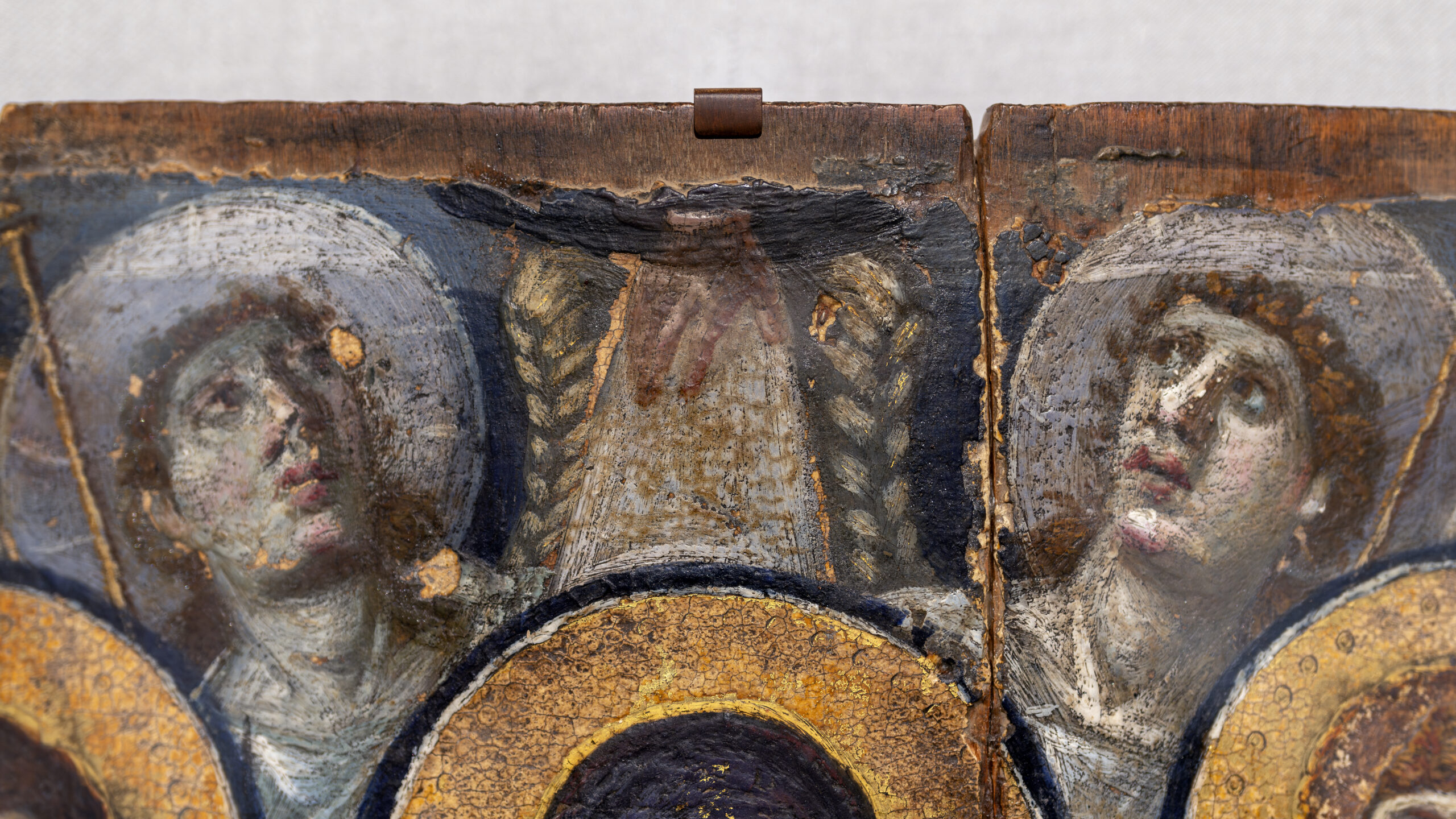
At the top of the painting an architectural member turns and recedes at the heads of the angels. The architecture helps to create and close off the space around the holy scene.
The composition displays a spatial ambiguity that places the scene in a world that operates differently from our world, reminiscent of the spatial ambiguity of the earlier Ivory panel with Archangel. The ambiguity allows the scene to partake of the viewer’s world but also separates the scene from the normal world.
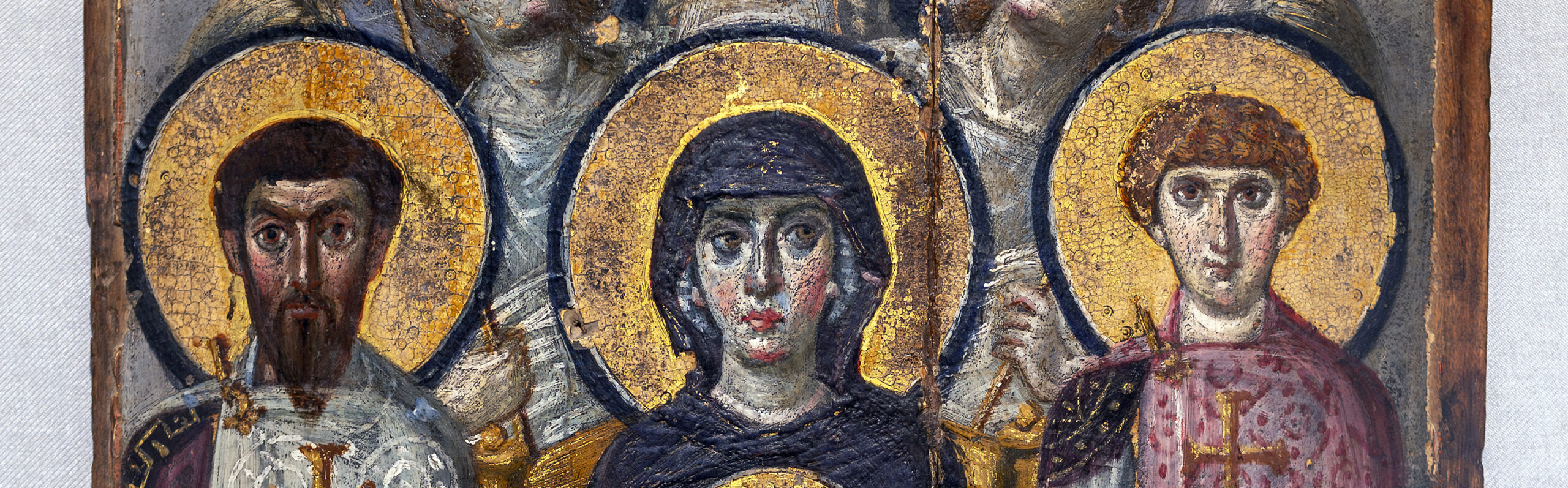
New in our icon is what we might call a “hierarchy of bodies.” Theodore and George stand erect, feet on the ground, and gaze directly at the viewer with large, passive eyes. While looking at us they show no recognition of the viewer and appear ready to receive something from us. The saints are slightly animated by the lifting of a heel by each as though they slowly step toward us.
The Virgin averts her gaze and does not make eye contact with the viewer. The ethereal angels concentrate on the hand above. The light tones of the angels and especially the slightly transparent rendering of their halos give the two an otherworldly appearance.
Visual movement upward, toward the hand of God
This supremely composed picture gives us an unmistakable sense of visual movement inward and upward, from the saints to the Virgin and from the Virgin upward past the angels to the hand of God. The passive saints seem to stand ready to receive the veneration of the viewer and pass it inward and upward until it reaches the most sacred realm depicted in the picture.
We can describe the differing appearances as saints who seem to inhabit a world close to our own (they alone have a ground line), the Virgin and Child who are elevated and look beyond us, and the angels who reside near the hand of God transcend our space. As the eye moves upward we pass through zones: the saints, standing on ground and therefore closest to us, and then upward and more ethereal until we reach the holiest zone, that of the hand of God. These zones of holiness suggest a cosmos of the world, earth and real people, through the Virgin, heavenly angels, and finally the hand of God. The viewer who stands before the scene make this cosmos complete, from “our earth” to heaven.
Early Byzantine: San Vitale and the Justinian and Theodora Mosaics
Gold, glass, and marble dazzle the eye in this 6th-century church. High above us, Emperor Justinian presides.
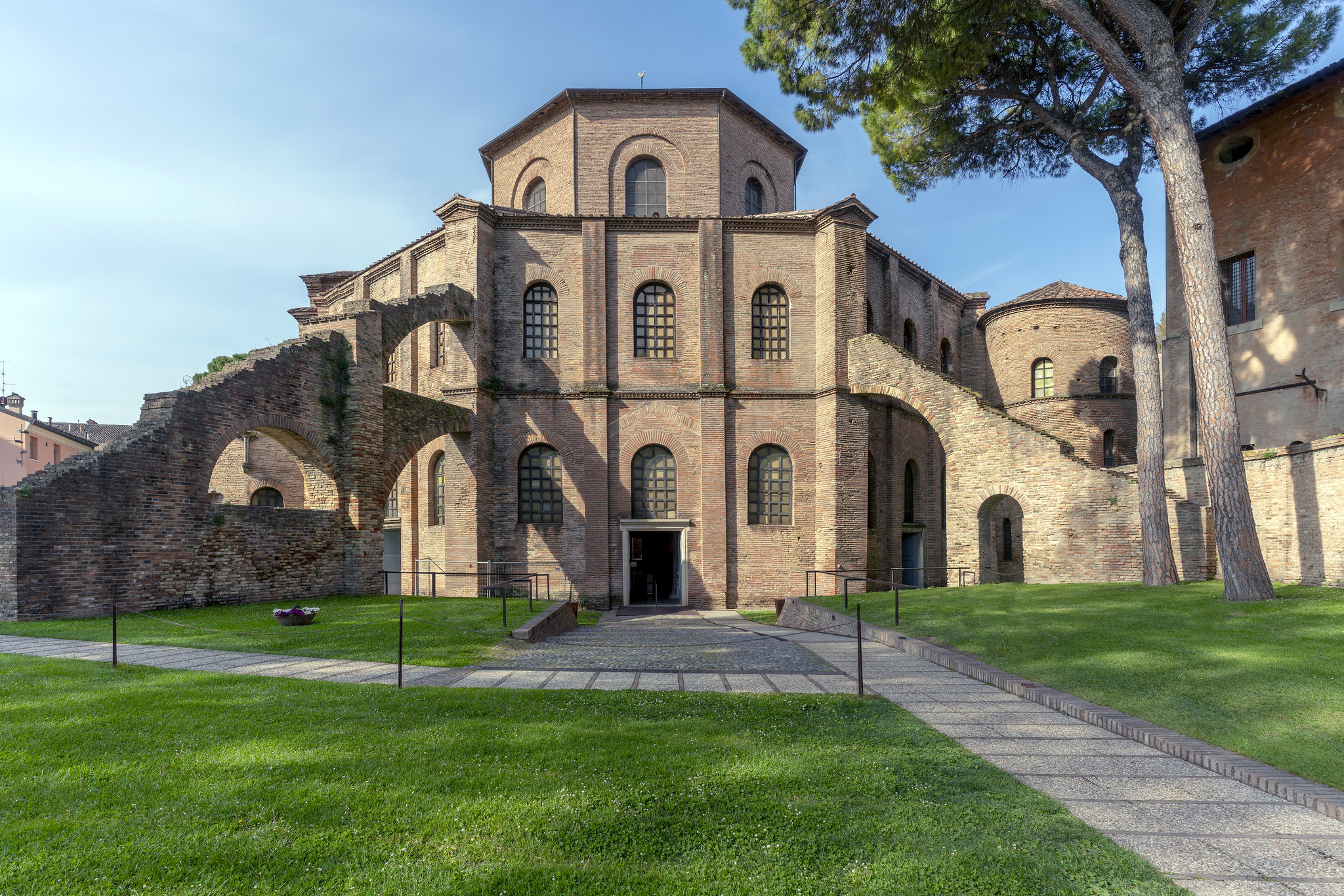
San Vitale is one of the most important surviving examples of Eastern Roman “Byzantine” Empire architecture and mosaic work. It was begun in 526 or 527 under Ostrogothic rule. It was consecrated in 547 and completed soon after.
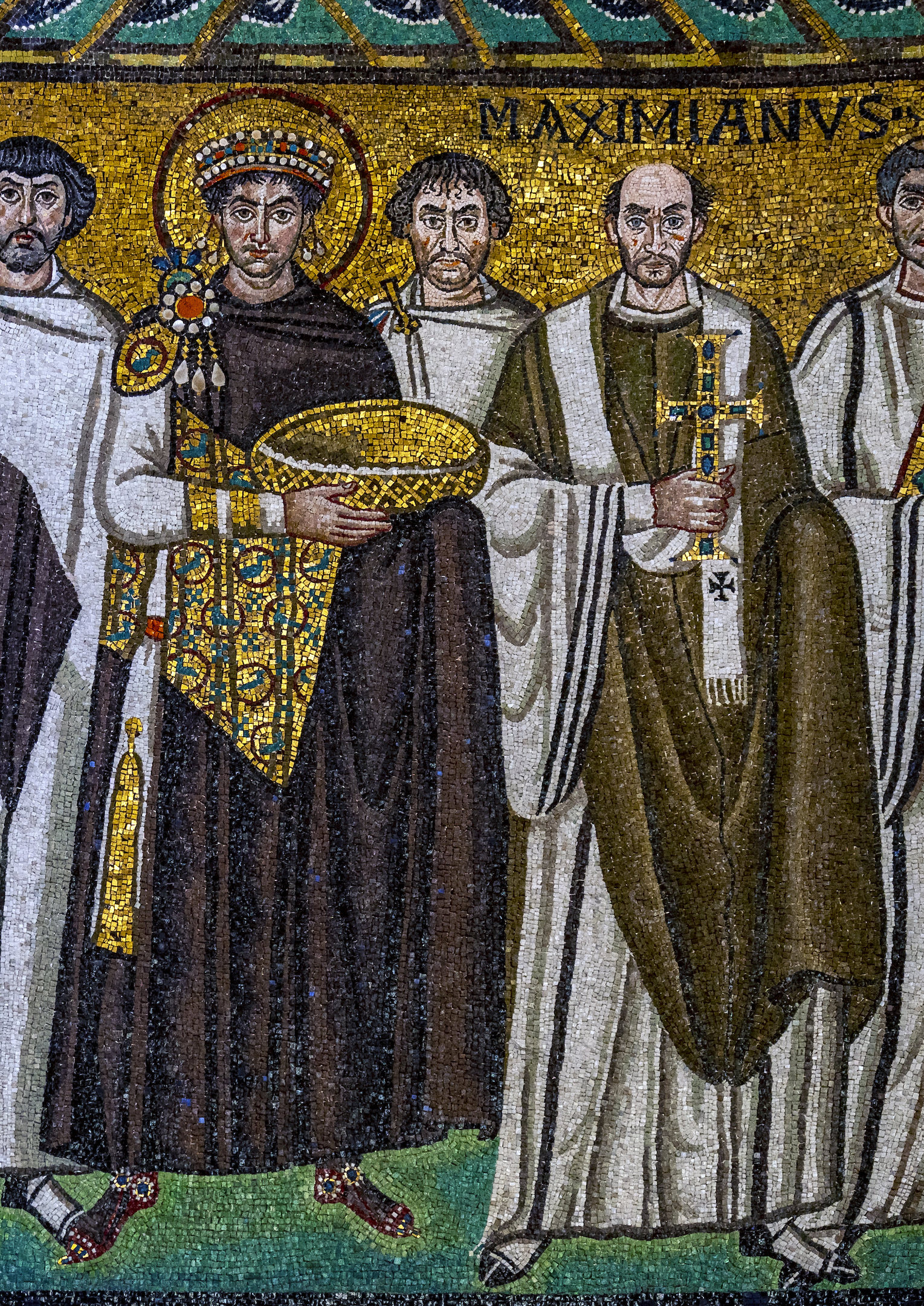
One of the most famous images of political authority from the “middle ages” is the mosaic of the Emperor Justinian and his court in the sanctuary of the church of San Vitale in Ravenna, Italy. This image is an integral part of a much larger mosaic program in the chancel (the space around the altar).
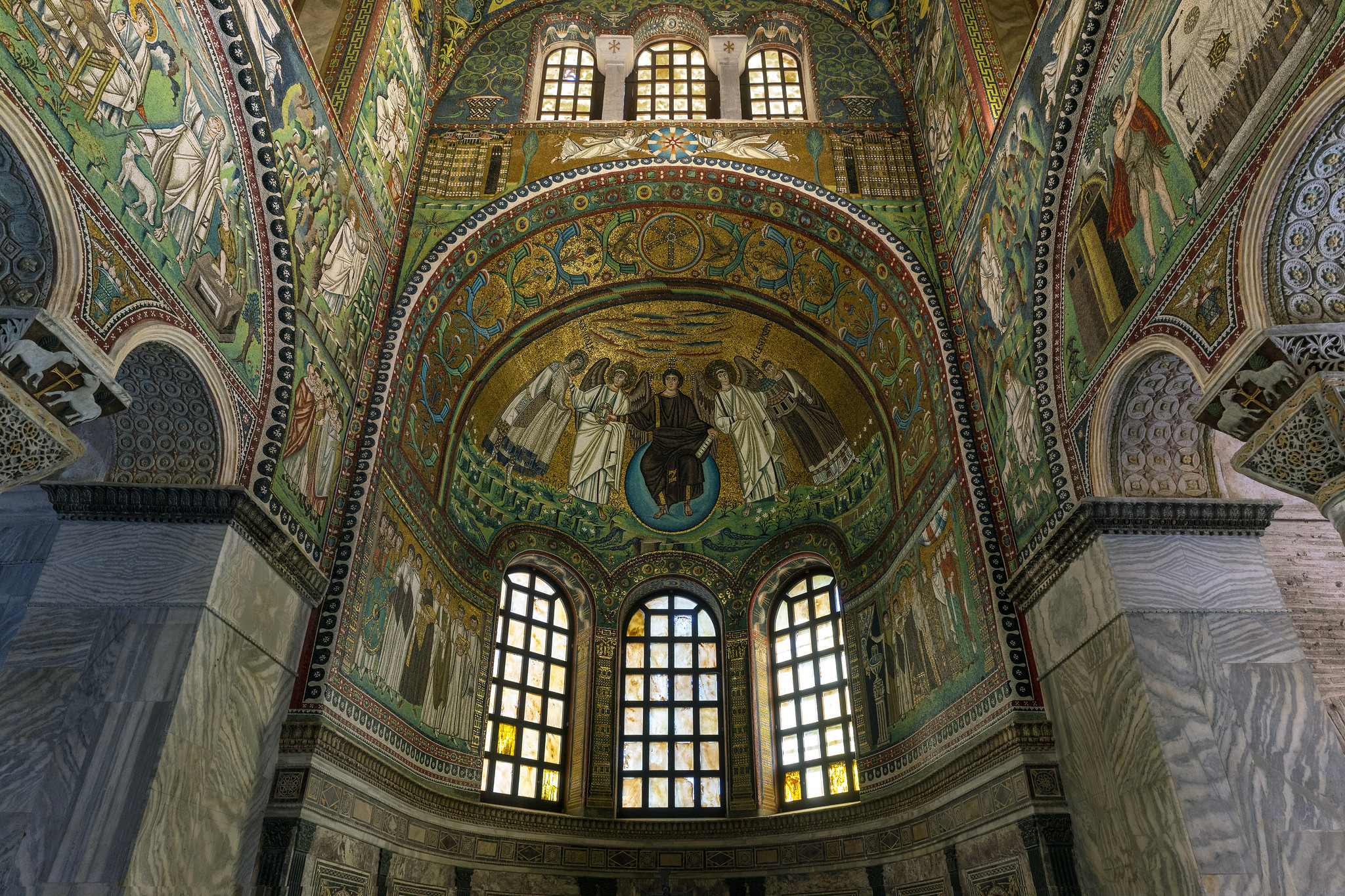
A major theme of this mosaic program is the authority of the emperor in the Christian plan of history.
The mosaic program can also be seen to give visual testament to the two major ambitions of Justinian’s reign: as heir to the tradition of Roman Emperors, Justinian sought to restore the territorial boundaries of the Empire. As the Christian Emperor, he saw himself as the defender of the faith. As such it was his duty to establish religious uniformity or Orthodoxy throughout the Empire.
Who’s who in the mosaic and what they carry
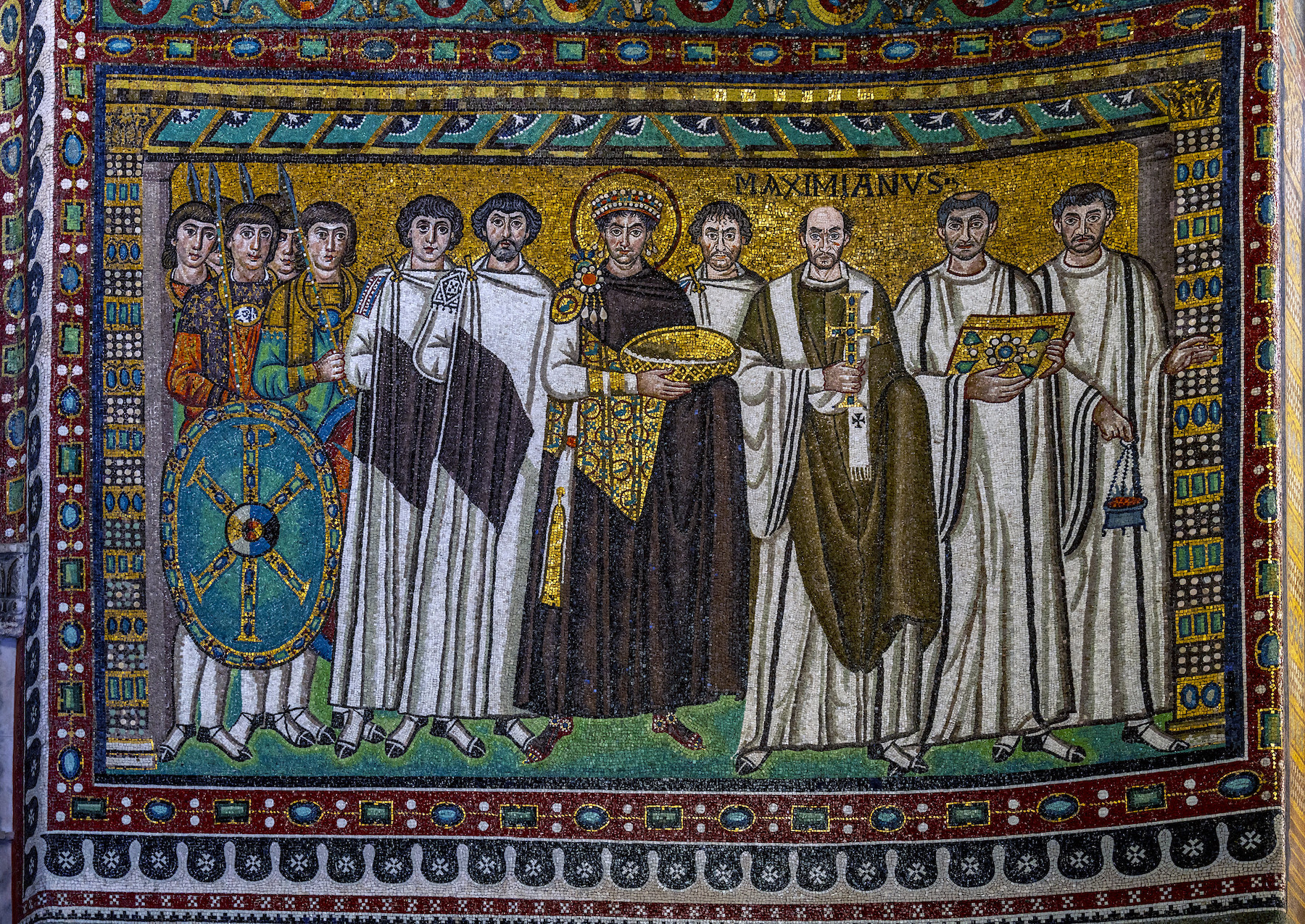
In the chancel mosaic Justinian is posed frontally in the center. He is haloed and wears a crown and a purple imperial robe. He is flanked by members of the clergy on his left with the most prominent figure the Bishop Maximianus of Ravenna being labelled with an inscription. To Justinian’s right appear members of the imperial administration identified by the purple stripe, and at the very far left side of the mosaic appears a group of soldiers.
This mosaic thus establishes the central position of the Emperor between the power of the church and the power of the imperial administration and military. Like the Roman Emperors of the past, Justinian has religious, administrative, and military authority.
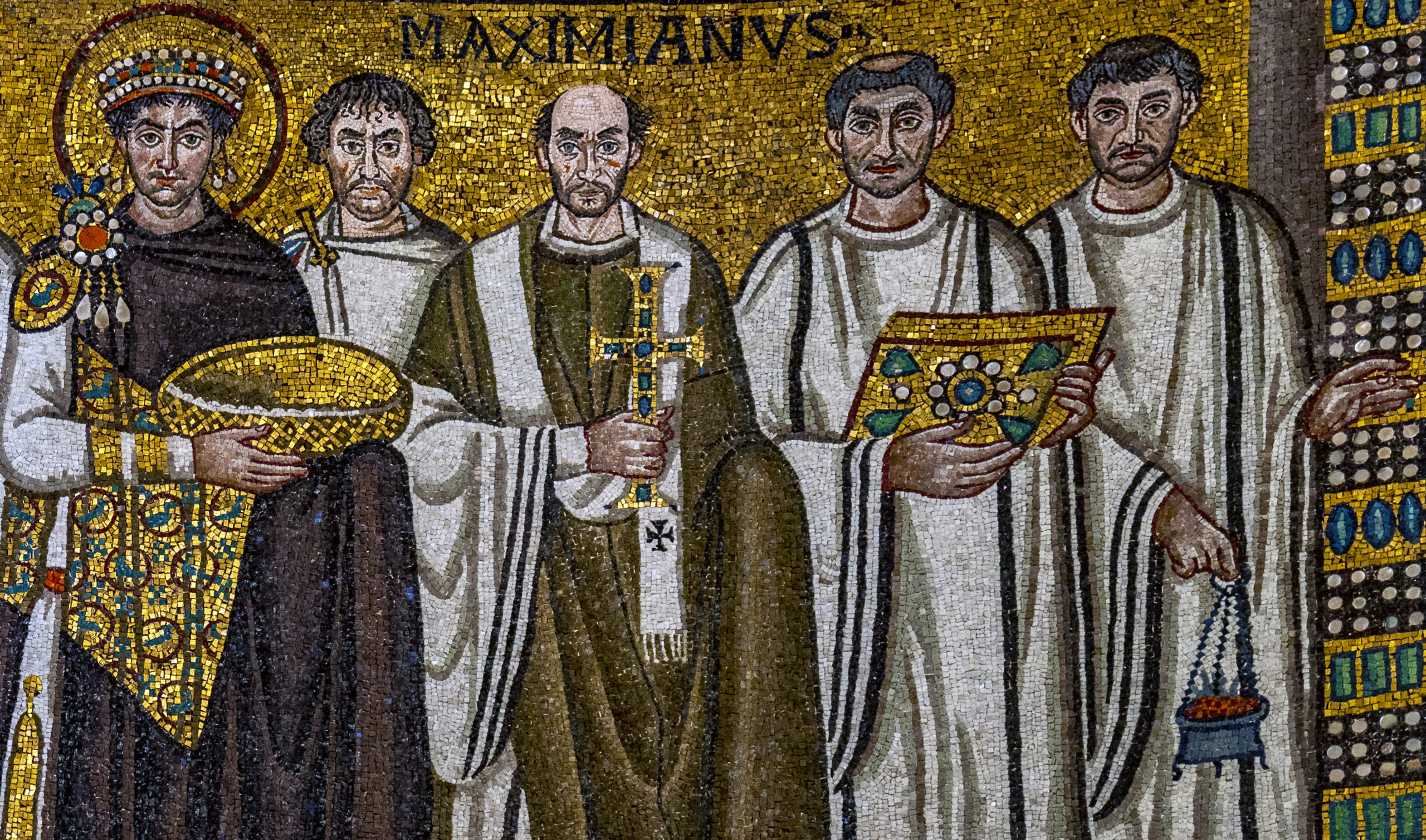
The clergy and Justinian carry in sequence from right to left a censer, the gospel book, the cross, and the bowl for the bread of the Eucharist. This identifies the mosaic as the so-called Little Entrance which marks the beginning of the Byzantine liturgy of the Eucharist. Justinian’s gesture of carrying the bowl with the bread of the Eucharist can be seen as an act of homage to the True King who appears in the adjacent apse mosaic.
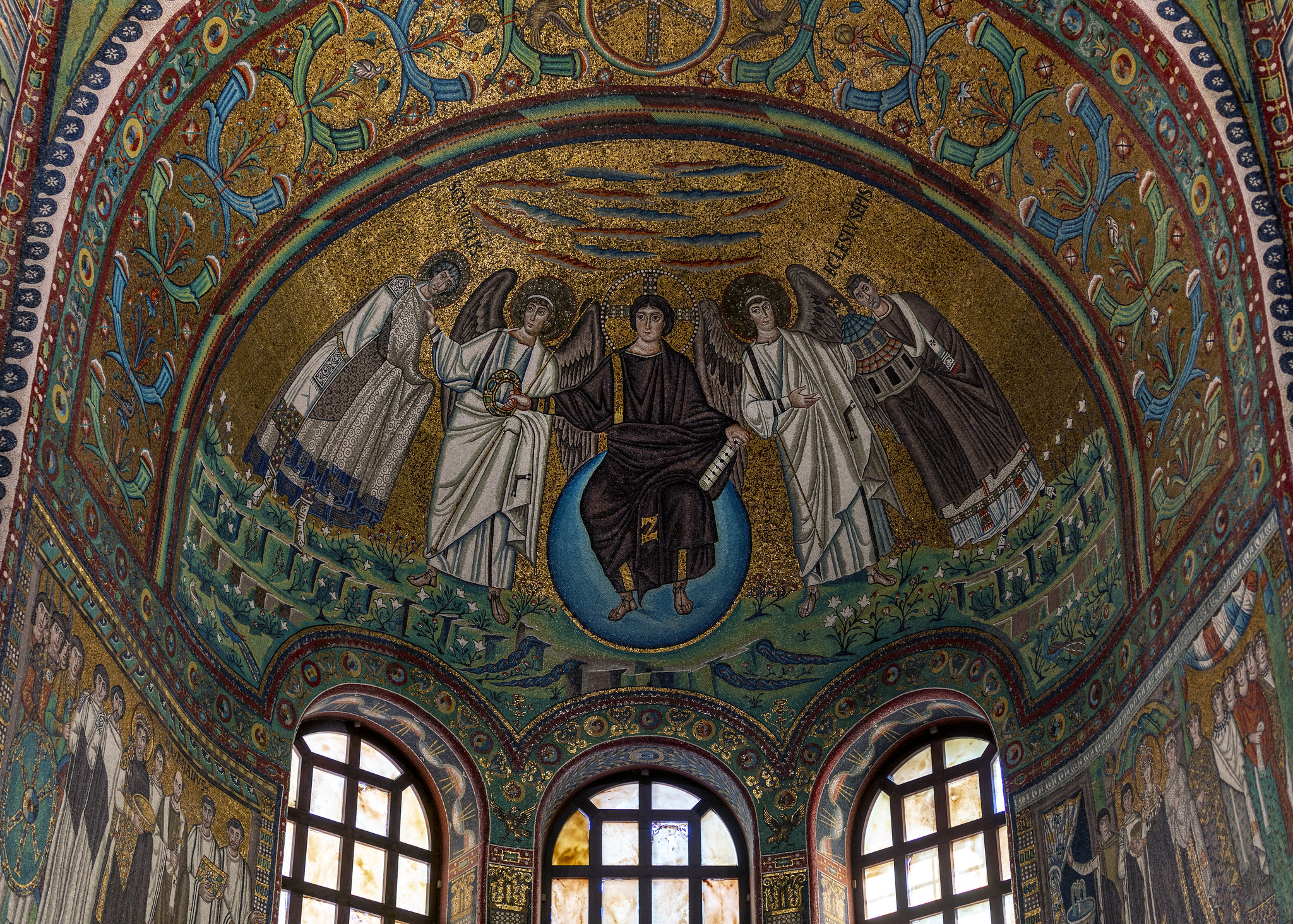
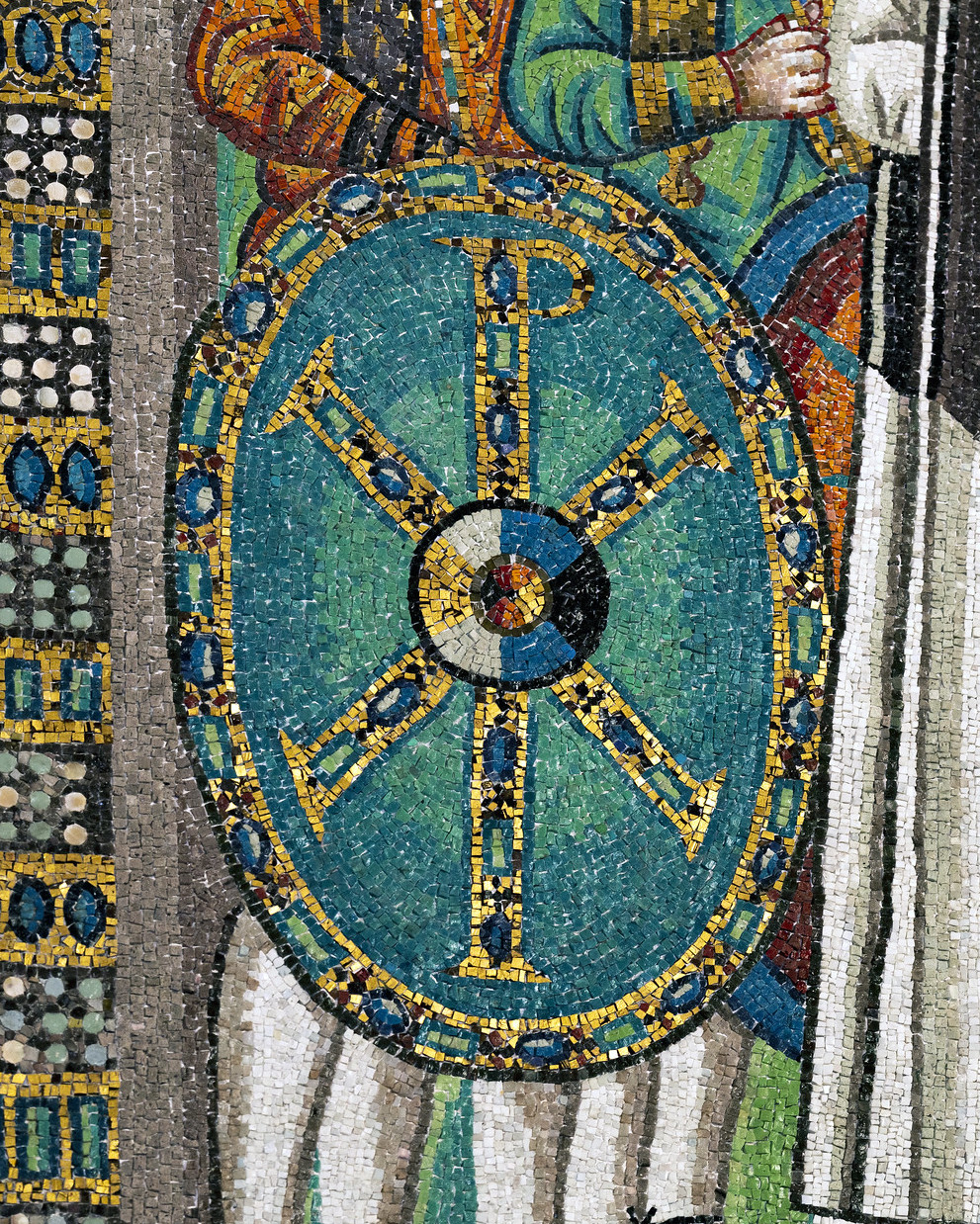
Christ, dressed in imperial purple and seated on an orb signifying universal dominion, offers the crown of martyrdom to St. Vitale, but the same gesture can be seen as offering the crown to Justinian in the mosaic below. Justinian is thus Christ’s vice-regent on earth, and his army is actually the army of Christ as signified by the Chi-Rho on the shield.
Who’s in front?
Closer examination of the Justinian mosaic reveals an ambiguity in the positioning of the figures of Justinian and the Bishop Maximianus. Overlapping suggests that Justinian is the closest figure to the viewer, but when the positioning of the figures on the picture plane is considered, it is evident that Maximianus’s feet are lower on the picture plane which suggests that he is closer to the viewer. This can perhaps be seen as an indication of the tension between the authority of the Emperor and the church.
Early through Late Byzantine: Hagia Sophia, Istanbul
The golden dome of this vast building appears suspended from heaven. It has withstood quakes, conquest, and crusades.
A symbol of Byzantium
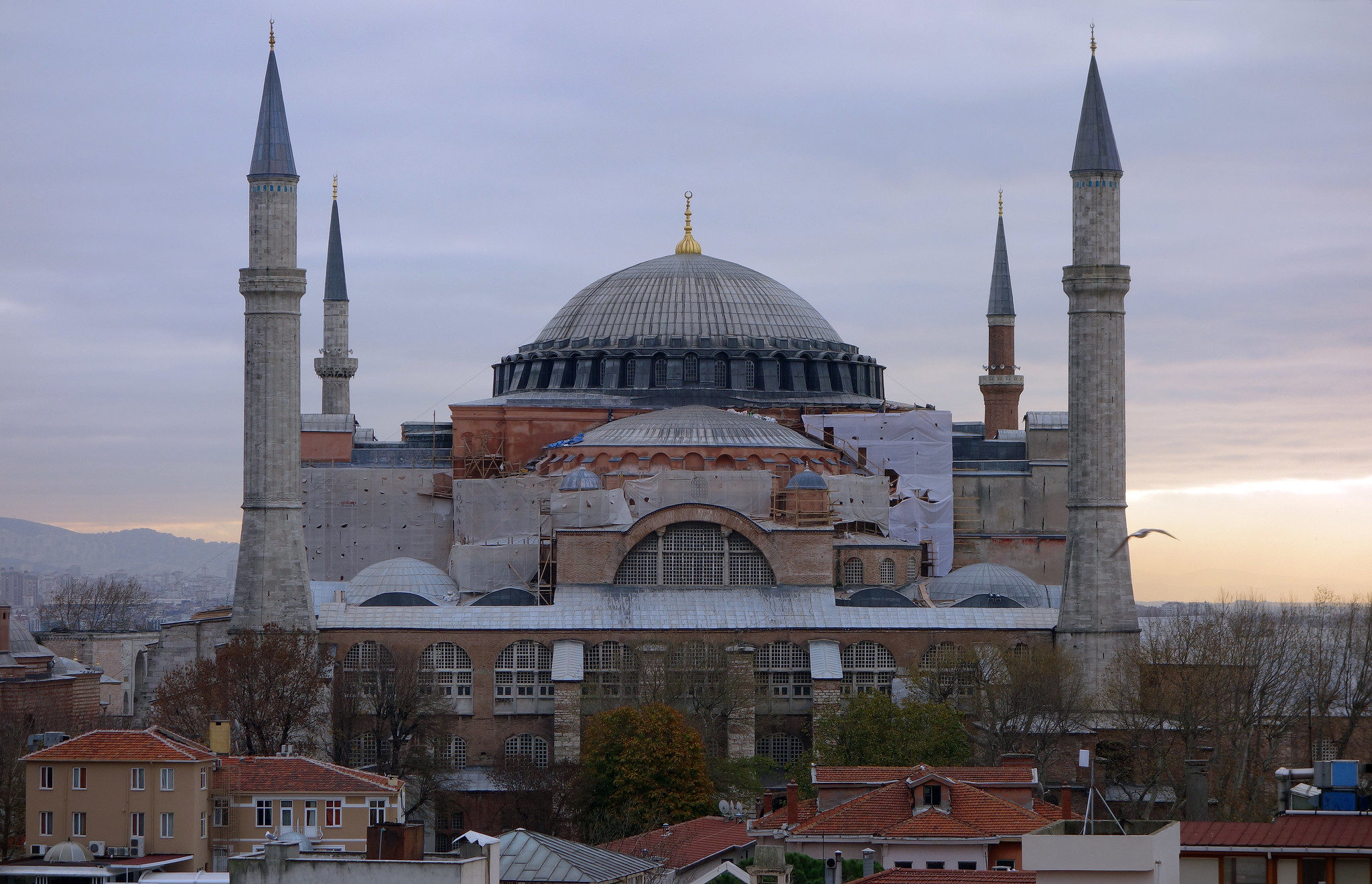
The great church of the Byzantine capital Constantinople (Istanbul) took its current structural form under the direction of the Emperor Justinian I. The church was dedicated in 537, amid great ceremony and the pride of the emperor (who was sometimes said to have seen the completed building in a dream). The daring engineering feats of the building are well known. Numerous medieval travelers praise the size and embellishment of the church. Tales abound of miracles associated with the church. Hagia Sophia is the symbol of Byzantium in the same way that the Parthenon embodies Classical Greece or the Eiffel Tower typifies Paris.
Each of those structures express values and beliefs: perfect proportion, industrial confidence, a unique spirituality. By overall impression and attention to detail, the builders of Hagia Sophia left the world a mystical building. The fabric of the building denies that it can stand by its construction alone. Hagia Sophia’s being seems to cry out for an other-worldly explanation of why it stands because much within the building seems dematerialized, an impression that must have been very real in the perception of the medieval faithful. The dematerialization can be seen in as small a detail as a column capital or in the building’s dominant feature, its dome.
Let us start with a look at a column capital
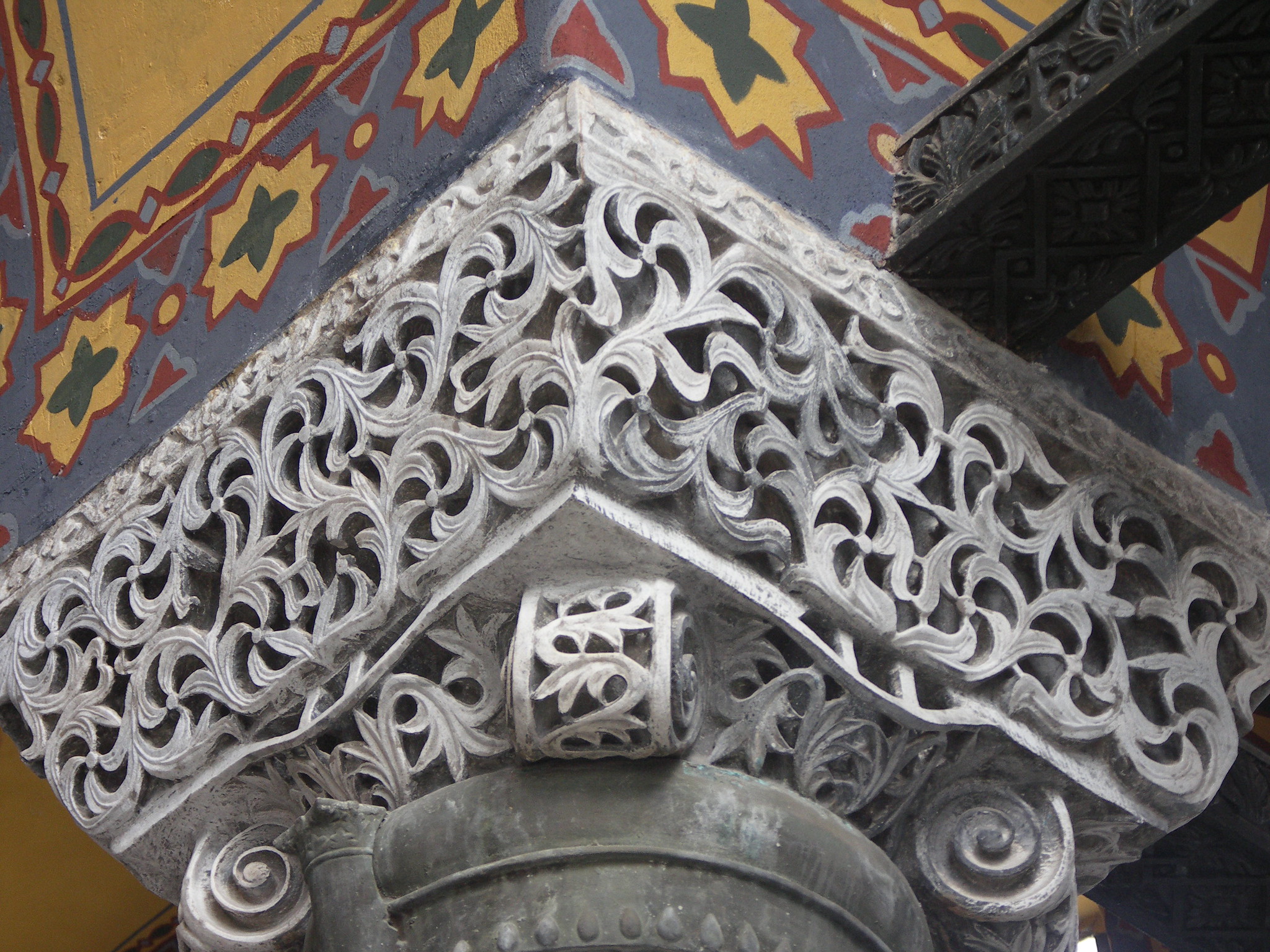
The capital is a derivative of the Classical Ionic order via the variations of the Roman composite capital and Byzantine invention. Shrunken volutes appear at the corners decorative detailing runs the circuit of lower regions of the capital. The column capital does important work, providing transition from what it supports to the round column beneath. What we see here is decoration that makes the capital appear light, even insubstantial. The whole appears more as filigree work than as robust stone capable of supporting enormous weight to the column.
Compare the Hagia Sophia capital with a Classical Greek Ionic capital, this one from the Greek Erechtheum on the Acropolis, Athens. The capital has abundant decoration but the treatment does not diminish the work performed by the capital. The lines between the two spirals dip, suggesting the weight carried while the spirals seem to show a pent-up energy that pushes the capital up to meet the entablature, the weight it holds. The capital is a working member and its design expresses the working in an elegant way.
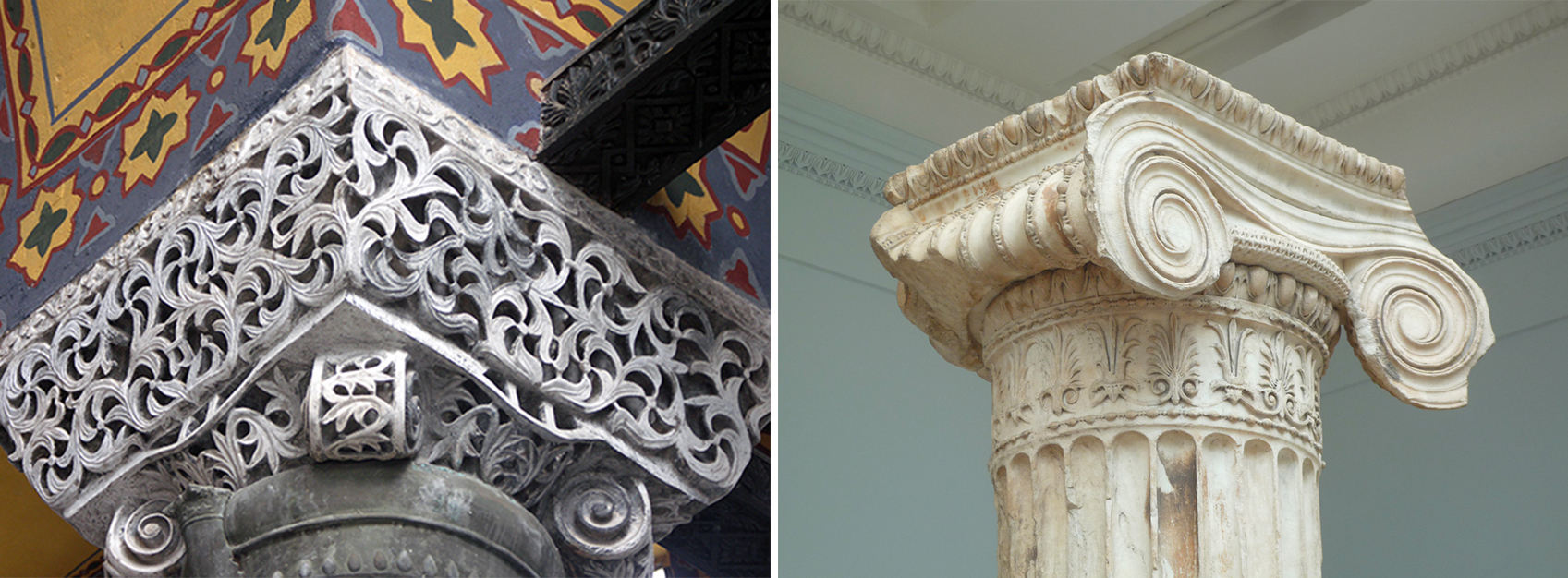
The relationship between the two is similar to the evolution of the antique to the medieval seen in the mosaics of San Vitale. A capital fragment on the grounds of Hagia Sophia illustrates the carving technique. The stone is deeply drilled, creating shadows behind the vegetative decoration. The capital surface appears thin. The capital contradicts its task rather than expressing it.
This deep carving appears throughout Hagia Sophia’s capitals, spandrels, and entablatures. Everywhere we look stone visually denying its ability to do the work that it must do. The important point is that the decoration suggests that something other than sound building technique must be at work in holding up the building.
A golden dome suspended from heaven
We know that the faithful attributed the structural success of Hagia Sophia to divine intervention. Nothing is more illustrative of the attitude than descriptions of the dome of Hagia Sophia. Procopius, biographer of the Emperor Justinian and author of a book on the buildings of Justinian is the first to assert that the dome hovered over the building by divine intervention.
“…the huge spherical dome [makes] the structure exceptionally beautiful. Yet it seems not to rest upon solid masonry, but to cover the space with its golden dome suspended from Heaven.” from “The Buildings” by Procopius, Loeb Classical Library, 1940, online at the University of Chicago Penelope project
The description became part of the lore of the great church and is repeated again and again over the centuries. A look at the base of the dome helps explain the descriptions.
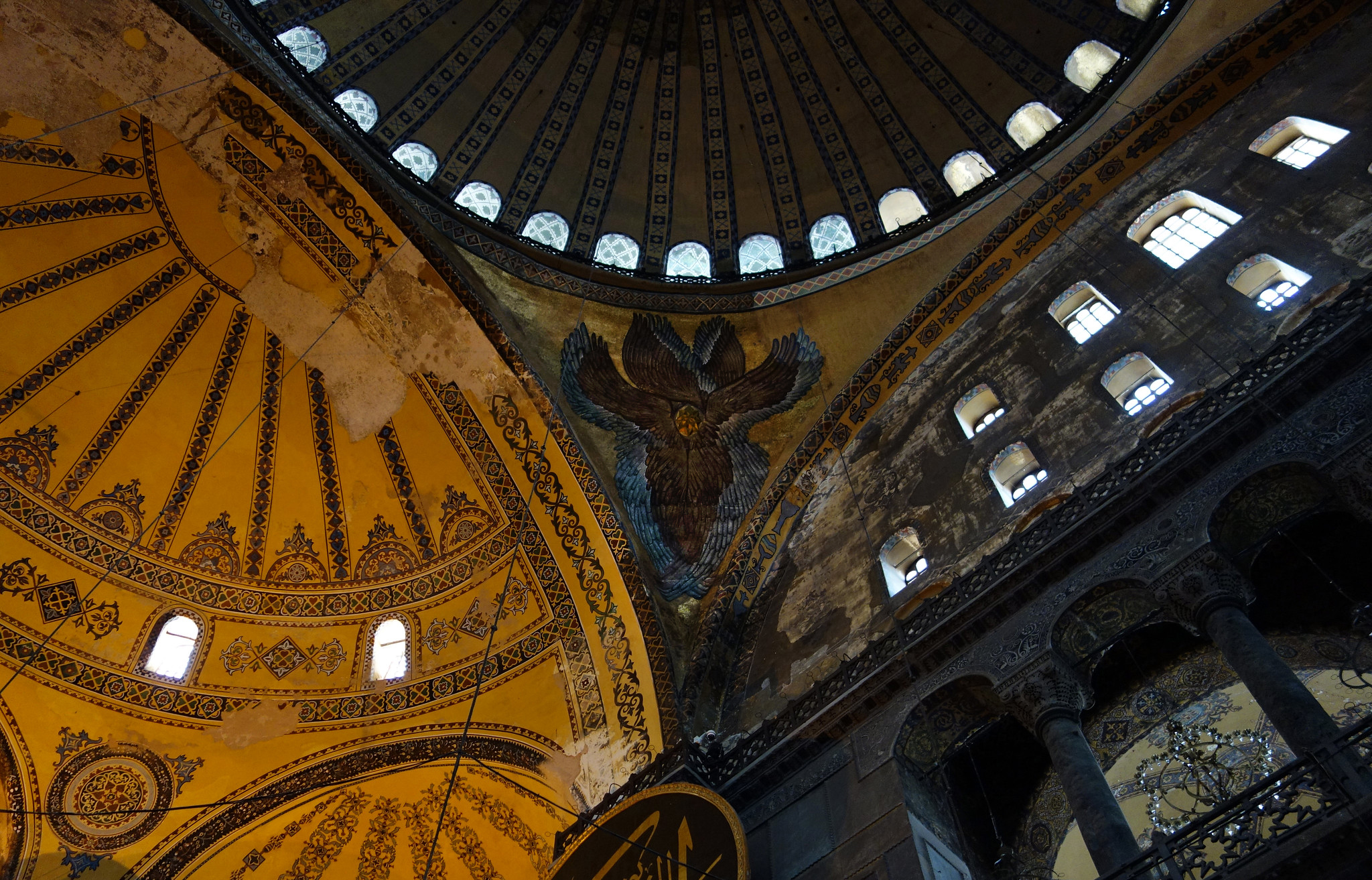
The windows at the bottom of the dome are closely spaced, visually asserting that the base of the dome is insubstantial and hardly touching the building itself. The building planners did more than squeeze the windows together, they also lined the jambs or sides of the windows with gold mosaic. As light hits the gold it bounces around the openings and eats away at the structure and makes room for the imagination to see a floating dome.

It would be difficult not to accept the fabric as consciously constructed to present a building that is dematerialized by common constructional expectation. Perception outweighs clinical explanation. To the faithful of Constantinople and its visitors, the building used divine intervention to do what otherwise would appear to be impossible. Perception supplies its own explanation: the dome is suspended from heaven by an invisible chain.
Advice from an angel?
An old story about Hagia Sophia, a story that comes down in several versions, is a pointed explanation of the miracle of the church. So goes the story: A youngster was among the craftsmen doing the construction. Realizing a problem with continuing work, the crew left the church to seek help (some versions say they sought help from the Imperial Palace). The youngster was left to guard the tools while the workmen were away. A figure appeared inside the building and told the boy the solution to the problem and told the boy to go to the workmen with the solution. Reassuring the boy that he, the figure, would stay and guard the tools until the boy returned, the boy set off. The solution that the boy delivered was so ingenious that the assembled problem solvers realized that the mysterious figure was no ordinary man but a divine presence, likely an angel. The boy was sent away and was never allowed to return to the capital. Thus the divine presence had to remain inside the great church by virtue of his promise and presumably is still there. Any doubt about the steadfastness of Hagia Sophia could hardly stand in the face of the fact that a divine guardian watches over the church. [1]
Damage and repairs
Hagia Sophia sits astride an earthquake fault. The building was severely damaged by three quakes during its early history. Extensive repairs were required. Despite the repairs, one assumes that the city saw the survival of the church, amid city rubble, as yet another indication of divine guardianship of the church.
Extensive repair and restoration are ongoing in the modern period. We likely pride ourselves on the ability of modern engineering to compensate for daring 6th Century building technique. Both ages have their belief systems and we are understandably certain of the rightness of our modern approach to care of the great monument. But we must also know that we would be lesser if we did not contemplate with some admiration the structural belief system of the Byzantine Age.
Historical outline
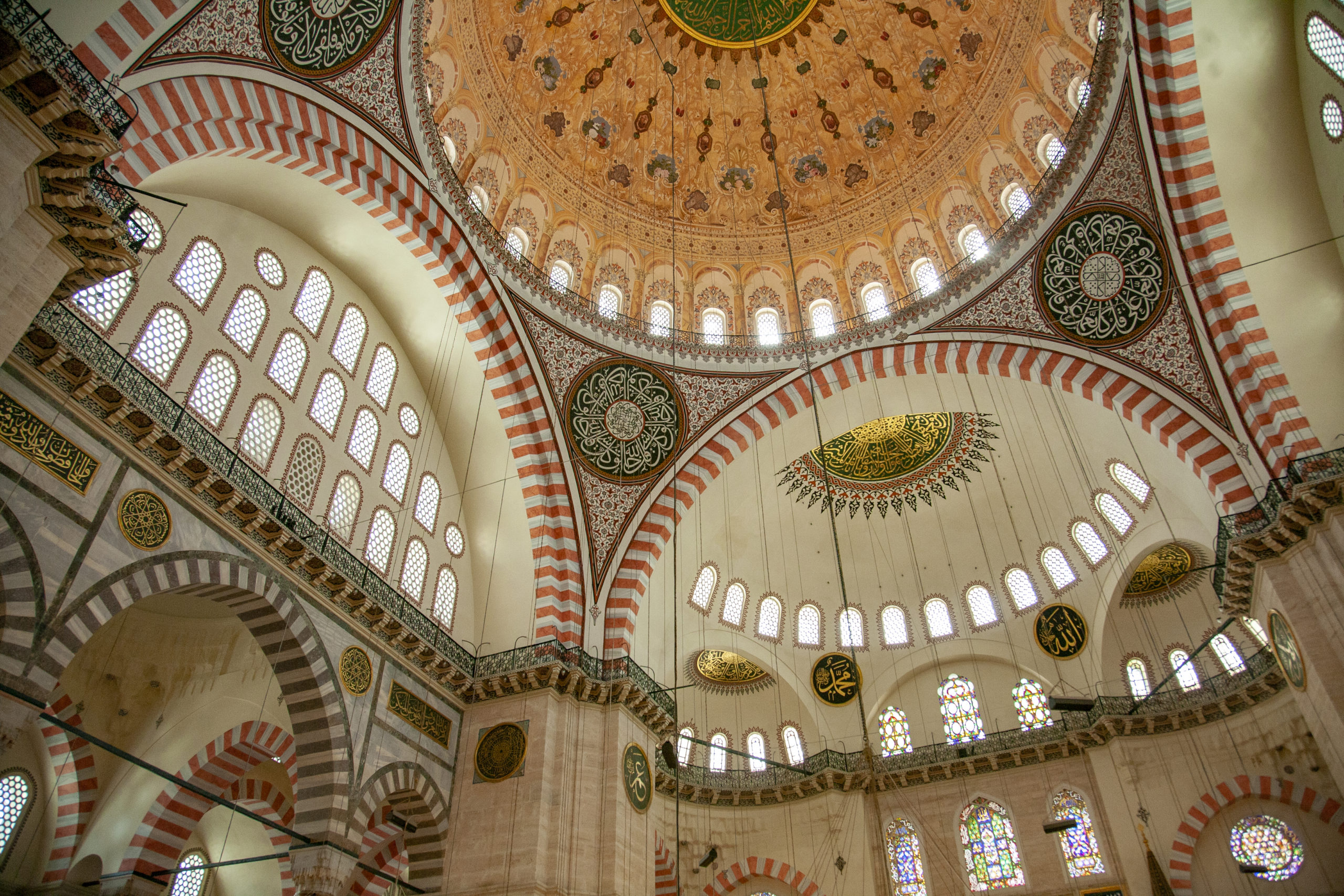
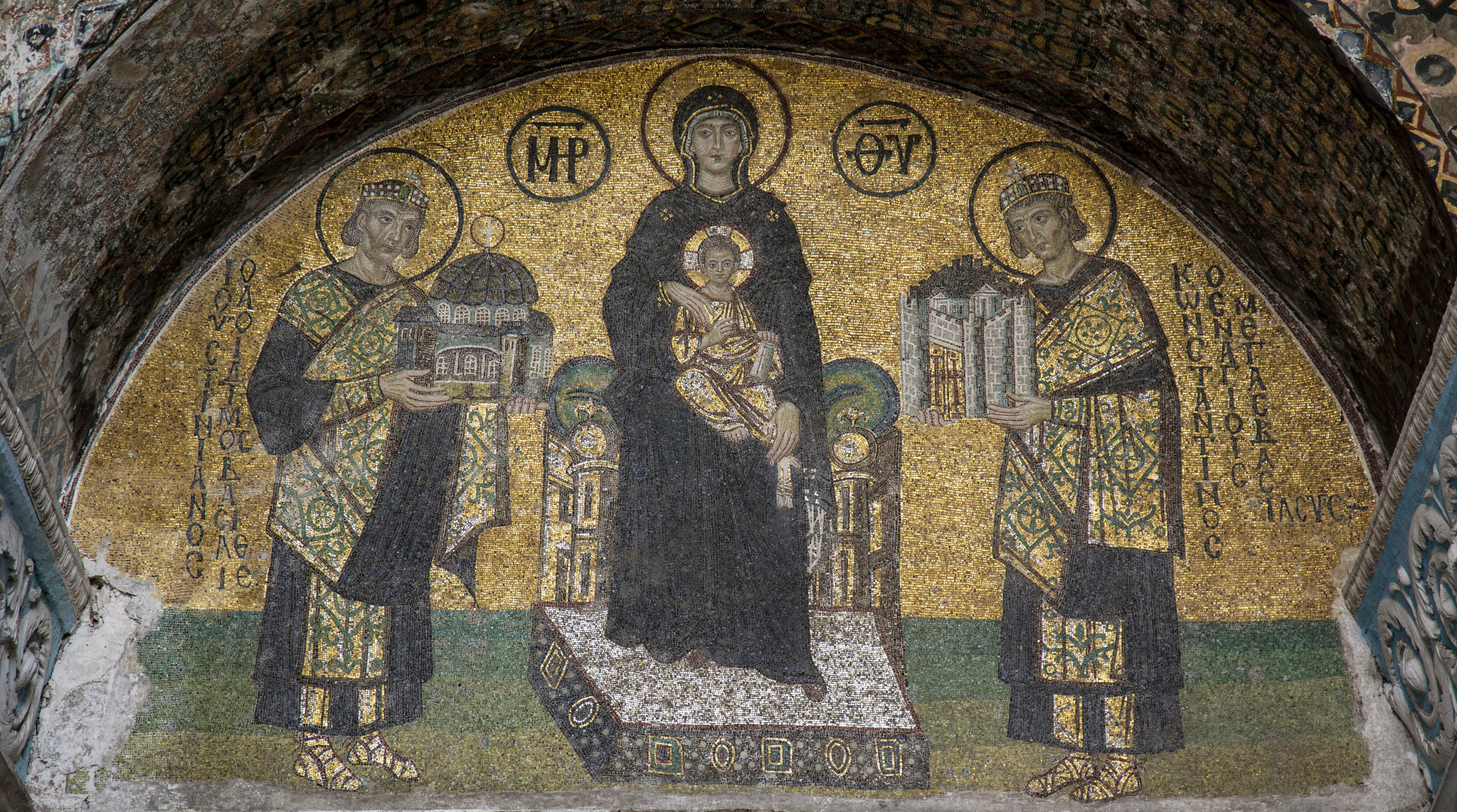
Isidore and Anthemius replaced the original 4th-century church commissioned by Emperor Constantine and a 5th-century structure that was destroyed during the Nika revolt of 532. The present Hagia Sophia or the Church of Holy Wisdom became a mosque in 1453 following the conquest of Constantinople by the Ottomans under Sultan Mehmed II. In 1934, Atatürk, founder of Modern Turkey, converted the mosque into a museum.
Hagia Sophia as a mosque
After the Ottomans conquered Constantinople, the sultan repurposed this church, adding slender “pencil” minarets.
Late Byzantine: Hagia Sophia’s Deësis mosaic
This mosaic shows how the arts—and an interest in naturalism—flourished in the final centuries of the Byzantine Empire.
Constantinople, lost and reclaimed
In 1204, a momentous event forever changed the history of the Eastern Roman “Byzantine” Empire. Western Europeans embarking on the Fourth Crusade diverged from their path to Jerusalem and sacked and occupied the Byzantine capital of Constantinople (modern Istanbul). The crusaders established a “Latin Empire” in Byzantine territory and subjected Byzantine Christians to the religious authority of the Pope in Rome. The crusaders also converted Hagia Sophia—Constantinople’s great cathedral, built in the sixth century by emperor Justinian—into a Latin (Catholic) church.
In 1261, the Byzantines recaptured their capital and crowned Michael VIII Palaiologos as emperor, inaugurating what historians refer to as the Late Byzantine—or Palaiologan—period. A new Orthodox patriarch of Constantinople was enthroned in Hagia Sophia in September 1261, and Justinian’s great church was used for the Byzantine rite once again.
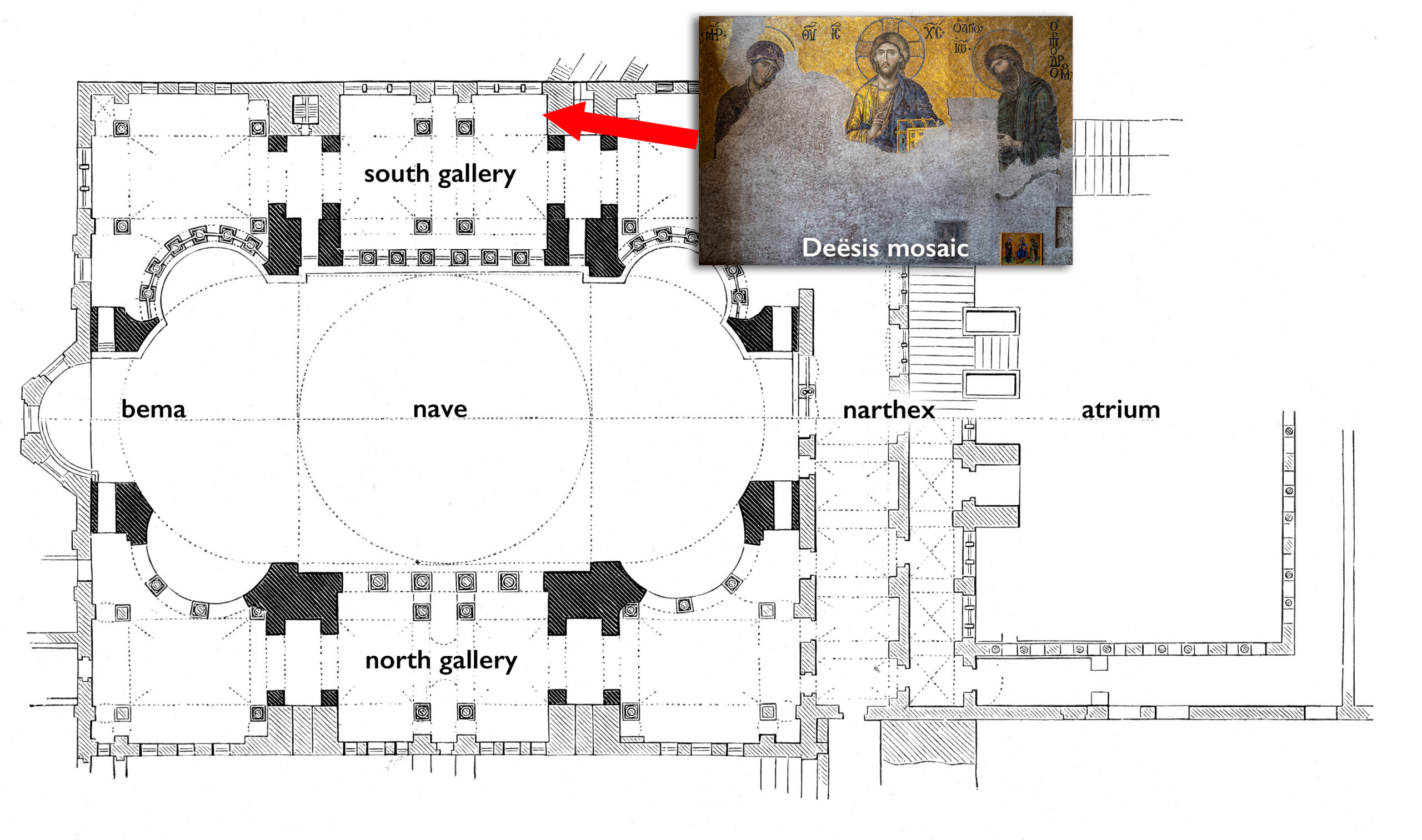
The Deësis mosaic in Hagia Sophia
Under Latin occupation, the capital and many of its churches fell into disrepair, and so the Byzantines began restoring Constantinople and its churches. Emperor Michael VIII Palaiologos, responsible for reclaiming the Byzantine capital, is likely responsible for installing a monumental new mosaic of the Deësis in the south gallery of Hagia Sophia—a part of the church traditionally reserved for imperial use—not long after reclaiming Constantinople in 1261. The mosaic was probably part of a larger restoration project in the church of Hagia Sophia.
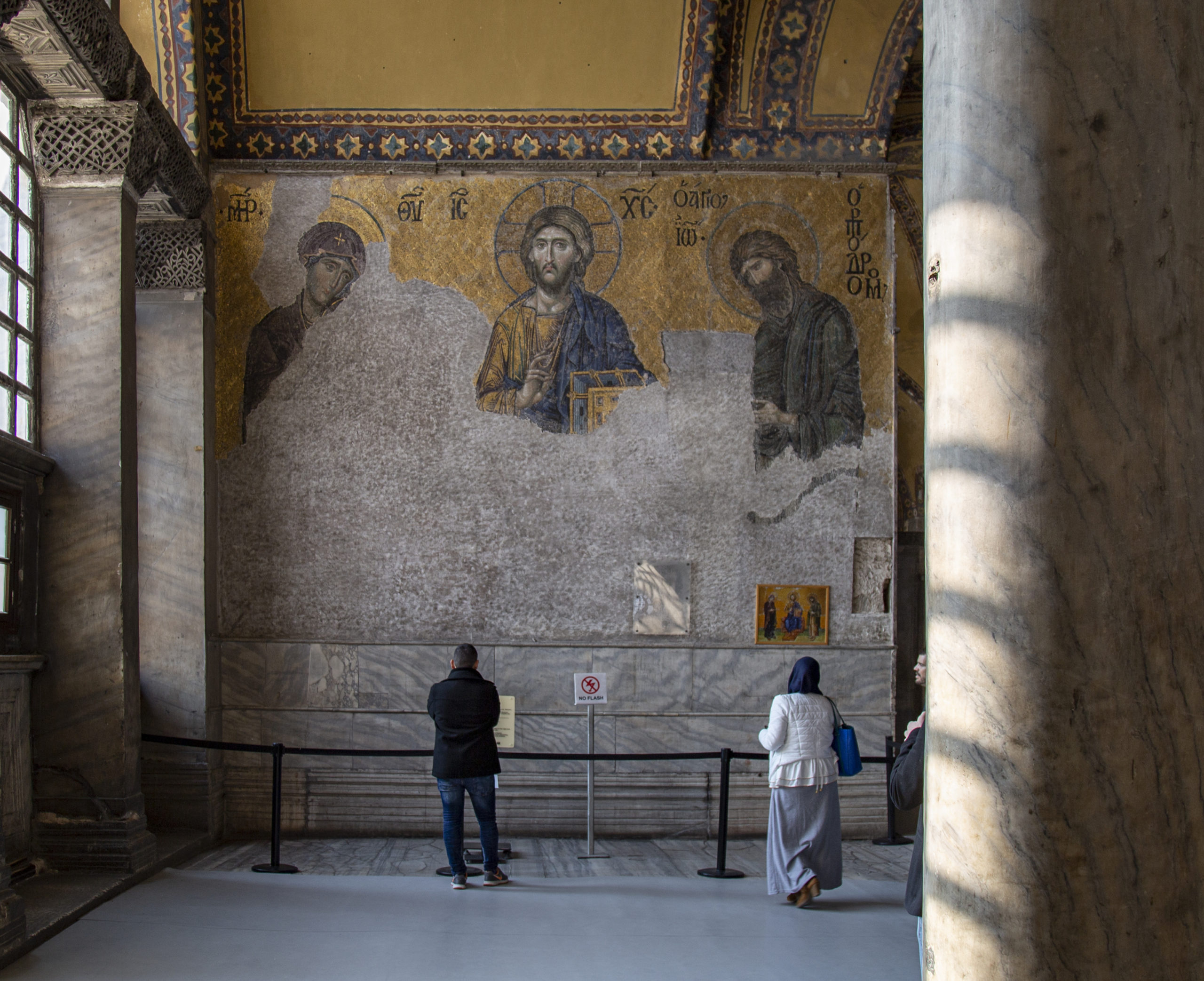
The monumental Deësis mosaic depicts Christ flanked by the Virgin Mary and John the Baptist approximately two and a half times larger than life. The looming stature of these three figures reflects their importance in Byzantine culture. Christ, the Son of God, appears at the center of the composition and is labeled, IC XC, the Greek abbreviation for “Jesus Christ.” The Byzantines viewed the Virgin Mary—Christ’s mother—as a powerful protector. She appears at Christ’s right hand and is labeled, MP ΘY, “Mother of God.” John was a prophet and relative of Christ, whose preaching and baptizing prepared the way for Christ’s ministry in the Gospels. He appears on Christ’s left with the label, “Saint John the Forerunner.”
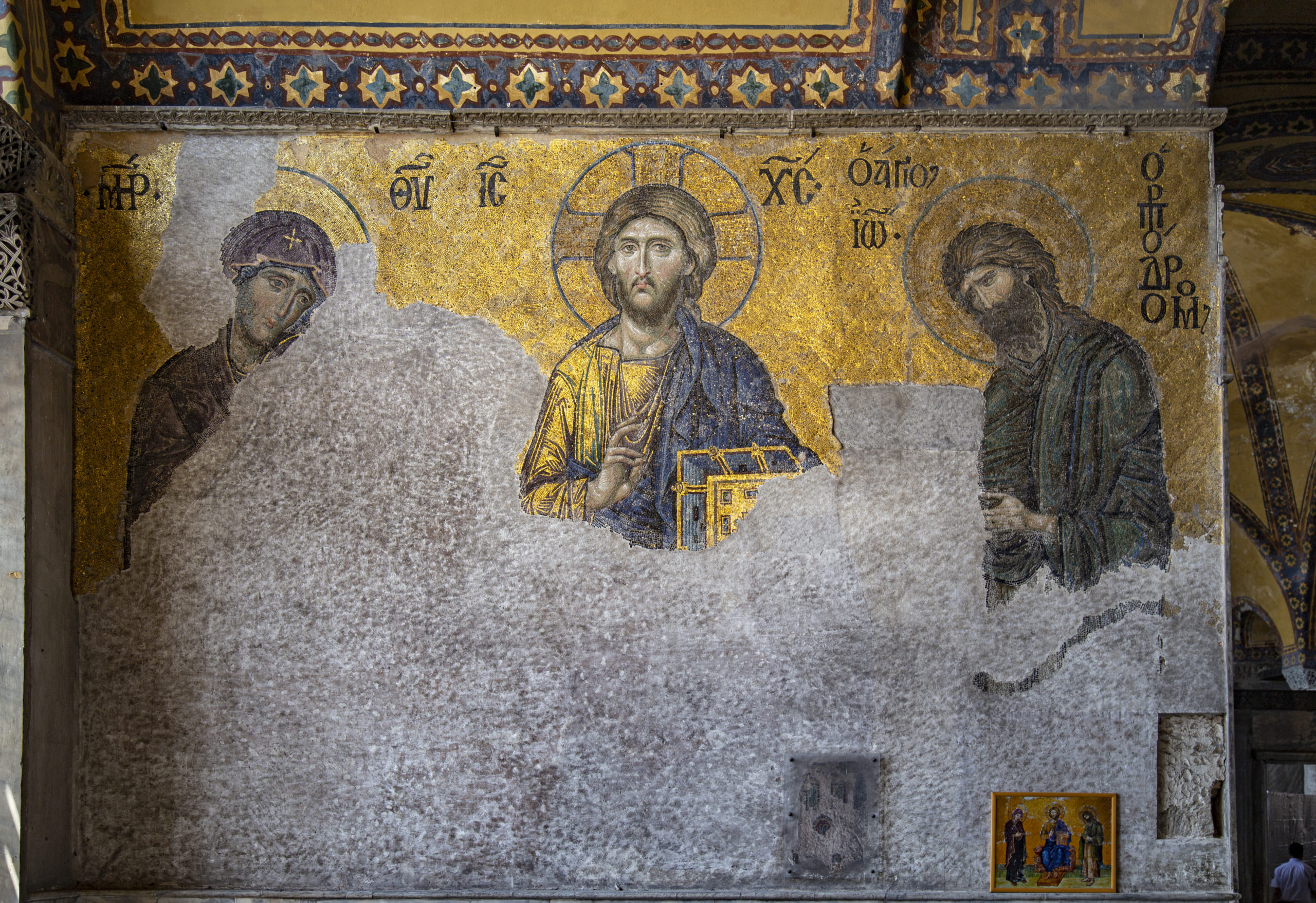
In the mosaic, Christ sits upon a jeweled throne like an emperor or judge (although most of the throne and bottom half of the mosaic have been lost). The Virgin and John turn inward toward Christ in a three-quarter view, and would have originally extended their hands toward Christ in a pleading gesture. This type of image is referred to as a deësis (δέησις), which means “entreaty,” suggesting an act of asking, pleading, begging. However, this title does not actually appear in the mosaic, and scholars debate whether the Byzantines actually used this term much to describe such images. This type of image reflects the Byzantine belief that the hierarchical order of their empire on earth mirrored heaven above. In the Deësis, the Virgin and John appear like courtiers in the heavenly court, asking God to have mercy on humanity. It is not hard to imagine why such an image of intercession and divine mercy might appeal to the new ruler of an empire still on precarious footing on the world stage.
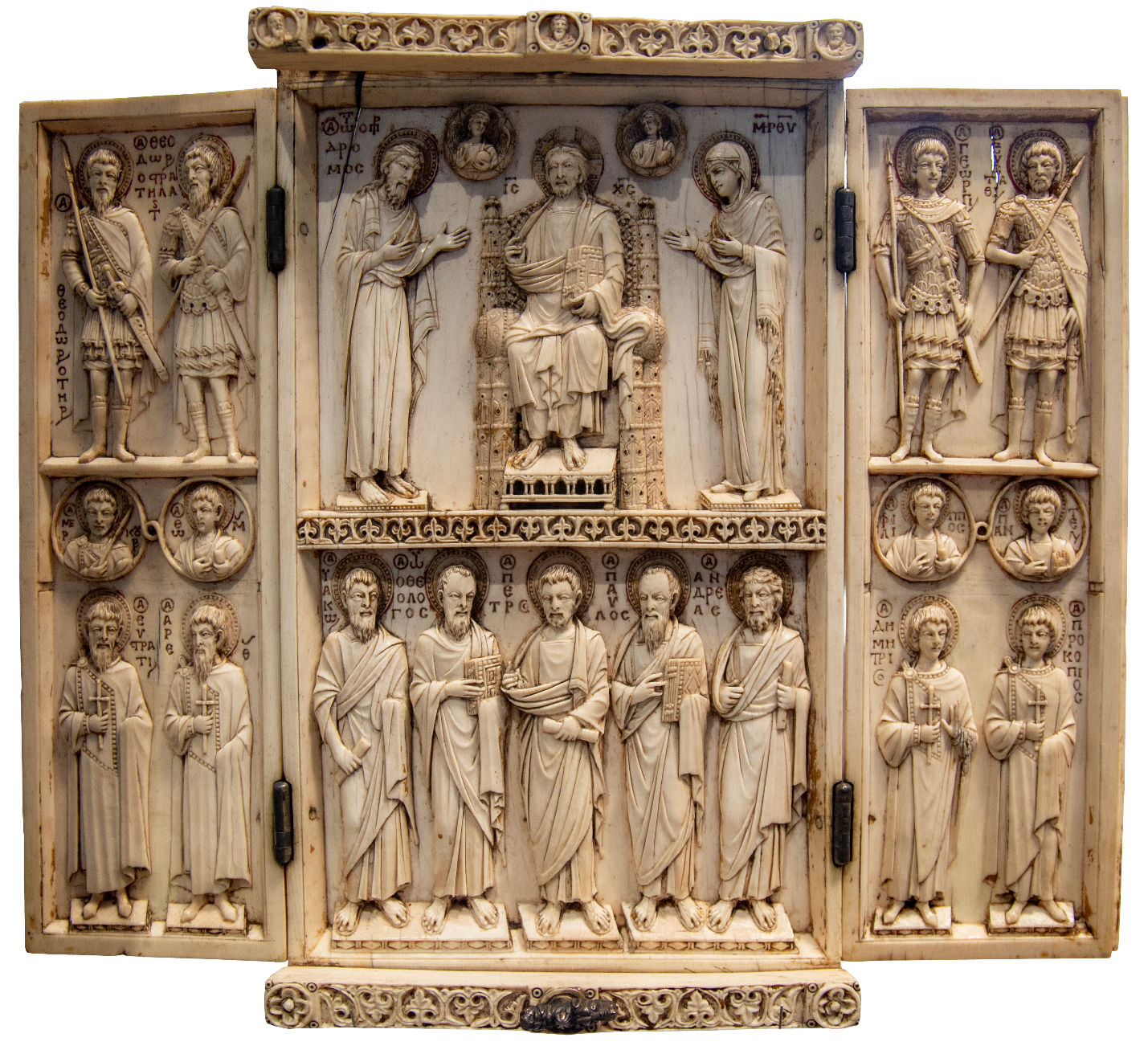
The subject of the Deësis is common in art in a variety of media from the Middle Byzantine period onward, often employing a similar composition to that found in Hagia Sophia. But the Deësis was also highly flexible: its figures could be rearranged, replaced by others, or expanded to include additional saints. This is the case with the mid-10th century, ivory Harbaville Triptych, in which Christ, the Virgin, and John—who appear in the top center with angels—are surrounded by a variety of saints.
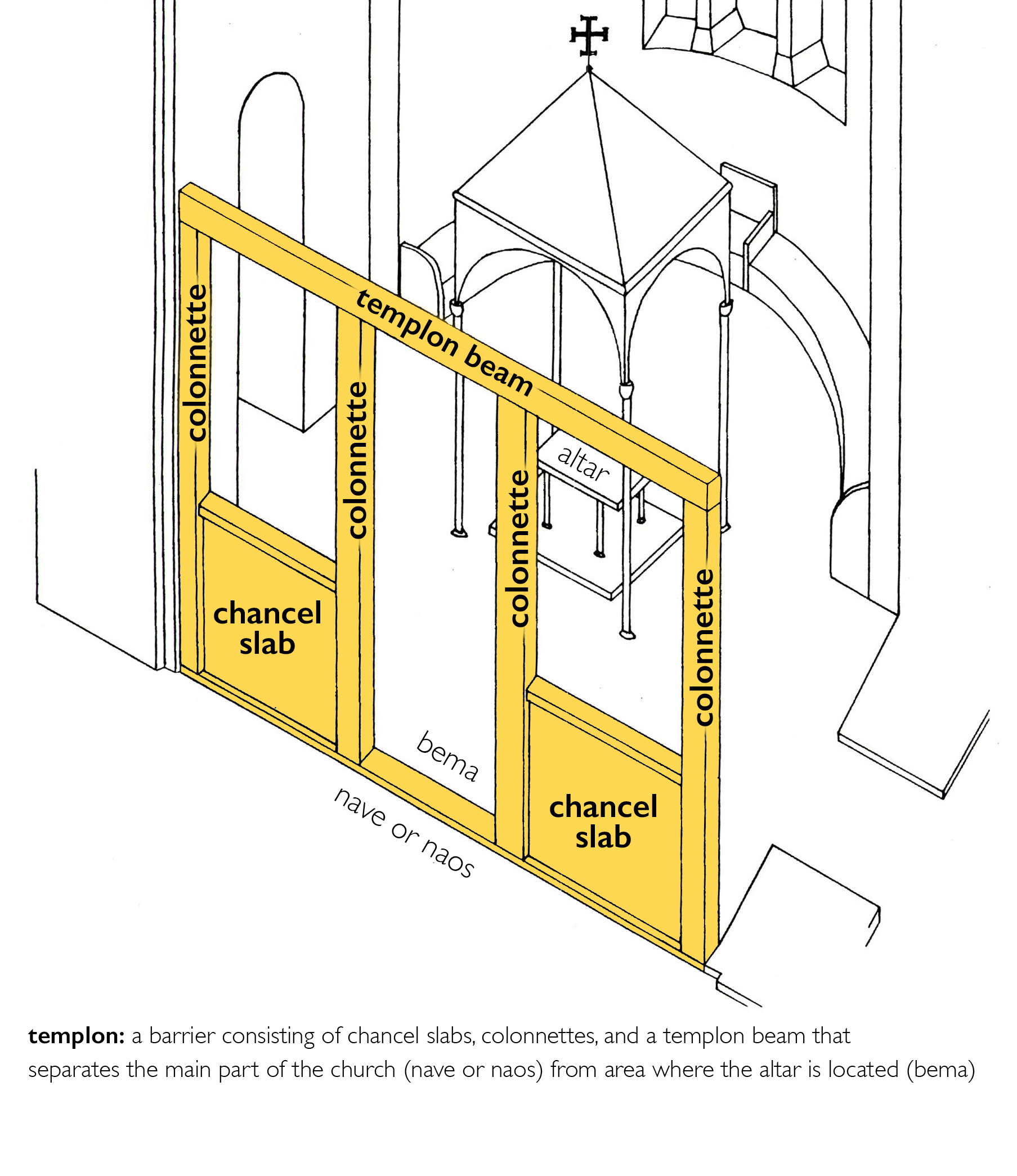
Additionally, the Deësis was often incorporated into larger compositions, such as templon beams and images of the Last Judgment. Scholars have debated possible meanings of the Deësis, sometimes understanding the Virgin and John as witnesses to Christ’s divinity and at other times emphasizing their role as intercessors on behalf of humankind.
Mosaics and light
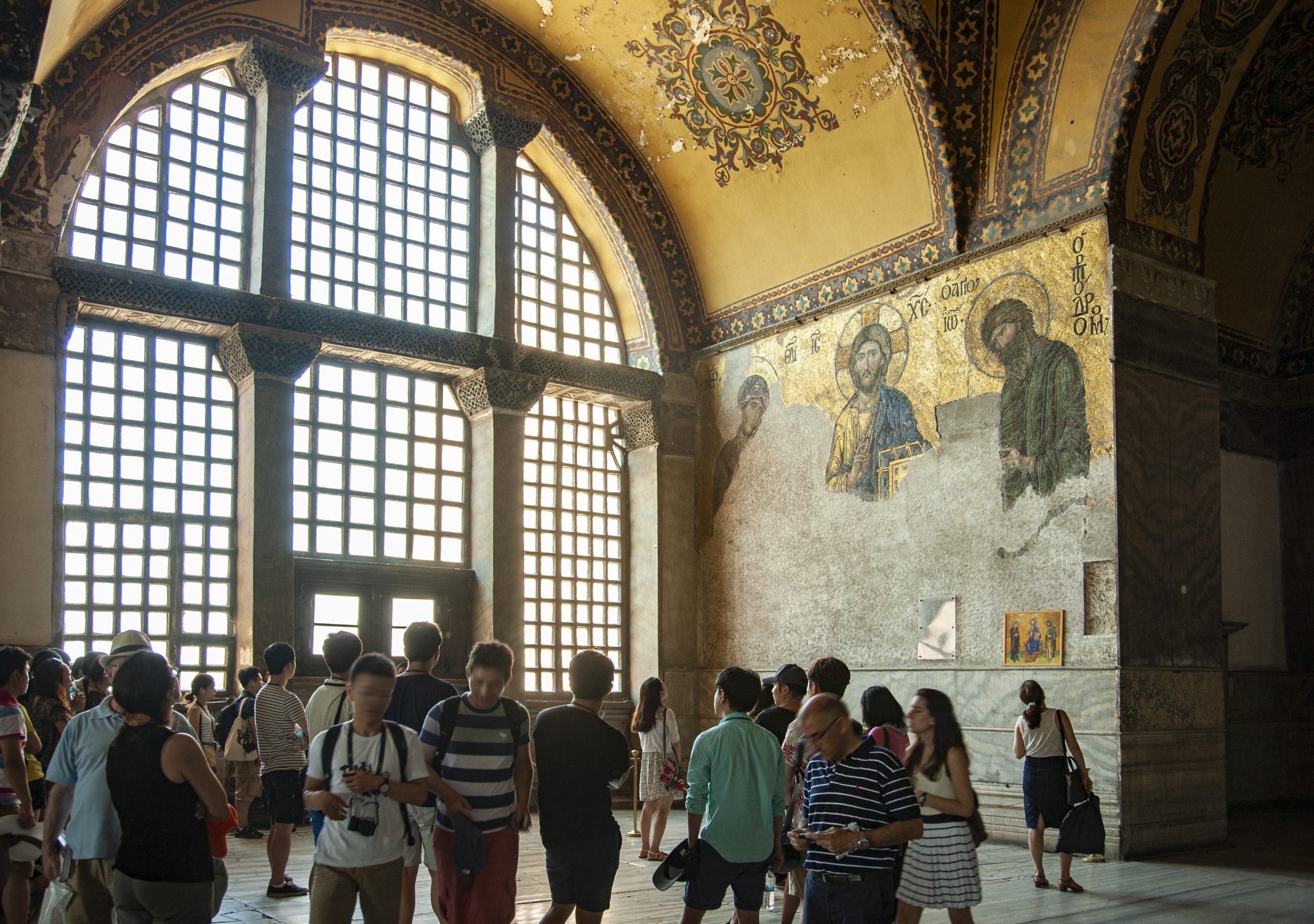
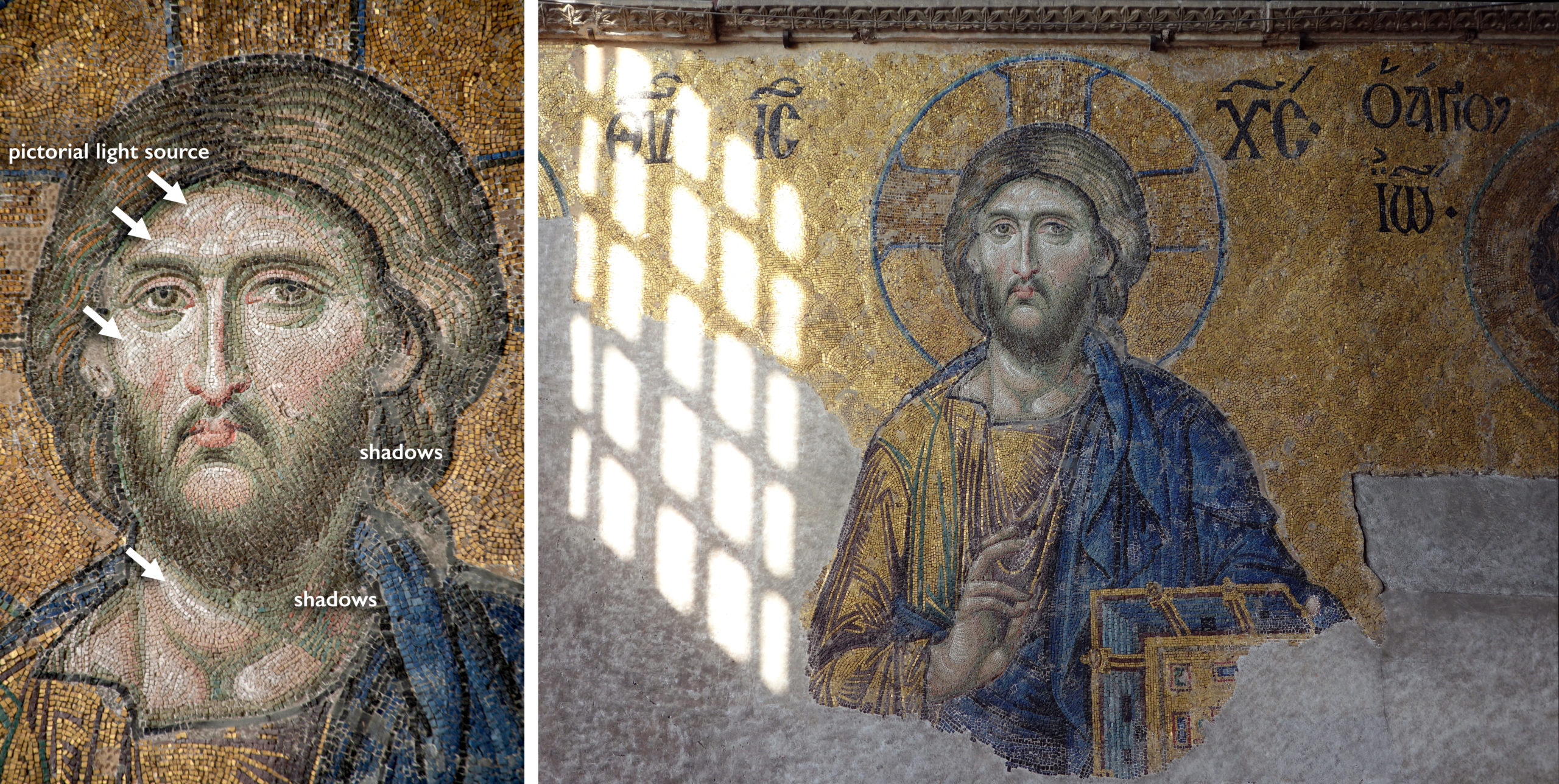
The Hagia Sophia Deësis is responsive to the lighting conditions where it is located. Within the image, light appears to shine on the figures from the left, casting shadows to the right. This pictorial light source corresponds with the actual light source of the window on the southern wall beside the mosaic. As a result, light and shadow seem to behave the same within the image and in the physical space the image inhabits, a feature that heightens the naturalism in the mosaic.
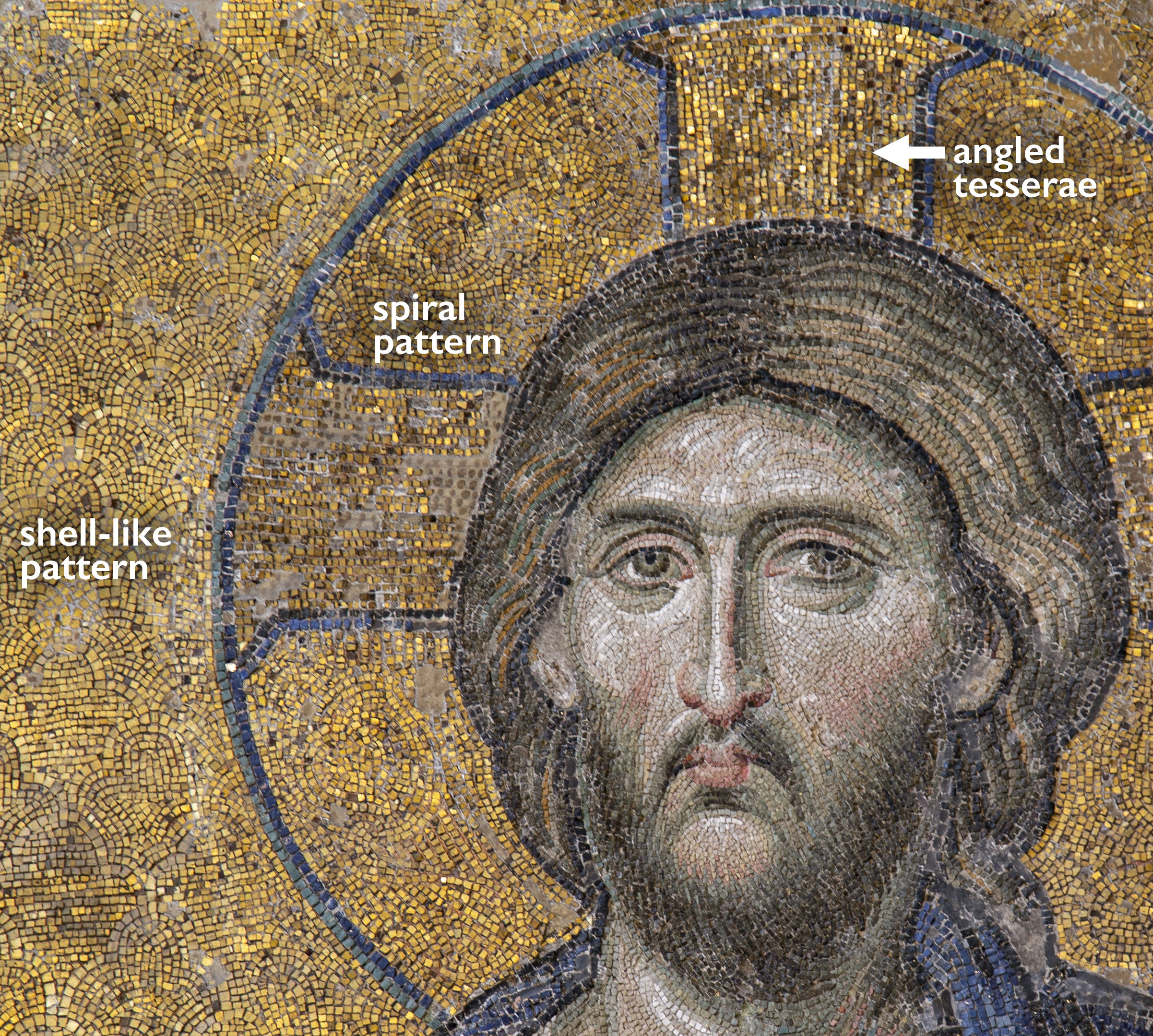
The artists who created this mosaic also considered how individual tesserae would reflect light. The gold tesserae that compose the background are arranged in a shell-like pattern and those in Christ’s halo seem to swirl. The tesserae within the cross in Christ’s halo are angled so they will reflect the light differently from the rest of the gold ground, highlighting the cross.
Late Byzantine naturalism
The Deësis at Hagia Sophia illustrates a broader tendency toward naturalism (imitation of the visible world) in Late Byzantine art. Let us compare the image of Christ in the Hagia Sophia Deësis with a Middle Byzantine mosaic of Christ at Hosios Loukas Monastery in Boeotia, Greece, which dates to the eleventh century. The two images both follow the same Byzantine conventions for depicting Christ, who holds a Gospel book in his left hand, blesses the viewer with his right hand, and wears a blue mantle and a tunic with gold highlights in both images. But in the Middle Byzantine mosaic at Hosios Loukas, Christ’s features are simplified. The artist relies heavily on lines to articulate form. As a result, Christ’s body may appear somewhat flat and even cartoon-like to our eyes.
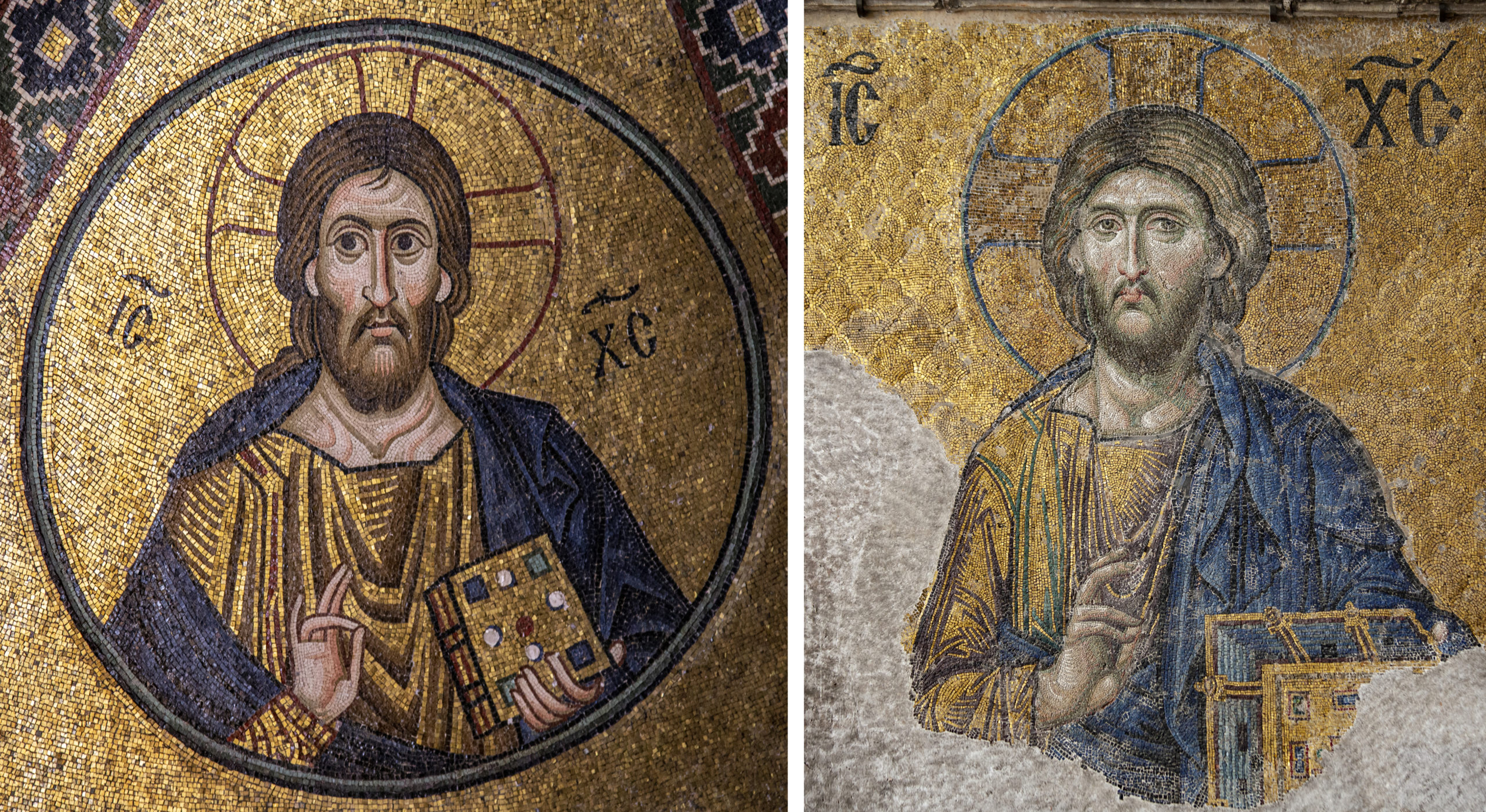
Certain aspects of the Deësis at Hagia Sophia—such as highlights and drapery folds—are similarly linear. But other elements of the Deësis demonstrate a new tendency toward naturalism. At Hagia Sophia, Christ is more anatomically accurate. The artist has also used modeling—carefully arranging light and dark tesserae—to create a sense of three-dimensional form. And a greater modulation of hues has produced more convincing skin tones.
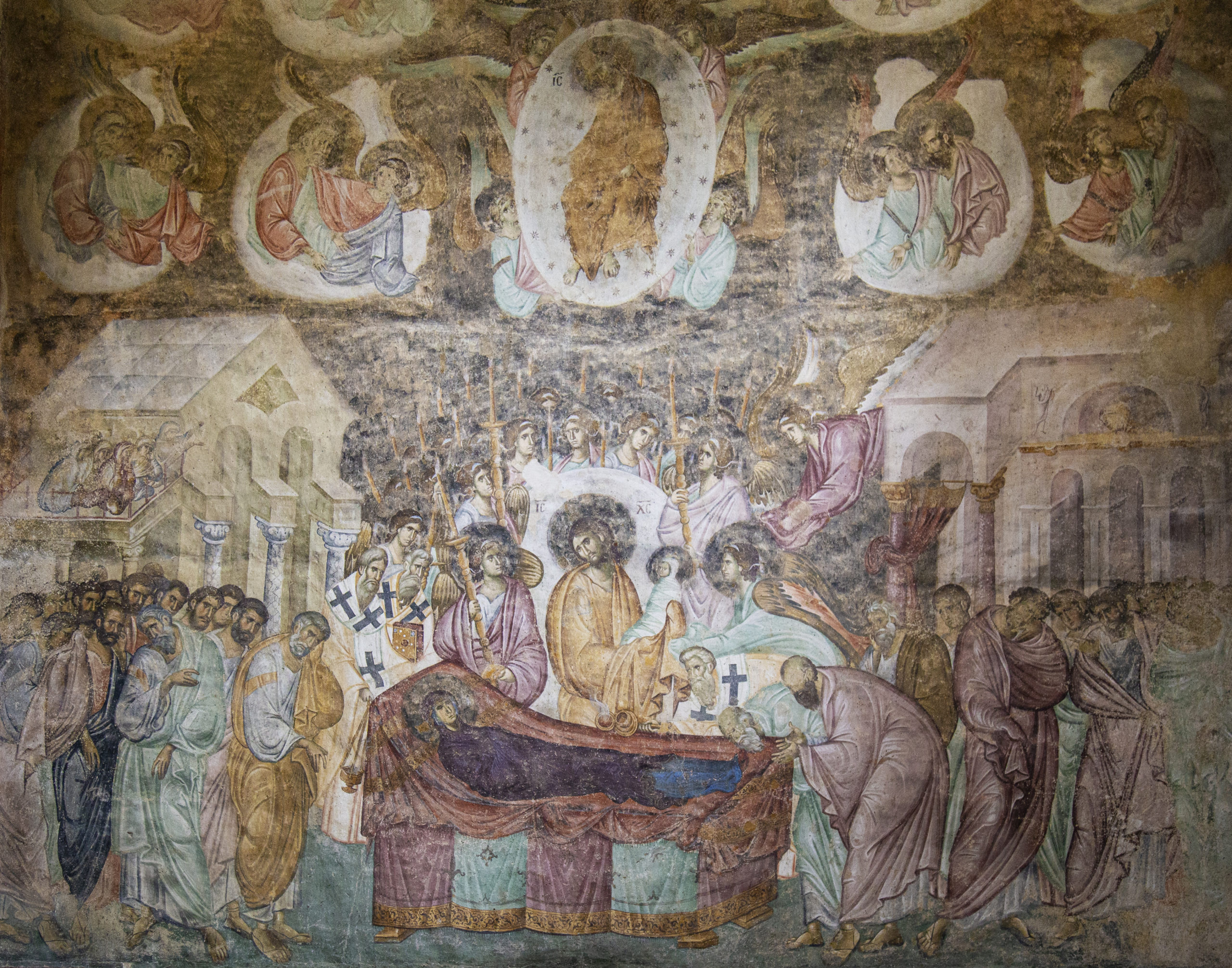
Neither the origins of the artist(s) who created the Deësis mosaic, nor the reasons for the mosaic’s naturalism, are easy to explain. But it should be noted that this tendency toward naturalism is part of a larger trend in Late Byzantine art, which may also be observed, for example, in the wall painting of the Dormition of the Virgin at Sopoćani Monastery in Serbia, also dated to the 1260s.
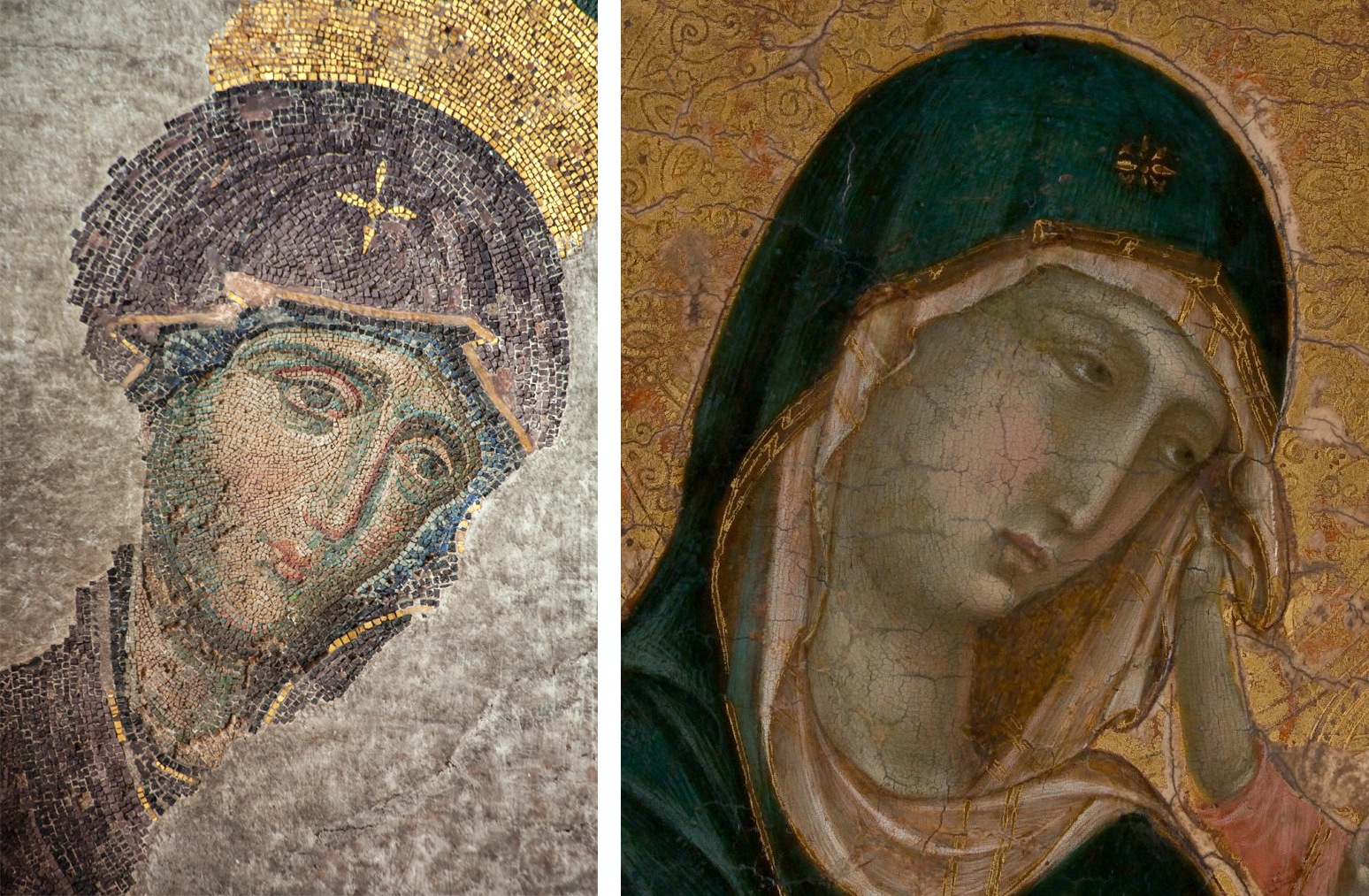
This attention to naturalism in the Late Byzantine art also corresponds with a similar interest in naturalism among some Italian artists like Duccio, Cimabue, and Giotto who are associated with the beginnings of the Italian Renaissance. Active in the late thirteenth and early fourteenth centuries—not long after the creation of the Deësis in Hagia Sophia—their paintings reveal similar attention to human anatomy and the modeling of form.
Today, the Deësis mosaic in Hagia Sophia still stands as a reminder of the moment when the Byzantines reclaimed their capital from the Latins and when the arts—and an interest in naturalism—flourished.
Conclusion
Ottoman Turkish forces conquered the Byzantine Empire in 1453. Despite the ultimate demise of the Byzantine Empire, the legacy of Byzantium continued. This is evident in formerly Byzantine territories like Crete, where the so-called “Cretan School” of iconography flourished under Venetian rule (a famous product of the Cretan School being Domenikos Theotokopoulos, better known as El Greco).
The Russian Empire, which was first starting to emerge around the time Constantinople fell, carried on as the heir of Byzantium, with churches and icons created in a distinct “Russo-Byzantine” style. Similarly, in Italy, when the Renaissance was first emerging, it borrowed heavily from the traditions of Byzantium. Cimabue’s Madonna Enthroned of 1280–90 is one of the earliest examples of the Renaissance interest in space and depth in panel painting. But the painting relies on Byzantine conventions and is altogether indebted to the arts of Byzantium.
Byzantium’s influence continued to spread beyond its former cultural and geographic boundaries, in the architecture of the Ottomans, the icons of Russia, the paintings of Italy, and elsewhere.
Citation and Licensing
The following sections were written by Chelsea Wright and are licensed CC BY-NC-SA 4.0:
- Chapter Overview and Introduction
- Focus artwork and term list compiled by Chelsea Wright
The following articles from Smarthistory licensed CC BY-NC-SA 4.0 were remixed and adapted for the chapter:
- Dr. Evan Freeman, “About the chronological periods of the Byzantine Empire,” in Smarthistory, September 22, 2020.
- Dr. Ellen Hurst, “Byzantine art, an introduction,” in Smarthistory, August 8, 2014.
- Dr. William Allen, “Icon with Virgin (Theotokos) and Child between Saints Theodore and George,” in Smarthistory, December 12, 2023.
- Dr. Allen Farber, “San Vitale and the Justinian and Theodora Mosaics,” in Smarthistory, August 20, 2022.
- Dr. William Allen, “Hagia Sophia, Istanbul,” in Smarthistory, August 8, 2015.
- Dr. Elizabeth Macaulay and Dr. Steven Zucker, “Hagia Sophia as a mosque,” in Smarthistory, December 15, 2015.
- Dr. Evan Freeman, “Late Byzantine naturalism: Hagia Sophia’s Deësis mosaic,” in Smarthistory, January 15, 2021.
- Helen C. Evans, Ph.D., “Byzantium Revisited: The Mosaics of Hagia Sophia in the Twentieth Century,” Fourth Annual Pallas Lecture (University of Michigan, 2006). ↵