
Curriculum
Defined
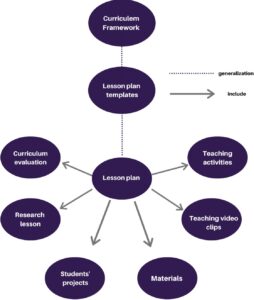
In early care and education, we value how children process information, we recognize how important their feelings are, and we place great significance on how children learn to socialize with others. As intentional teachers, our primary goal is to incorporate curriculum that supports the “whole-child” in all domains of development including social, emotional, physical, and intellectual. The word “curriculum” can mean different things to different people. For some, curriculum can provide the framework for learning, for others it can be a variety of planned activities, still for others curriculum is a way to drive learning outcomes, goals and objectives.
Curriculum can be developed by teachers, or it can be purchased as part of a prefabbed program. Curriculum can be child-directed, and it can be teacher-directed. According to a joint position paper by the National Association for the Education of Young Child (NAEYC) and the National Association of Early Childhood Specialists in State Department of Education (NAECS- SDE), “Curriculum is an organized framework that delineates the content children are to learn, the processes through which children achieve identified curricular goals, what teachers do to help achieve these goals, and the context in which teaching and learning occur” (2009). In other words, curriculum helps teachers organize the day to day activities, it outlines the learning goals and outcomes that teachers need to assess, and lastly, curriculum provides teachers with the guidance and structure that they need to teach.
Benefits of Implementing Meaningful of Curriculum
From the moment a child is born, each interaction and experience affects their brain development and lays the foundation for future success. Research on brain development shows that early experiences are essential. It is suggested that if children are not interested in what they are learning, and if it is not meaningful or connected to their cultural practices, they will not create new neural pathways in which to store new knowledge. Subsequently, children will not retain information or learn as intended. As suggested in the California Early Learning Foundations, well planned curriculum provides opportunities for children to use, build, and master skills. With every engaging activity, children are encouraged to investigate key concepts in mathematics, science, and literacy, explore their creativity, establish relationships with peers, and develop self-efficacy skills.31
It is important to note that thoughtful curriculum planning does not just impact children for that present moment. A high-quality program that incorporates meaningful curriculum can provide long-lasting benefits. As demonstrated with the Abecedarian Project, a vastly recognized longitudinal research study that followed a group of 111 children into adulthood, not only did the children who received high-quality child care outperform their peers in math and reading, 30 years later project participants continued to exhibit significant merits as compared to their counterparts in the control group. More specifically, children that participated in the Abecedarian Project were four times more likely to earn a college degree. Additionally, it was reported that “Twenty-three percent of the participants graduated from a four-year college or university compared to only 6 percent of the control group.” Other significant benefits included:
participants were more likely to have been consistently employed (75 percent had worked full time for at least 16 of the previous 24 months, compared to 53 percent of the control group) and less likely to have used public assistance (only 4 percent received benefits for at least 10 percent of the previous seven years, compared to 20 percent of the control group). They also showed a tendency to delay parenthood by almost two years compared to the control group. Project participants also appeared to have done better in relation to several other social and economic measures (including higher incomes) but those results were not statistically significant (Virginia Tech, 2012).
Media Attributions
- image10 © The College of the Canyons ZTC Team is licensed under a CC BY (Attribution) license
- image11 © The College of the Canyons ZTC Team is licensed under a CC BY (Attribution) license