
Assesssing
Assessing Children’s Development
Assessment is “a systematic process which allows for understanding a child’s competencies”46 Every child in your class needs to be assessed. To properly assess children, we use observations and documentation to determine a child’s abilities, interests, strengths, and areas of development that may need additional support. The information gathered during observations guides the classroom routines, curriculum planning, and implementation to ensure quality care. Over time, assessments record a child’s learning, growth, development, and social behavior.
Assessments also provide an opportunity to share information with families that will build a bridge from school to home.
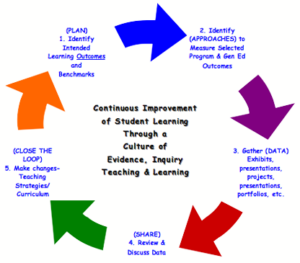
Let’s take a closer look at how we might use assessments in early childhood education. First, assessment is used to inform instruction and to guide teachers as they plan curriculum. With each observation a teacher can assess children’s strengths and capabilities to determine an individualized plan of action with just the “right” balance of independent and group activities across all areas of development (e.g. social, emotional, creative, cognitive, language and physical). When teachers create meaningful curriculum based on the children’s interest and abilities, research indicates that children will take greater strides in academic learning and are more likely to be successful throughout life.
For example, a teacher may notice that one of her students has difficulty joining in and socializing with classmates during group activities. A teacher will then consider activities that would encourage peer interactions while also considering opportunities to support their independence.
Second, assessment is designed for accountability and program evaluation. Assessments provide information that is needed to evaluate program practices and to inform program policies. One of the hallmark traits of a high-quality early childhood program is the practice of continuously monitoring children’s development and responding to their learning needs. When administrators, teachers, and families reflect on program goals and outcomes they can determine specific areas that need improvement. Once areas are identified, they can focus on implementing professional development workshops and training in order to improve their ability in meeting the needs of children and families. For example, upon reviewing the math indicators for all of the kindergarten students in a school, the principal realizes that additional teacher training on math-related materials is needed to support math instruction and student learning across all of the kindergarten classrooms in the school.
Third, assessments are used to support school and family partnerships. Assessment helps teachers communicate important milestones in a child’s development to families. More importantly, when teachers share their assessments with families, there is an opportunity for teachers and parents to work together to support children as they grow. Intentional teachers respect that parents are teachers on the “home front.”
Additionally, families have valuable insight that they can contribute when assessing a child’s needs. For example, a teacher may not observe a child’s ability to identify colors but through a discussion with the parents, the teacher learns that the child identifies colors of fruit at the grocery store. In this way, parents and teachers collaborate to better understand what needs to happen in the curriculum or at home to support the child’s learning and growth (The National Education Goals Panel, 2000).
Media Attributions
- image19 © Rich James is licensed under a CC BY-NC-SA (Attribution NonCommercial ShareAlike) license