
15 European Exploration and Conquest
Europe was not a particularly important place, in the context of global empires, economies, or cultural influence during the medieval period. While it invaded the Middle East during the crusades and the European states themselves warred against one another almost constantly, on balance Europe was quite weak and poor compared to other regions farther east. China and India are both outstanding examples of regions that produced far greater wealth, had far larger populations, and were far more militarily powerful than any European kingdom was. In the case of China under the Ming dynasty of the fourteenth and fifteenth centuries, China was probably more powerful than all of Europe put together. Likewise, China’s cultural influence on its neighbors was profound.
Nevertheless, the long expansion of European power to the rest of the world began in the fifteenth century. One of the great world-historical conundrums is why European states expanded so rapidly and aggressively, in the long run, while other powers like that of China, the Ottoman Empire, or the Indian kingdoms did not. Why was it Europe that took over the Americas (and, much later, much of the rest of the world) rather than Persia, the Ottoman Empire, India, or China?
Ironically, one of the most likely answers to that question is that it was Europe’s relative poverty as compared to the states of the Middle East and Asia that led Europeans to seek out new sources of wealth. Whereas the intra-Asian trade routes linking China, Korea, Japan, the islands of the western Pacific, Southeast Asia, and India ensured that Asian states enjoyed access to wealth and luxury goods, Europeans had to rely on the hugely expensive long-distance trade between Asia, the Middle East, and Europe to access goods like spices and porcelain that Europeans desperately wanted (as we can conclude based on the prices elite Europeans were willing to pay for them) but could not produce themselves. One of the major motivations for European explorers was the pursuit of direct access to luxury goods that bypassed the eastern mercantile networks that had traditionally profited off of the long-distance East-West trade routes.
The demand for trade with the east was limitless in European society. Luxury goods from South and East Asia were always among the most sought-after commodities in Europe, stretching all the way back to Roman times. Spices were worth far more than their weight in gold, and Chinese goods like porcelain were also highly prized. Enterprising merchants who were able to position themselves somewhere along the Indian Ocean trade routes or the famous Silk Road between Europe and China stood to make a fortune, but the distances covered were so vast that it was very difficult and perilous to take part in mercantile ventures. Thus, Isabella of Spain was not alone in funding explorers who sought to reach the east via easier routes when she supplied Columbus with his ships and sailors.
The situation became even more difficult for Europeans thanks to the rise of the Ottoman Empire. When Constantinople fell to the Ottomans in 1453, the traditional trade routes to Asia were disrupted, particularly as the Turks started taking over the Venetian maritime empire. Between the 15th and 18th centuries, the Ottomans replaced Venetian hegemony in the eastern Mediterranean by conquering key territories like Salonika, Negroponte, Cyprus, and Crete. Likewise, Europeans had long traded with Muslim merchants in North Africa for gold, ivory, and spices, and they longed to cut out the middlemen and get to the sources farther south. Some of this was doubtless born of anti-Muslim prejudice, but there was also the simple fact that the Ottomans now directly controlled a major link in the East-West trade axis, deriving profits that Europeans desired for their own.
In addition, the crusading tradition, especially that inspired by the Reconquista of Spain and Portugal, served as an inspiration for European explorers. The Reconquista was only completed in 1492 and the wealth accrued from the conquest of Granada helped to fund Columbus when he sailed in search of a western route to Asia that same year. Many of the Spanish conquistadores (conquerors) who would go on to invade South and Central America afterwards had acquired their military experience from what they considered to be the holy wars against the Muslim inhabitants of the Iberian peninsula. That crusading ideology was easily adapted for the purposes of conquering vast American territories and forcibly converting the Native American inhabitants to Christianity.
There were thus economic and cultural reasons that Europeans wanted to reach Africa and Asia. They were able to access that wealth of those regions thanks to technological advances. Until about 1400, Europeans had no ships capable of sailing across an entire ocean (the Viking longboats of the Middle Ages were an exception, but they were no longer in use by the Renaissance era), and the European understanding of geography and navigation was extremely primitive. From about 1420 on, however, maritime technology improved dramatically and it became feasible to launch voyages that could cross the entire Atlantic Ocean with a reasonable degree of certainty that they would succeed. Ironically, much of that technology had been developed in Asia. The key here was the invention of carracks and caravels, new kinds of ships that were able to sail both with the wind and against lateral winds; as long as the wind was not blowing in the opposite direction one wanted to travel in, it was possible to keep moving in the right direction. Reasonably effective compasses came into European hands from the Middle East around 1400 as well. Thus, by 1400 Europeans had both a number of reasons to want to explore and for the first time had the technological means to do so.
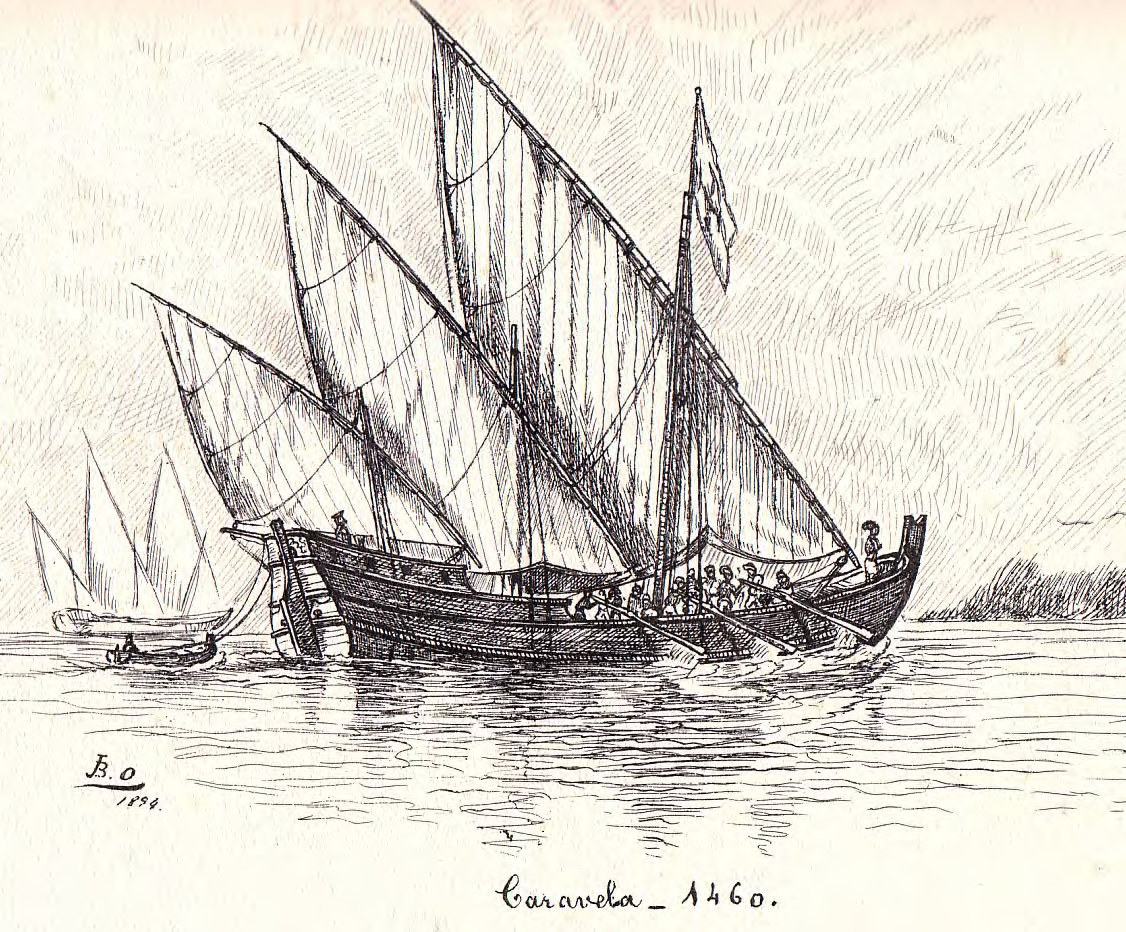
Figure 15.1 Nineteenth-century drawing of a Portuguese caravel, based on the designs used during the early Portuguese expeditions of the fifteenth century. Credit:
Caravel in Public Domain
Despite those advances, the European grasp of geography remained very shaky. As of 1400, Europeans had terribly imprecise knowledge about the rest of the world. They did not, of course, know anything about the Americas. They tended to confuse India, Cathay, and Japan with Asia itself. They also had a vague notion that all of Asia was ruled by khans, in part because of the popularity of the Venetian merchant Marco Polo’s famous account of his travels undertaken in the latter part of the thirteenth century, travels that he may or may not have actually taken part in. According to the manuscript, Polo was a Venetian merchant who had traveled to the court of the Mongol Khan Kublai and eventually returned to Europe, but his account merely reinforced just how far away, and difficult to reach, Asia was taking the usual eastern routes. Many sincerely believed that monsters occupied the interiors of Africa and Asia, and besides Polo, no Europeans had ever made the trek to the far east and returned to tell the tale.
World-Historical Comparison: China and Europe
The idea of the “Age of Discovery” described in this chapter is European in origin, but it is useful in describing major voyages of discovery launched by non-European empires at the time as well. The exemplary case is that of the great voyages of Zheng He, admiral of an enormous fleet of Chinese ships that sailed between 1405 – 1433, during China’s Ming Dynasty. The sheer size of the fleets commanded by Zheng He was staggering. Whereas Columbus would later sale with three small ships and 90 sailors, the first of the seven Chinese expeditions led by Zheng He boasted 300 ships and over 27,000 men, including diplomats, scholars, translators, and what amounted to an actual army of soldiers. The expeditions were launched on the order of the Yongle Emperor (r. 1402 – 1424), third emperor of the Ming Dynasty, who sought to more directly connect China to the outside world. His goals in sponsoring the expeditions were twofold: to establish stronger maritime trade connections and to ensure that foreign states acknowledged the political supremacy of China.
The Zheng He expeditions traveled from southeastern China, following the monsoon winds south and west, visiting kingdoms and trade cities along the way in the regions corresponding to present-day Vietnam, Indonesia, Malaysia, Thailand, India, and Sri Lanka. Later voyages visited the trade city of Hormuz on the Persian Gulf and sailed up the Red Sea, visiting the Islamic holy cities of Mecca and Medina. One voyage sailed directly to Mogadishu in east Africa, bringing back (among other things) a giraffe to the Ming court on its return voyage. The voyages benefited from the fact that most of the territories they visited were either entirely or partly populated by Muslims, and Arabic was one of the shared languages of the entire Indian Ocean region. Zheng He himself spoke Arabic, as did many of his navigators and sailors, and it was thus easy to communicate despite the enormous distances separating the regions they visited from China itself.
Along the way, the voyages succeeded in the major goals defined by the Yongle Emperor. First, they exchanged precious trade goods in huge volumes, deliberately seeking out cities tied to maritime trade (like Kolkata in South Asia) and establishing strong trade links for Chinese merchants. Second, they took both diplomats and gifts back from many of the kingdoms they visited, which according to Chinese political theory implied that foreign kingdoms were making good on their obligation to acknowledge Chinese sovereignty. In one case, Zheng He was forced to seize the king of Sri Lanka, Alagakkonara, after the latter tried to plunder some of the expedition’s ships. Alagakkonara was taken back to China, where he begged for forgiveness and promised to send gifts and tribute in the future. This episode aside, the expeditions were essentially peaceful in nature. They did not conquer the regions they encountered, their impressive military power was only used defensively, and almost all of the rulers of the kingdoms to which they traveled welcomed them.
One of the great world-historical conundrums is thus not only why the expeditions ended, but also why in their aftermath the entire state-sponsored Chinese presence on the Pacific and Indian Oceans vanished entirely. Many people, and not only historians, have noted that world history might have gone very differently if China had maintained direct political and economic ties to the regions visited by Zheng He’s expeditions. Instead, the last voyage sailed in 1431, never to be repeated. By the time the Portuguese arrived in the Indian Ocean in 1497, there were no Chinese ships and just a handful of independent Chinese merchants in the entire, vast trade zone.
The reasons for this apparent about-face are threefold. First, the expeditions were incredibly expensive. They required a staggering commitment of wealth and manpower, not to mention vast natural resources. The entire region of southeastern China from which the expeditions sailed was deforested to build the ships, and the cost to the imperial government was enormous. Second, many in the Ming court had long argued that the resources spent on the expeditions were better used defending China from the Mongol, Manchu, and Turkic threats to the north. The memory of the Yuan Dynasty founded by the Mongols was still fresh, and northern China continued to face serious military threats from the semi-nomadic peoples of the steppe. The Yongle Emperor, the great sponsor of the expeditions, died in 1424, and while the last expeditions would continue under his immediate successors (the Hongxi and Xuande emperors), the priority of the state shifted to containing the nomadic threats to the north.
The third, and perhaps most straightforward reason for the end of the expeditions is simply that they had succeeded in their goals. In contrast to the rapacity of the European voyages of discovery, which were expressly focused on seizing riches and territory, the Zheng He expeditions made good on their goals of forging economic links and “reminding” foreign rulers of their secondary position in relation to China. China would remain the powerhouse of East Asia, surrounded by smaller kingdoms that did acknowledge Chinese predominance, but no one in a position of significant political power for the rest of the Ming Dynasty, or the Qing Dynasty that followed it, sought to extend the Yongle Emperor’s efforts to turn China into a maritime power.
Africa and India
Europeans at the time were almost completely ignorant of Chinese civilization, and since the Zheng He expeditions did not create lasting Chinese influence in the regions that Europeans traveled to starting in the fifteenth century, they did nothing to improve that ignorance. Europeans did, of course, know about North Africa. The Mediterranean had served as a zone of exchange between Europe, the Middle East, and North Africa since ancient times, and despite North Africa being ruled by Muslim kingdoms, Europeans regularly traded with Muslim merchants. As noted above, there were many lucrative commodities (like gold and ivory) that Europeans coveted and were only available from North African merchants. Europeans knew that these commodities originated somewhere across the Sahara desert but were unable to access their sources directly.
During the European Middle Ages, Africa south of the Sahara was dominated by dozens of kingdoms, the northernmost of which had converted to Islam. The largest was that of Mali, which oversaw a lucrative trade in gold and various luxury goods north via caravan to North Africa and the rest of the Mediterranean. Likewise, other kingdoms traded with one another and, via caravans, the Middle East and Europe. These kingdoms also engaged in frequent warfare against one another (just as the states of Europe did).
Drawn by the gold they were able to acquire via merchants in North Africa, Europeans had tried in the late Middle Ages to sail down the west coast of the continent, but their naval technology was insufficient. In the fifteenth century that changed with the introduction of the caravel; the same thing that made it possible for Europeans to reach the Americas allowed them to make reliable journeys along the African coast. Europeans were thus able to make long-distance trips by the mid-fifteenth century that far exceeded their earlier maximum ranges. In the process, the Portuguese discovered that it was possible to sail back north from an African expedition by first sailing west into the Atlantic; there a ship would intersect with the Gulf Stream current that flows toward Europe, allowing a return voyage to Portugal (the same trick would be used by Christopher Columbus in his return from the Americas).
The beginning of the ongoing contact between Africa south of the Sahara and Europe happened under the auspices of Prince Henry the Navigator (1394 – 1460), the governor of the southernmost province of Portugal. He sponsored numerous Portuguese expeditions along the west coast of Africa, hoping to somehow seize lands or at least find routes to lucrative sources of gold and spices. In 1497, Vasco Da Gama, a Portuguese nobleman, was sponsored by the Portuguese crown and sailed around Africa and as far as India, in the process claiming various territories for Portugal. Following Da Gama, Portuguese fleets established a lucrative monopoly on trade between Europe and West African kingdoms, East African kingdoms, and Indian merchants. This amounted to a royally controlled, militarily enforced monopoly of waterborne trade between Europe and India and Africa that lasted well into the sixteenth century. Thus, tiny Portugal was, for a time, one of the wealthiest states in Europe.
It should be emphasized that this Portuguese “monopoly” was first and foremost a monopoly between the Indian Ocean trade and Europe, not a monopoly of trade within the Indian Ocean itself. Indian, African, and Middle Eastern merchants continued to exchange goods and wealth whose value greatly exceeded that of the trade between Europe and the Indian Ocean region. However, two things did change with the entry of the Portuguese into the Indian Ocean trade. First, the Portuguese set up what amounted to an enormous protection racket, forcing merchants to buy a cartaz, an official seal of safe passage. Any ship that did not hold a cartaz was liable to be attacked by a Portuguese warship, which would then loot the cargo. Obviously, this system amounted to state-sponsored piracy on an enormous scale, and it was deeply resented across the region. Many merchants succeeded in avoiding Portuguese ships and trading without a cartaz, and the Ottoman Empire warred against Portugal throughout the 1500s to try to break the system (and impose Ottoman control in its place), but there is no question that Portugal profited enormously from this racketeering.
In addition, Europeans were for the first time able to directly access the sources of luxury commodities like spices, indigo, ivory, and gold, and Portugal was in the forefront of the European states that sought to reach those sources. In other words, Portugal was the first European state to succeed in making good on the dream of European sovereigns and merchants to bypass Muslim-controlled trade routes and directly access Asian goods. Other states were quick to follow once the sheer extent of African and Indian wealth was revealed through Portuguese trade, and soon the Dutch and then the English started taking over the oceanic trade routes from the Portuguese.
Spain, Columbus, the Great Dying, and the Columbian Exchange
Some of the most significant voyages of discovery of the early modern period were undertaken by agents of the Spanish monarchy, starting with that of Christopher Columbus in 1492. They were inspired by religious fervor as much as a practical desire for riches—fresh off the successful Reconquista, Queen Isabella wanted to both flank the Muslim forces of the Middle East so the Holy Land could be recaptures and new trade routes to Asia. The voyage was thought to be feasible both because all educated people already accepted that the world was round (common knowledge since the days of ancient Greece) and because the circumference of the globe was not really clear to them: it simply was not known how long one would have to sail west to reach the far east.
Columbus was one of those who had totally inaccurate beliefs about the distance between Europe and Asia. Basing his calculations on an ancient (and completely inaccurate) account by the Greek philosopher Ptolemy, he thought that Asia was not far west of Europe. Despite being disliked and distrusted by most of the rulers he had approached in the past, Columbus succeeded in winning Isabella over to his vision, and she paid to outfit him with a tiny fleet (she even sent him with letters of introduction to the Great Khan, who she presumed still ruled in Asia). Columbus departed in August of 1492 with three small boats—the Niña, Pinta, and Santa Maria—and 90 men. They arrived in the Bahamas in October at the island of Guanahani, which was renamed to San Salvador by Columbus.
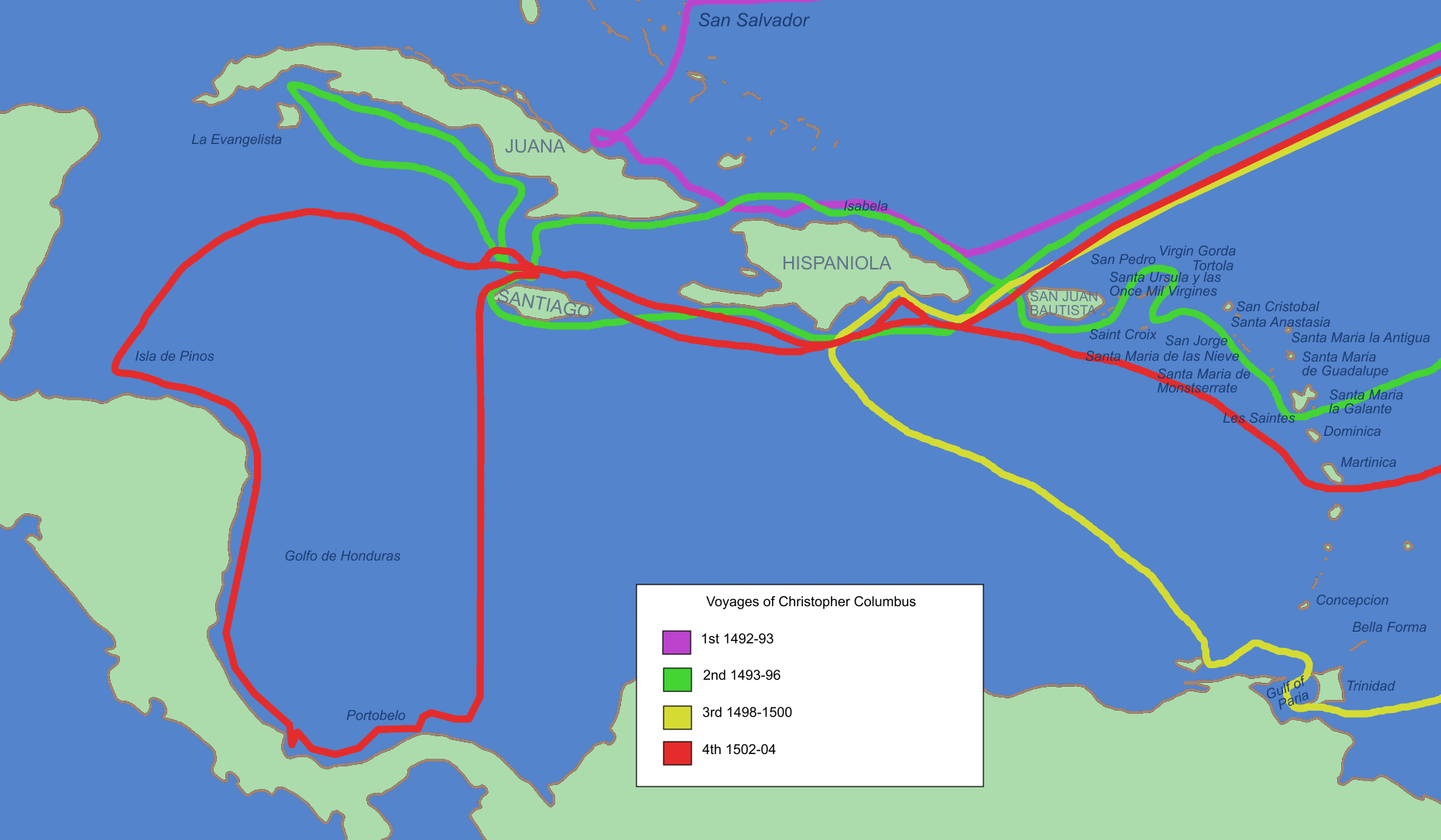
Figure 15.2 The four voyages of Columbus between 1492 and 1504. ‘Juana’ is present-day Cuba, and ‘Hispaniola’ is present-day Haiti and the Dominican Republic. Credit: Columbus voyages by Roke
Columbus ended up spearheading everything the Spanish empire was to represent in the Americas: brutality against the native “Indians” (Columbus’s term, indios, which he used assuming he had indeed arrived in “the Indies” of Asia), attempts to convert by force, intense greed for precious metals, and the introduction of pathogens against which the Native people had no resistance. With Columbus, the traffic in goods and commodities between the two hemispheres began. While Europeans at the time were obsessed with the vast mineral wealth found in the Americas, it is clear in historical hindsight that far more important than precious metals were the living things exchanged between the western and eastern hemispheres of the globe starting in 1492. Coined by Alfred Crosby in 1972, historians now refer to that enormous distribution of plant and animal species, as well as bacteria and viruses, as the Columbian Exchange.
From the New World, Europeans brought back corn, potatoes, tobacco, chocolate, and tomatoes, just to name the most important of the crops that soon flourished across Africa and Eurasia. Potatoes alone would go on to reshape the demography of all of northern Europe and various other regions in the world because they provide a great deal of nutrition and calories and can grow in poor, rocky soils. The poor of many European regions (Ireland, most famously) became largely dependent on potatoes for nourishment by the nineteenth century. From the Old World, Europeans imported large, domesticated animals—horses, cows, sheep, goats, pigs, and sheep—as well as numerous crops like rice, wheat, sugarcane, and coffee.
That noted, the single most significant biological entity to be exchanged between the hemispheres was the smallpox virus, which was at the heart of the worst epidemic in world history. Isolated from the western hemisphere for thousands of years, Indigenous Americans had no resistance to Eurasian diseases. Because almost all diseases that affect humans are mutated strains of diseases affecting domestic animals, referred to as zoonotic diseases, and all of the large animal species that can be domesticated were Eurasian in origin except llamas, Eurasians and Africans had spent thousands of years both suffering from and building up resistance to these epidemics while Native Americans had not. Those pathogens (which also included malaria, yellow fever and pertussis) arrived all at once with the European invasion of the New World that began with Columbus.
Historians refer to the demographic catastrophe that accompanied the European encounter with the Americas as the Great Dying. As much as 90% of the Indigenous people of the Americas died within a few generations of Columbus’s arrival. While the Spanish and Portuguese did win some noteworthy military engagements, due largely to their use of horses, gunpowder, and steel, their true military advantage lay in germ warfare, something they certainly did not anticipate unleashing on their arrival. Spanish explorers in the early sixteenth century encountered whole regions with abundant evidence of sophisticated cultures that were already abandoned, their former inhabitants wiped out by disease. Put simply, the conquest of the Americas by Europeans was made possible not because Europeans were significantly more militarily powerful than were Native Americans, but because so many of the latter were already dead thanks to disease.
The Columbian Exchange, and the Great Dying that was part of it, began with Columbus’s initial voyage. Almost immediately after Columbus’s return to Spain after his expedition, Ferdinand and Isabella of Spain grasped the significance of his discovery and actively funded more expeditions and soon, colonists. The Spanish crown also quickly tried to cement its hold on the New World, petitioning the pope to grant them everything across the Atlantic, which the Portuguese attempted to block. After papal intervention and negotiations between the two Iberian kingdoms, the Spanish were to receive everything west of an arbitrary line on the map 1,100 miles west of the Cape Verde Islands, with everything to the east granted to the Portuguese. Practically speaking, this meant that the Portuguese concentrated their colonization efforts on Brazil, Africa, and India, while the Spanish concentrated on the Caribbean, Central America, and South America. Needless to say, the other European powers were not about to honor this agreement, called the Treaty of Tordesillas and dating to 1494, but it gave the Spanish and Portuguese a considerable head start.
By the 1520s, Europeans recognized that Columbus had been completely wrong about the New World being part of Asia. The term “America” was invented by another Italian, Amerigo Vespucci, who was another early explorer (he led two expeditions between 1497 and 1503) and was the first to grasp the immensity of the lands of the western hemisphere. Vespucci was also a relentless self-promoter, whereas Columbus did not attempt to publicize his discoveries with the same focus, hence why the “New World” came to be known as America, rather than Columbia.
Even though Europeans quickly realized that the Americas were whole new continents, they persisted in their quest to find a western route to Asia. The Spanish dispatched explorers and sailors who sought Asia by going around the Americas. This led to the voyage of Ferdinand Magellan (1480 – 1521), who commanded a small fleet of five ships funded by the Spanish crown and who tried to find a western route to Asia in 1519. He succeeded in rounding South America and crossing the Pacific but was then killed by inhabitants of the Philippines in 1521. There, his Basque navigator Juan Sebastián Elcano took over and managed to guide one ship all the way back to Spain, arriving in 1522 (Magellan is much better remembered than Elcano, but it was Elcano who actually made it back). The voyage proved definitively that it was possible to sail around the world. The Spanish would subsequently use the Philippines as the base of their Pacific trade network, ultimately linking together Europe, the Americas, and Asia and fulfilling the original vision of a western route to Asia that had inspired Columbus’s expedition in the first place.
Indigenous American Empires and The Conquistadors
There were two significant empires in the Americas at the time of the Spanish invasion, along with hundreds of smaller states and free associations. In both cases, the empires in question—the Aztec of central Mexico and the Inca of the western Andes in South America—were relatively young states that faced considerable internal and external pressures. In other words, the Spanish did not set out to conquer ancient empires stretching back to some prehistoric past; they faced states that, like Spain itself, were only recently united and which experienced considerable turmoil.
The Aztec Empire originated as a settlement of a nomadic people known as the Mexica (“Aztec” is a term used in later histories of their culture). According to their own origin stories, the Aztec had arrived from the north, following a prophecy that their new home would be found where they discovered an eagle eating a snake while perched on a cactus. In approximately 1325 CE, the Aztec arrived at a lake surrounded by brackish marshlands in central Mexico and according to legend they found just such an eagle. The area was already the site of thousands of years of Mesoamerican civilization, with several major cultures having already risen and fallen over the course of over a thousand years of pre-Aztec history, and initially the Aztec were forced to create their settlement on islands in Lake Texcoco, rather than the more desirable areas that surrounded it. This settlement, Tenochtitlan, would rapidly expand and eventually come to dominate the surrounding region.
The success of the Aztec in expanding their power was based initially on their creation of farms built on partly submerged artificial islands of rich compost known as chinampas. The Aztec population expanded rapidly, and in 1428 they entered into a triple alliance with the neighboring cities of Texcoco and Tlacopan, building a causeway between Tenochtitlan and Texcoco and constructing monumental architecture in the cities themselves. While the members of the triple alliance were allies, the Aztec dominated, and over the course of the next eighty years they launched a series of wars against other states in the neighboring regions. These wars were focused not on actual conquest, but on two things guaranteed to cause enormous hatred directed at the Aztec: ongoing demands of tribute and, as importantly, the capture of enemy warriors to be sacrificed to the gods back in Tenochtitlan. These wars are remembered historically as “sacred” or “divine” wars because of this religious motivation, which was truly central to the Aztec practice of warfare itself. When the Spanish arrived, they found it relatively easy to form their own alliances with the enemies of the Aztec, who were eager to strike back against the dominant state that had extracted so much wealth, and taken so many young men, from them over the preceding decades.
Meanwhile, in the western Andes of South America, another empire had only recently arisen. The region had long been dominated by family networks known as ayllus, each of which was part of a system of labor obligations, marriage alliances, and economic exchange, all bound together by a shared culture and religious rituals. The royal ayllu was led by the Inca, meaning “emperor,” who claimed to be descended from the sun god Inti. In 1471, mere decades before the arrival of the Spanish, the Inca Pachacuti conquered the core region of the western Andes in what later became Ecuador, Peru, and Chile. His son and grandson, Topa Inca and Huayna Capac, expanded the empire considerably, until it encompassed the entirety of the western Andes and extended across the mountains in many regions to the jungles and plains to the east. The next generation of Inca rule, however, saw a civil war which created rival factions still in conflict at precisely the time the Spanish arrived (described below).
The Conquistadors and the Creation of the Spanish Empire
The Conquistadors were the military explorers sent by the Spanish crown to the Americas to claim land, convert “heathens,” and enrich both themselves and the crown. They were usually poor noblemen with few prospects back in Spain and many explorers in the first generation were essentially unemployed knights. Some conquistadors simply launched expeditions to the New World without royal authorization, hoping to seize enough plunder to receive retroactive royal approval. Officially, all conquistadors were obliged to turn over the “royal fifth”—20% of all precious metals discovered or mined—of all loot to the crown.
The most significant conquistador was Hernán Cortés (1485 – 1547). A poor knight with few prospects in Spain, he jumped at the chance to travel to the New World. Cortés proved brilliant at allying with Indigenous peoples he encountered in Mexico, where he arrived in 1519 with 450 Spanish troops and 15 horses. Working through a translator, Malinche, who had already learned Spanish, Cortés was able to convince groups resentful of the Aztec to fight alongside the Spanish. Practically speaking, this meant that the Spanish were almost completely dependent on their allies militarily, particularly the Tlaxcaltec Confederation, an independent rival of the Aztec state. After securing the alliance with the Tlaxcaltec, the Spanish made their way to the Aztec capital of Tenochtitlan, where they were initially welcomed by the emperor Moctezuma II. Once the Aztecs realized the extent of the rapacious designs of the Spanish they chased them from the city, but then an epidemic of smallpox undermined their ability to fight.
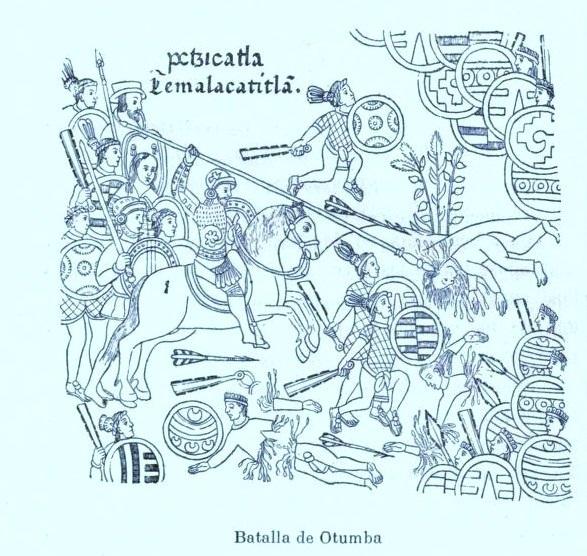
Figure 15.3 A later Spanish illustration of the Spanish conquest of the Aztec Empire. Note the allied Tlaxcaltec troops both behind and in front of the charging Spanish soldier. Credit: Spanish conquest in Public Domain
Ultimately, the Tlaxcaltec took advantage of the situation to launch a full-scale invasion, nominally “led” by the Spanish but in fact representing a settling of scores between the Aztec and Tlaxcaltec. It is important to emphasize the vast disparity in numbers involved: the Tlaxcaltec forces numbered approximately 200,000 soldiers, with Cortés leading a mere 900 Spanish soldiers and 80 cavalry (after he received reinforcements). That noted, there is no question that Cortés was excellent at forming new alliances by supporting the ambitions of other regional powers. Along with the Tlaxcaltec, the Spanish allied with the Tarascan kingdom of northern Mexico to help complete the conquest of the Aztec. Tarascan elites in turn married Spanish noblewomen and were formally recognized as Spanish nobility themselves. Thanks to the devastation of the smallpox epidemic and the military power of the Tlaxcaltec and Tarascans, the remaining Aztec forces surrendered in 1522. Cortés declared a new Spanish colony of New Spain in the center of Mexico.
The other noteworthy conquistador of the first generation following Columbus was Francisco Pizarro (1478 – 1541). Inspired by Cortés’ success in Mexico, Pizarro set off (with 180 Spanish troops and 30 horses) for an empire the Spanish had learned of in the Andes of western South America in 1531. Fortunately for the Spanish, the Inca Empire was in the immediate aftermath of a civil war, and rival factions were eager for alliances that could increase their power. Shortly after arriving, Pizarro ambushed the Inca emperor Atahualpa and captured him, demanding a building full of gold for his release. Instead, once the ransom was paid, Pizarro had the emperor killed and then marched on the Inca capital of Cuzco.
Just as Cortés had farther north, Pizarro allied with Atahualpa’s former enemies within the empire, with the Spanish “tagging along” in what really amounted to a continuation of the Inca civil war. Inca allies of the Spanish not only retained their wealth and status but were confirmed as Spanish nobility, and the resulting power structure remained squarely rooted in pre-existing Inca political traditions (such as the mita, labor tithes owed by communities to the state). By 1533, Spain claimed sovereignty over the former Inca Empire, but the new Spanish colony would have seemed to an outside observer to have changed relatively little, at least for the first few generations of its existence. Likewise, it took until 1572 for the Spanish and their allied Inca factions to defeat the last anti-Spanish leader, Tupac Amaru.
Thus, less than fifty years after Columbus’s initial landing, the two greatest empires of Central and South America had already fallen to the Spanish. By 1600, practically every part of Central and South America was nominally under Spanish (or, in the case of Brazil, Portuguese), control. Spain and Portugal would go on to retain their respective American colonies until the early nineteenth century. It is important to emphasize that the conquest represented not only the imposition of new hierarchies, very much including many grotesque examples of exploitation, but also the integration and adaptation of Indigenous American social structures, cultures, and beliefs into the Spanish imperial system.
New World Wealth and Latin American Society
The Spanish discovered huge sources of wealth in South and Central America. The most important of which was discovered in 1545 at Potosi in present-day Bolivia. Potosi had the largest known silver deposits in the world at the time, producing thousands of tons of silver for the crown. It also represented a horrific site of slave labor for the native people of the area. Building on the Inca labor system known as the mita (noted above), Spanish officials forced thousands of the Indigenous inhabitants of the region to toil in atrocious conditions, often until they died from exhaustion, all for the rapacious Spanish appetite for bullion. Whereas the Great Dying might be the most visceral aspect of the Columbian Exchange, Potosi is probably the greatest example of the influx of mineral wealth that flooded into Spanish coffers
The irony of the wealth generated by American mines is that it undermined the vitality of the Spanish state itself in the long run. Spain did not have to cultivate trade or pursue technological or bureaucratic innovation in the same manner as the rest of the European powers because it had such an enormous surplus of precious metals. Thus, even though Spain was the most powerful state in Europe in the sixteenth century, its longer-term trajectory was one of decline, in large part because of its commercial stagnation. In addition, so much bullion was shipped back to Europe that inflation undermined its value, another factor that weakened Spanish power over time. That noted, Spain’s relative decline in relation to other European states did not occur for well over a century after the initial invasions. Back in Europe, funded by the incredible wealth of the New World, the still recently united Spain became the greatest European power in the sixteenth century.
Meanwhile, in the New World, royal authority was enforced by two viceroys, royal officials who ruled over the northern and southern parts of the territory. Under them, rich nobles (often originally successful conquistadors) ran encomiendas, feudal estates with the legal right to exploit Indigenous labor which often evolved into the even larger haciendas, the size of whole states back in Europe.
The Spanish crown and members of the clergy sought to not just derive economic benefits from their rule, however, but to win souls. Conversion to Christianity was always a major driving force behind Spanish conquest, but many Spanish missionaries felt considerable discomfort in discovering people who had quite obviously never been in contact with the Christian world. The Christian Bible did not explain their origins, so the Spanish invented various hypotheses: Indigenous Americans were descended from the Lost Tribes of Israel described in the Old Testament of the Bible, they were somehow created and ruled by the devil, they simply were not human beings but strange, human-like animals, and so on. The consensus by the 1530s was that, wherever they were from, Indigenous Americans were blank slates who had to be conquered for their own good. The pope recognized the humanity of the Indigenous Americans in 1537, but the Church continued to support forcible conversion, and over time the vast majority of the inhabitants of Latin America became Catholics. However, just as Indigenous elites were part of the colonial power structure, pre-Christian religious and spiritual traditions were often incorporated into Latin American Catholic ritual.
The majority of Spanish immigrants were men, and so the lack of Spanish women led to these men entering into relationships with Native women. Attempts to ban marriage between Spanish men and Native women did nothing to prevent the growth of a large “mixed” class of mestizos, the children of Spanish-Indigenous unions who were usually recognized as the legitimate children of the former. By the seventeenth century the Spanish crown oversaw a hardening of racial lines, distinguishing between Spanish-born elites, Spanish creoles (those of unmixed Spanish ancestry born in the Americas), mestizos, and “indios.” Practically speaking, however, there was much more flexibility in Latin American societies than would be the case in North American states later in history, both because of the number of people of mixed racial backgrounds and because of the necessity of Spanish-Indigenous alliances (still very much the case all the way until the wars of Latin American independence in the nineteenth century). In short, there was still a racialized hierarchy in New World society, but more ethnic mixing occurred in Central and South America than in North America.
Conclusion
Overall understandings of the Spanish and Portuguese invasions of the Americas have been revised considerably by historians in recent decades. No longer do we see these conquests as representing overwhelming, triumphant victories, despite the self-serving propaganda written by conquistadors like Cortés at the time. The Spanish and Portuguese successfully imposed their own authority, but Central and South American societies were as much about alliance and integration as top-down authority and hierarchy. Starting with the Tlaxcaltec and Tarascans who played such a pivotal role in the defeat of the Aztec, the Spanish were obliged to work with Indigenous power structures everywhere they went. Indigenous leaders, usually referred to as caciques by the Spanish (“lord” or “chief” in the Carib language, which eventually became the universal term for Indigenous leadership within the Spanish Empire), were acknowledged as Spanish nobles, operating with considerable power and autonomy within the empire. Spanish was eventually one of the prevailing languages of the entire continent-spanning territory, but so too were countless pre-Spanish languages that thrive into the present (e.g. Quechua in Peru, Mayan and Nahuatl in Mexico, etc.). The culture and identity of Indigenous Americans in the Spanish-ruled lands also thrived despite the violence of the conquests. The point of this section is to emphasize that alliance and cultural blending were powerful and long-lasting elements of the Spanish Empire in the Americas, and Indigenous cultures were not simply the passive victims of Spanish conquest.
None of this is to diminish that violence. Spanish soldiers were often horribly cruel in seizing lands and extending Spanish rule. Especially before legal reforms in the 1540s, Spanish authorities routinely enslaved whole Indigenous communities. Resistance was met with lethal violence, including the use of mastiffs trained to tear people apart on command and numerous outright massacres. Likewise, the effects of the Great Dying were felt for decades, with periodic epidemics that effected Indigenous communities with greater severity than they did Spanish settlements.
Another result of the European invasions was the creation of a brutal form of hierarchy, that of one of the largest-scale and most significant slave systems in world history. The use of Indigenous slave labor only grew over time, although by the middle of the sixteenth century Europeans were increasingly turning to Africa for their labor needs, spawning one of the most horrendous injustices in history: the Transatlantic Slave Trade. European states in the Americas were thus built on the backs and with the blood of both the Indigenous inhabitants and, increasingly over time, enslaved Africans.
The impact of the conquests on Europe took longer to become entirely evident, but in the long run the conquest of the Americas sparked the beginning of the process by which Europe became one of the dominant global regions. Europeans now had access to not only enormous quantities of precious metal, but vast new natural resources (from huge stocks of fish to millions of acres of fertile land) that were to bolster European power for centuries to come. It is no coincidence that the year 1492 is often used as the starting point of what historians refer to as the early modern period: when both global hemispheres came into sustained contact for the first time. It was the starting point of massive change for the human species.